The Last Free Man in the World

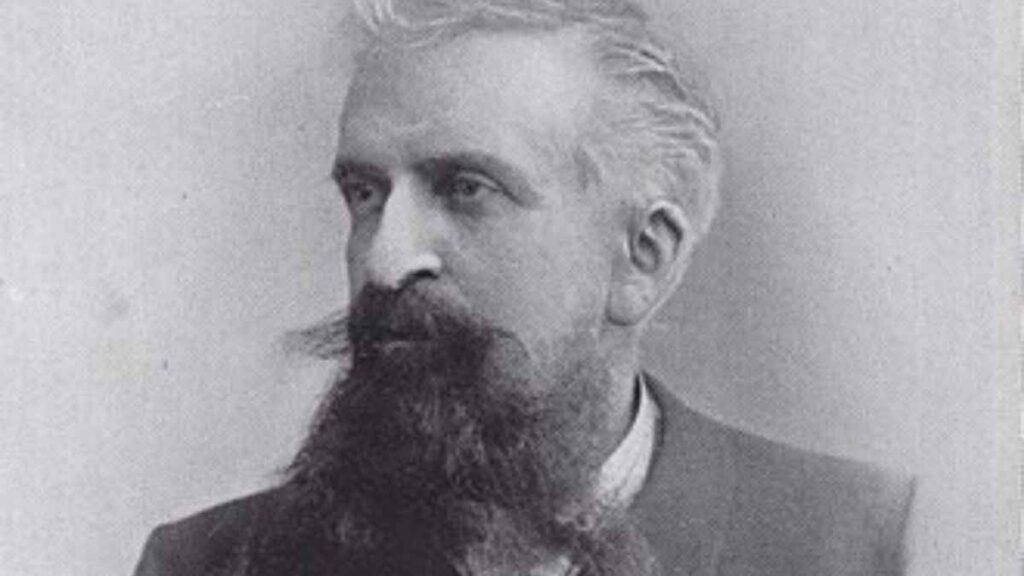
The butterfly clings to the flower in the garden, yet the flower appears untouched and pristine. Our friend, Yusuf Bhopali, is a truly unique individual whom I have known for the past forty years. Despite the long wait for a bride, he has neither aged nor grown despondent; rather, his state resembles that of a government file that remains under review for decades but is deemed “extremely important” with each new officer’s arrival. After this long companionship, I can confidently say that he shares only one similarity with Mulla Do-Piyaza. No one should attempt to find another similarity, as I have claimed exclusive rights to this comparison.
Just as Mulla Do-Piyaza considered his meal incomplete without two onions, Yusuf Bhai’s personality is layered. Anyone familiar with only one layer of his character does him the same injustice as some critics do to good books: they judge by the cover and begin criticizing the author without reading the preface. Yusuf Bhai is one of those rare books with a velvet cover, scholarly text, romantic footnotes, and always an unexpected conclusion.
If there were ever a census of beauty, the statistics department might divide his single face among several individuals, for every perspective reveals a different hue of his radiant charm. At times, he seems like a nobleman from Lucknow, at others, a distinguished scholar from a madrasa, and sometimes a romantic dervish mistakenly placed among books of jurisprudence. His elegance is such that if Nawab Wajid Ali Shah were alive today, he would certainly consult him on matters of attire, possibly even dismissing his tailor in favor of Yusuf Bhai. His knowledge is so profound that even the most learned teachers might pocket their credentials, and his literary prowess is such that both Urdu and Arabic languages would take pride in their beauty emerging from his pen.
Place him in a gathering of scholars, and it feels as if a nobleman has mistakenly sat among them. Take him to a madrasa, and students might suspect that a special edition of “Adab-e-Latif” has arrived instead of a Hadith lesson. His appearance exudes cheerfulness, his conversation refinement, his attire sophistication, and his gait that carefree dignity found only in great or utterly carefree individuals. His presence feels like an unexpected verse of Ghalib in a serious book.
Yusuf Bhai possesses knowledge and wields it with such finesse that the listener is half-impressed and half-intimidated. When he speaks on jurisprudence, it seems as if he has spent years in night tuition with Imam Abu Hanifa, and when he delves into literature and prose, Shibli and Ghalib might turn in their graves and wonder where this gentleman came from after them.
Whoever hears about Yusuf Bhai wishes to see him, and once they do, they become his forever, singing his praises. In his company, one feels like a student who learns more from the teacher’s style than the lesson itself. He introduces a new language in every circle of friends; some people even find their previous conversations lacking after meeting him.
We couldn’t find any flaw in him, but one gentleman, whose gaze is always tasked with extracting flaws from virtues, and who finds faults even in praise like customs officers searching for contraband in a suitcase, remarked that Yusuf Bhai’s greatest tragedy is that despite his many qualities, he remains unmarried. We replied: Sir, this is your lack of understanding. It seems inappropriate to call someone a bachelor who speaks of houris with such enthusiasm.
And if we accept it, this is no ordinary bachelorhood. It is a high degree of celibacy where a person doesn’t avoid marriage; rather, marriage itself seeks refuge from him. His bachelorhood is not a temporary or forced state like that of ordinary people but has become a permanent school of thought.
Imagine if Yusuf Bhai had a wife, and she introduced a new language in his circle, what use would Yusuf Bhai be then? He might become a martyr of love’s tyranny. Remaining unmarried has granted him the golden opportunity to remain ever fresh, cheerful, and free from creases like a freshly ironed coat. His forehead bears the same tranquility usually found only in those who have not yet received their electricity bill.
His freedom of spirit is such that he considers marriage a sacred institution, but always for others. Countless brides and grooms in Bhopal and its surroundings have been united in matrimony by his blessed hands, yet his own state is such that when he recites the marriage vows, the emotion in his voice makes it seem as if he is reciting his own funeral prayer. Some simple souls even begin to weep, though the groom is still very much alive.
His philosophy regarding himself is that one should first cultivate spiritual peace, scholarly dignity, a taste for refinement, and inner elegance before considering marriage. One gentleman remarked: Sir, all these things are found in paradise. He replied: Then what is the hurry?
Once, a disciple respectfully asked: Sir, is there any particular reason for not marrying? He replied: Marriage confines, restricts, and rejects a person. A friend immediately added: And bachelorhood? An elder sitting nearby interjected: It makes a person suspicious!
At this, someone began to hum under their breath:
Listening to the whispers of the damp night
A bachelor blushed for a long time
Yusuf Bhai’s personality is a beautiful tapestry of contradictions. On one hand, he is extremely well-mannered, well-dressed, fragrant, and refined; on the other, he is so nonchalant that if he disappears from friends’ gatherings for months, he returns as if he had just left yesterday. He chews betel with such ceremony as if performing a courtly ritual, yet when alone in his room at night, a seriousness descends on his face as if the finance minister is calculating the national budget deficit, or a philosopher is pondering the futility of life while simultaneously searching for a betel box.
His relationship with women is also very courteous. So courteous that at times the woman in front begins to suspect that he has come not to propose but to offer condolences. His gaze is modest, his tone dignified, his conversation cautious, and such caution that if a woman smiles, he immediately changes the subject to mimic a religious sermon or prayer, as if a guard of proselytization has been stationed at the gates of emotion.
In a gathering, everyone listens to him, but as soon as an elderly lady affectionately suggests: Son, you should get married now, he becomes as serious as if he has just received news of the fall of Baghdad or someone has pointed out a crease on his coat.
Yusuf Bhai claims that the charm of bachelorhood is unmatched by marriage. A bachelor can marry, but a married person can never attain the state of bachelorhood. Indeed, if all the married men and women in the world wished to become bachelors, the sun might rise in the west, but their wish could never be fulfilled:
A dry tree might turn green
But a married person can never become a bachelor
Personally, I believe Yusuf Bhai should get married. Not because he is alone, but because the world cannot tolerate such an interesting bachelor for long. Society has its rights too. If such individuals remain bachelors continuously, the morale of married people begins to decline, and dangerous libertarian movements start to arise among the younger generation.
But for now, his state is such that he stands before the mirror, strokes his beard, smiles, and murmurs:
Bachelors roam free in every country
But the married, victims of fate, are all alike
Translation note: This article was translated by AI. View the original Telegram post.