Gustave Le Bon and Religious Movements in India

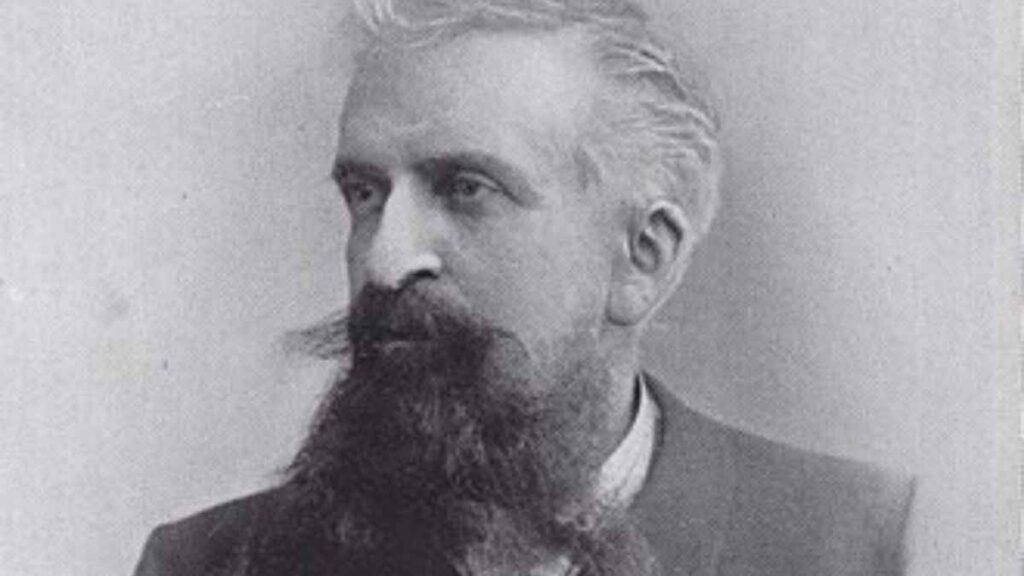
Gustave Le Bon, the Psychology of the Crowd, and the Religious Movements of the Indian Subcontinent: A Critical Study
While examining the contemporary religious movements of the Subcontinent, the question repeatedly presents itself: how did these movements succeed in attaining, at the popular level, an extraordinary degree of stability, expansion and influence? The question is important, for the popularity of any religious movement cannot be comprehended solely on the basis of its juristic argumentation, theological discussions or scholarly resources. History bears ample witness that certain intellectually intricate and academically robust ideas have remained confined to a limited elite, whereas notions comparatively simple or weaker in scholarly foundation have managed to achieve astonishing popularity among wide circles of the laity. From this it becomes evident that popular acceptance and intellectual soundness are two distinct phenomena that cannot always be mapped one upon the other.
An initial survey suggests that many religious movements in the Subcontinent have been notably successful in organising public emotions, religious affiliations and collective identities. The notions of akābir, madhhab, mashrab, taqlīd, riwāyah and religious heritage are not merely technical terms or historical references; they are also potent symbols of collective consciousness. These symbols connect individuals with a broader spiritual and historical community, instil within them a pride of affiliation, nurture a sense of belonging, and endow them with the feeling of being custodians of a particular intellectual tradition. Moreover, various religious movements have sought to reinforce their collective identities through a diversity of means—polemic literature, doctrinal and juristic disputations, refutational writings and the delineation of intellectual boundaries. The outcome is not merely the formation of a set of dogmas; rather, it is the emergence of a psychological and social sphere that consolidates loyalty, distinctiveness and group consciousness among its members.
In this very context, I perused the essay of Mawlānā Tawqīr Aḥmad Nadwī, “On the Desk of Mawlānā ʿAbd al-Salām Nadwī in the Monthly al-Nadwah (The Logical Definition of the Jamaʿat, i.e., the True Meaning of al-Jumhūr and al-Sawād al-Aʿẓam).” In that piece there is an indication that Mawlānā ʿAbd al-Salām Nadwī had considered certain discussions of Gustave Le Bon’s renowned work, The Crowd: A Study of the Popular Mind, to be worthy of attention for an understanding of the concepts “jamaʿat”, “jumhūr” and “al-sawād al-aʿẓam”. That indication prompted further examination, and thus an opportunity arose to review the book. Although it was written at the close of the nineteenth century and many of its conclusions are disputed by modern social psychology, nevertheless the foundational questions it raises remain of unusual significance for the study of religious, political and social movements today.
Gustave Le Bon’s The Crowd: A Study of the Popular Mind is counted among the classical and influential works of modern social psychology. The central question of the book is: when an individual becomes part of a crowd, what change occurs in his psychology, and what are the factors that transform an aggregate of individuals into such a collective force as possesses the capacity to exert profound effects upon social and historical processes? According to Le Bon, in order to understand the modern world it is more necessary to study the psychology of the crowd than that of the individual, because in the modern age the centre of political and social power has shifted from limited aristocratic classes to public gatherings.
The point of departure for Le Bon’s thought is the conception that a crowd is not merely a physical congregation of persons. If thousands of individuals were to assemble in one place yet each acted according to his own independent thought and will, that would be no more than a gathering, not, in the true sense, a crowd. A crowd comes into existence when the distinct personalities of individuals merge in a shared mental state and they begin to think and act under the sway of a single emotion, a single belief or a single impulse. At this stage a new psychological unity arises, which Le Bon terms the “collective mind”.
Viewed in the light of this theory, the strength of many religious movements in the Subcontinent appears to reside not only in their organisational structures or scholarly literature, but also in the formation of that collective mind which is generated through shared religious symbols, historical memories and communal affiliations. When the adherents of a movement begin to regard themselves as part of a broader religious community, their individual identity starts to dissolve into a larger collective identity.
Original source: View the original Telegram post.