Social Realities
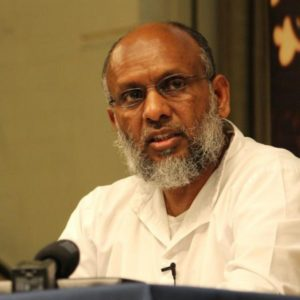
Maulana Muhammad Ghufran Nadwi (administrator of Majlis Tahqiqat wa Nashriyat Islam, Nadwat al-‘Ulama’, Lucknow) is a man of broad reading, deep insight, and refined character. He is also generous in manner and cheerful in disposition. Once, he shared an incident: during the summer, as he was walking along the road outside Nadwah, he saw a Sikh gentleman and his wife pushing their scooter uphill. He was surprised — why were they pushing the scooter up such an incline, off the road? When he looked at his watch, he saw it was noon.
You drive a vehicle on roads, not over rough fields, mountains, or rocks. You don’t fly your car in the air, nor do you sail it across waves. Fields, mountains, air, and sea are natural facts — they are part of the created reality and we are bound by them. Not only humans, but even animals observe these limits.
Once, in Bayt al-Maqdis (Jerusalem), I visited a great scholar and jurist. It took two hours to reach his home, even though from his house you could see Masjid al-Aqsa. He said, “We used to walk there and pray in ten minutes. But since the government erected the wall, it now takes two hours. We Palestinians are also required to obtain a permit to enter Al-Aqsa, which is granted, at most, once or twice a year.” The wall between his home and the mosque is a natural fact — he cannot ignore it. The need for a permit to enter the mosque is a social fact — it, too, cannot be ignored.
Social facts are a term in sociology, known in Arabic as الحقائق الاجتماعية, and in Urdu as اجتماعی حقائق, معاشرتی حقائق, or سماجی حقائق. For the sake of brevity, I have preferred the last term. The meaning of the term is that just as natural facts are solid and undeniable, so too are social facts. Social facts include laws, regulations, traditions, customs, principles, morals, etiquette, and language. Just as you stop your car when a rock appears in your path, you also stop when the traffic light turns red. Just as you do not marry an animal, you also do not marry your mother or daughter. If you are from a higher caste, you will not typically form matrimonial ties with a lower caste. Just as a stone can physically wound you, so too can an insult or verbal abuse injure you emotionally.
A civilised person treats social facts with the same seriousness as natural facts. An uncivilised person does not. In Britain, when English people visit mosques or Islamic centres, they are careful to follow parking regulations. In contrast, Muslims are often criticised for parking disorderly, causing inconvenience to others. The same people, however, follow parking laws strictly in government buildings and public areas.
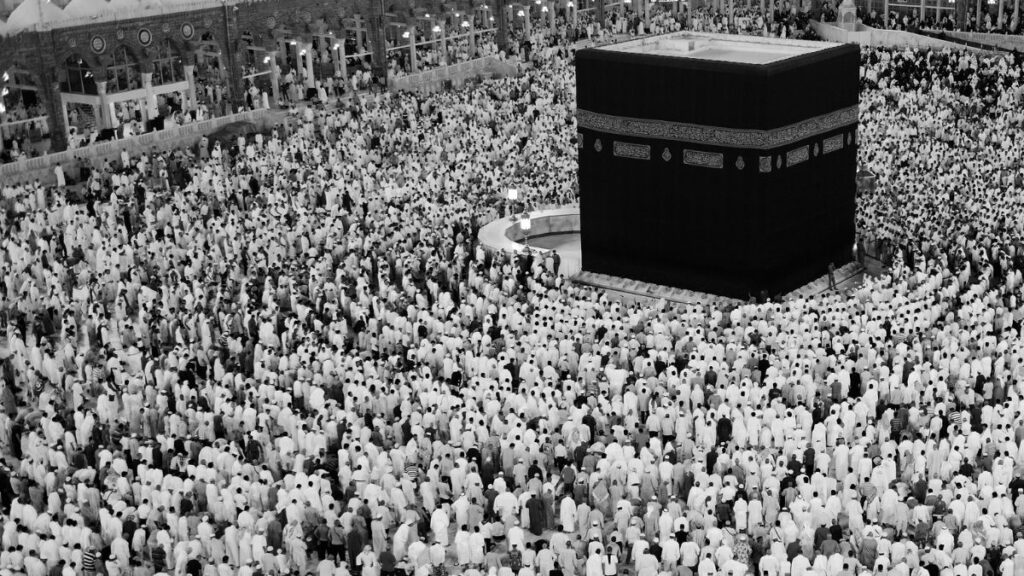
When you perform ṭawāf in iḥrām (the sacred pilgrimage garb), you are allowed on the ground level. If not in iḥrām, you must perform ṭawāf on the second or third floor. This is organised to ease crowding. Yet, many scholars from the subcontinent wear iḥrām only so they can be considered muʿtamir (pilgrim) and enter the ground floor area. They even issue fatāwā to that effect. Likewise, the Saudi government restricts locals from performing ḥajj without permits to control numbers. Yet, some people sneak in illegally and consider it an act of righteousness.
The real shock is when scholars issue fatāwā justifying such lawbreaking. Yet, these same individuals remain silent when strict penalties are in place. No scholar will ever issue a fatwā allowing ḥajj without a passport or visa. In WhatsApp groups, people are overly cautious not to mention any “offensive” country by name — yet these same people violate the honour and dignity of Muslims worse than wild beasts.
The difference between a civilised and uncivilised person is that the former respects social facts, while the latter disregards them — until breaking them leads to physical or financial loss.
You will never see a muftī kill someone from a different sect, but you will often see muftīs declaring them disbelievers (kāfir) — even though takfīr is a greater sin than murder. The difference is that murder leads to worldly punishment, while calling someone a disbeliever does not. A ḥadīth in both Ṣaḥīḥ al-Bukhārī and Ṣaḥīḥ Muslim states: “Whoever accuses a believer of disbelief is as if he has killed him.” Yet, many scholars quickly label others as munkir al-ḥadīth (deniers of hadith). One of our friends was deeply offended when his evidence was dismissed as deceptive, yet he himself openly accuses others of denying ḥadith. Another muftī refers to Ahl-e-Ḥadīth scholars as “non-followers” or “those without a school,” not realising this falls under tanābuz bi’l-alqāb (calling others by offensive nicknames), which is a major sin.
These are the same people who tremble at anything punishable by law or that may cause material harm.
These uncivilised behaviours become especially dangerous when they bring disrepute to Islam and Muslims. A growing perception is that scholars lack character and are uncivilised. A root cause of this is their refusal to treat social facts as real. Language and etiquette also fall within the domain of social facts. Scholars who lack training in adab (refined conduct) are often unfamiliar with metaphor, allusion, and rhetorical devices. They sometimes judge statements solely by their literal meaning, completely missing the intended context — leaving those skilled in language quietly smiling at their ignorance.
It is essential that the curriculum of our seminaries include sociology and that it is taught properly. And anyone who lacks understanding of social facts — including national laws, customs, and modes of expression — should never be given a license to issue fatwā. Such individuals damage the credibility of fiqh and fatwā, and turn both educated people and the general Muslim public away from the pure religion of God.
Translated by AI. Original article:
Original source: