From Oxford to Sheffield: A Day of Faith, Unity, and Intellectual Fellowship
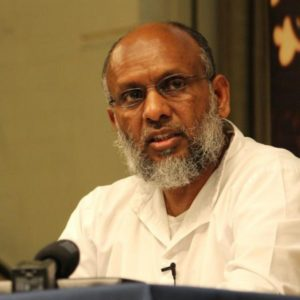

Some journeys may appear short, yet they return carrying within them many memories, encounters, thoughts, and emotions. A person travels from one city to another, but on returning, he feels that it was not merely distances that were covered along the way. He had the opportunity to meet certain hearts, to look into certain minds, and to sit in gatherings whose fragrance lingers long afterwards.
My journey to Sheffield was much like this. I left my home in Oxford in the morning. The purpose of the trip was to teach a religious and academic course in Sheffield on the subject of religion and unity. I took the train from Oxford railway station and began the journey. The train continued at its usual pace, while, alongside the changing scenery outside, the topics that would form part of the forthcoming discussion gradually took shape in my mind.
There is something peculiar about travelling: outwardly, a person may simply be sitting quietly, yet inwardly, so much is taking place. At times, memories of days gone by return; at others, one thinks about the gathering that lies ahead. And sometimes a thought comes to the heart about the many ways in which Allah uses a person for His purposes.
I arrived at Sheffield station at around 12:30 p.m. Dr Shah Nawaz was there to welcome me. Whenever I meet him, I sense a particular warmth and sincerity. Professionally, he is a medical doctor, but his personality is not confined to medicine. He has a deep concern for religion, a genuine desire for the welfare of people, and a strong commitment to serving the faith. He is an extremely humble, gentle, and sincere person. There is no affectation in his conversation, no desire for display in his temperament, and, in matters of religious service, one can see in him a quiet but continuous struggle.
People like this are often accomplishing great things without making great claims. There may be little publicity surrounding their service, but its effects endure. Dr Shah Nawaz seems to me to be one of those people who, despite the demands of their professional lives, make time for religion, bring people together, organise intellectual gatherings, and try to create an environment in which religion can be understood with seriousness, affection, and insight.
He took me to the Wybourn Islamic Centre in Sheffield. It is a new centre that Dr Shah Nawaz has established together with a few sincere and like-minded colleagues. The true importance of a centre lies not merely in its building, its name, or its outward organisation. Its real significance lies in the vision with which it is established and in the sincerity of those who devote their time, energy, and abilities to it.
In this respect, the efforts of Dr Shah Nawaz and his colleagues are worthy of appreciation. Alongside their professional lives, they have sought to create a place for religious engagement—a place where people can gather, discuss knowledge, raise questions, understand differences, and endeavour to present religion in its comprehensive and balanced form.
I had previously met Dr Shah Nawaz on another beautiful academic occasion. A few months ago, when I taught a course in Batley, he attended it with two of his colleagues. Even then, his intellectual interest and attentiveness were evident. He reads my writings with enthusiasm. At times, he studies them with his colleagues, discusses them with them, and then shares them with a wider circle of people. It gives me particular pleasure when a piece of writing is not merely read, but reflected upon and discussed, and when, if it is found beneficial, it is passed on to others.
Dr Shah Nawaz particularly appreciates those explanations in my writings in which I try to present difficult religious questions in a simple, clear, and accessible manner. His interest is not merely a matter of personal preference; it is also an indication that there are educated and professionally accomplished people in our society who desire serious study and intellectual understanding of religion.
When I arrived at the centre, many doctors, professionals, and people from various fields were present. They greeted me with great warmth. Several people mentioned my writings and previous teaching work and expressed their appreciation. Some said that they had been reading my writings, while others mentioned that they shared them with other people as well.
These encounters were not merely formal meetings for me. They reflected an intellectual connection. I felt that even within people whose lives are consumed by the demands of today’s busy professional world, there remains a thirst to understand religion. What is needed is simply to reach that thirst with knowledge, wisdom, and genuine concern for people’s well-being.
Then came the moment for which the journey had been undertaken. The course began after the noon prayer. The subject was Religion and Unity.
The discussion began with the fundamental question of what constitutes the sources of religion and what does not. This was followed by an explanation of the fundamental principles of religion, its major branches, and its subsidiary branches. Emphasis was placed on the importance of understanding the distinction between fundamental and secondary matters in religious thought. To place every issue on the same level is neither intellectually just nor religiously wise.
In this context, drawing upon the conduct of the Companions of the Prophet ﷺ, it was explained that where the Companions were united upon a matter, we should preserve that agreement rather than fuel disagreement. Where differences existed even among the Companions themselves, we need to understand those differences and create room and latitude for them.
Difference is a part of human life, but not every difference constitutes conflict. Intellectual disagreement, when conducted with courtesy, sincerity, and within proper bounds, broadens thought. But when disagreement becomes a source of partisanship, prejudice, and mutual hostility, it divides hearts.
The discussion then turned to the fundamental religious terms dīn, sharīʿah, īmān, and Islām. Their meanings, their relationship with one another, and their significance within religious thought were discussed in detail. Many disagreements, in fact, arise from differences in underlying concepts; and concepts become clear when the meanings of fundamental terms are properly understood.
The first session continued from after the noon prayer until approximately 3:30 p.m. Then, after the afternoon prayer, the gathering resumed, and discussion, questions and answers, and intellectual exchange continued until 6:30 in the evening.
Both men and women attended the gathering, and most of the participants were educated professionals from a variety of fields. Their attentiveness and seriousness were noteworthy. They did not merely listen to the discussion as though it were a lecture; they asked questions, sought clarification, and participated in examining different aspects of the subject.
This is the true beauty of an intellectual gathering. There is one form of learning in which a teacher speaks and students listen. But when the listener asks questions, reflects, brings forward the difficulties in his or her mind, and improves their understanding through the answers, the gathering becomes a living expression of knowledge.
Throughout the programme, the efforts of Dr Shah Nawaz and his colleagues were also evident. Establishing a new centre, bringing people together, encouraging individuals from different professions to participate in an intellectual gathering, making the necessary arrangements, and then committing oneself to developing the initiative on a sustained basis is not an easy task. It requires time, effort, sincerity, and perseverance.
These qualities are evident in Dr Shah Nawaz and his colleagues. Rather than seeking prominence for themselves, they have tried to create an environment from which others can benefit through knowledge and religion. Their efforts are also worthy of appreciation because they have not treated their professional lives and religious service as separate pursuits; rather, they have sought to connect both to a broader purpose of doing good.
At around 6:30 p.m., the intellectual gathering came to an end. After a full day of activity, there was physical tiredness, but there was also a particular sense of freshness in the heart. Sometimes a person speaks for several hours, yet at the end feels that he himself has received much in return. The questions of the people, their attentiveness, their responses, and their affection turn one’s attention once again towards the purpose of one’s work.
At around 7 p.m., I set out from Sheffield to return to Oxford. Now it was the journey home. The person who had left Oxford in the morning was returning in the evening carrying with him some new encounters, some new impressions, and some renewed hopes.