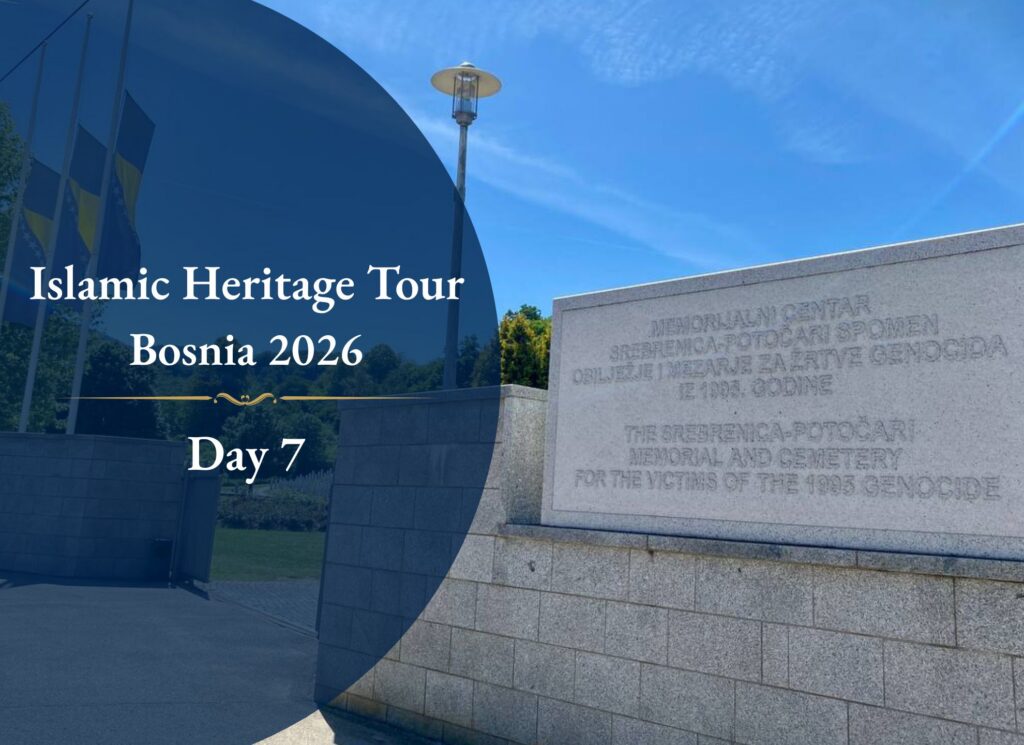
Bosnia Journey 2026 — Day 7

Bismillahir-Rahmanir-Rahim
We set out at eight o’clock, with the breaking of morning, towards Srebrenica. Two coaches carried us, cutting through the mountains of Bosnia with a gentle parting, as though they feared to wake the deep silence that wraps the earth. The cold was light, reaching the spirit more than the body, and scattered clouds clung to the mountain peaks. The roads wound between dark forests, and the pine trees stood on the slopes like silent guardians of a memory that refused to die.
I sat in the first coach among my companions, and hearts ran ahead of tongues into conversation. On the road the questions came upon me like light rain falling on the coach window: about faith when the earth grows narrow despite its vastness, about the signs of the Hour, about the secret of the tribulation that befalls the believers, and about why the people of truth are tested while they carry in their chests the light of certainty. In the eyes of those who asked there was a hidden worry, barely visible yet felt the way one feels the cold of dawn before the sun rises. It was the worry of a generation that sees the world in turmoil and wonders where mercy has its place in the midst of so great a mass of pain.
The road was long, not in distance but in its weight upon the soul. The further the two coaches moved between the mountains, the deeper the silence around us grew, until our own voices seemed to echo in our chests before they reached the air. After an hour and a half I moved to the second coach. There the faces were like those of our companions in the first: young men carrying in their eyes questions larger than their years, and sorrows they had not made with their own hands but had inherited from this troubled world.
The nature around us was beautiful enough to break the heart. Rivers ran in clear calm, and small villages rested between the hills like paintings. Yet the heart could not surrender to such innocent beauty, because the very name of Srebrenica was enough to turn the green into mourning, and the breeze into a long sigh rising from the chests of bereaved mothers.
Approaching Srebrenica
The closer we came to the city, the more we felt that we were not walking towards a place alone, but towards an open wound in the body of all humanity. There, in that quiet spot that sleeps today between the mountains, thousands of Muslims were killed wrongfully and in aggression, and the men and the young fell because their names bore witness that they were Muslims. There the world abandoned a whole city, and stood watching the massacre as though human blood might become a passing item in the evening news.
The grief that filled our hearts was not a passing grief. It was something closer to a silent breaking. We felt that the earth on which we walked kept an old groaning beneath its dust, and that the trees around us had perhaps witnessed screams no one had heard. Each time we saw a white cemetery reaching across a green slope, it seemed to us that the graves themselves were speaking, not in words, but in that heavy silence which language cannot hold.
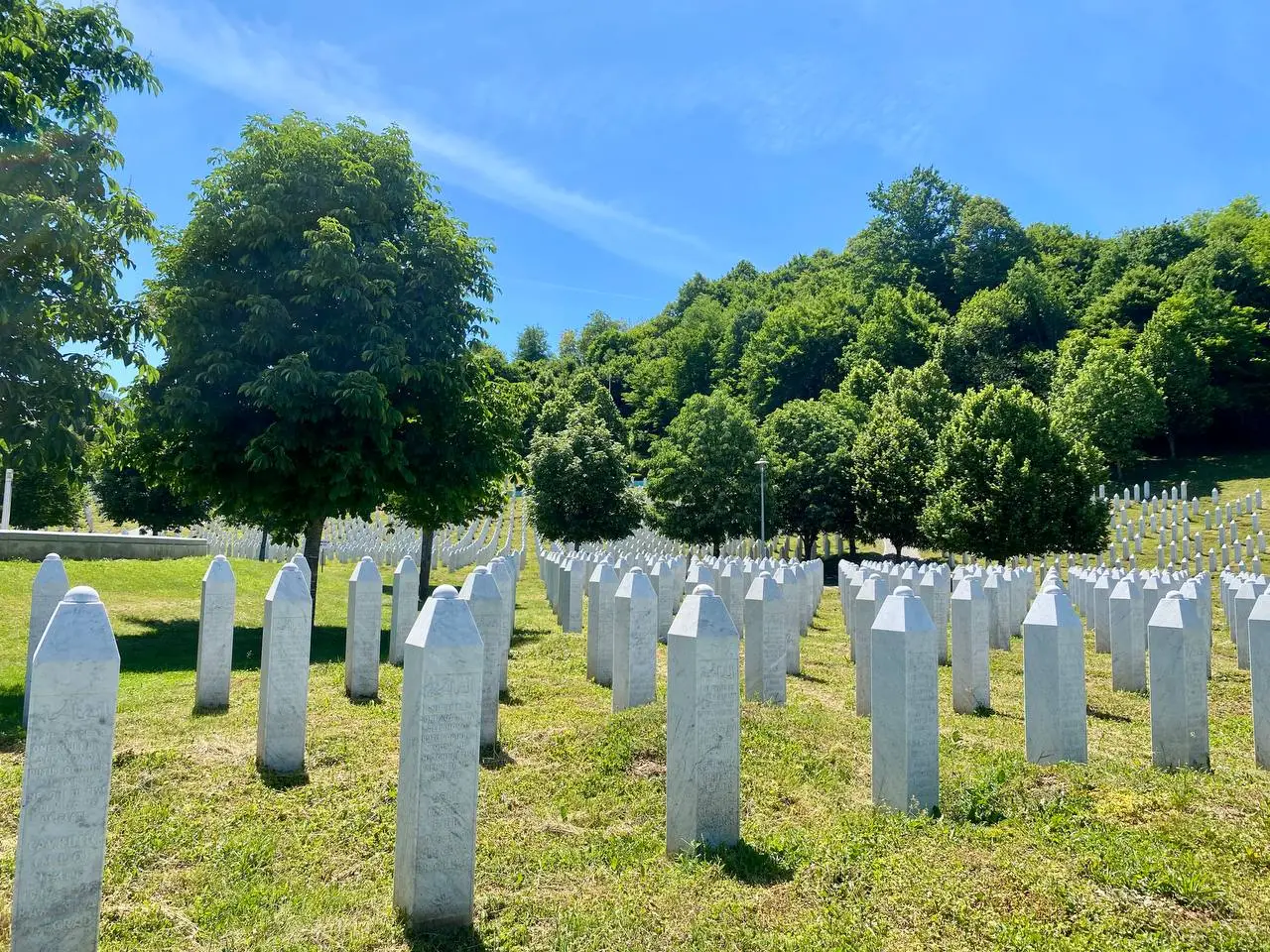
There I understood that the journey to Srebrenica is not a visit to a city, but a confrontation with the whole meaning of human suffering. It is a confrontation with the old question that people have never stopped asking since history began: how can a human being reach such a degree of cruelty? And how does faith remain alive after all this ruin?
Yet in the midst of that deep grief we also felt something else, something like a hidden covenant that the blood would not be forgotten, and that the tragedies meant to be buried in the earth remain alive in the conscience of the free. For this reason Srebrenica has remained, despite everything, not a city of death alone, but a lasting witness that injustice may triumph for an hour and still cannot erase the truth, so long as there is on earth a heart that remembers, a tongue that tells, and a spirit that refuses to forget.
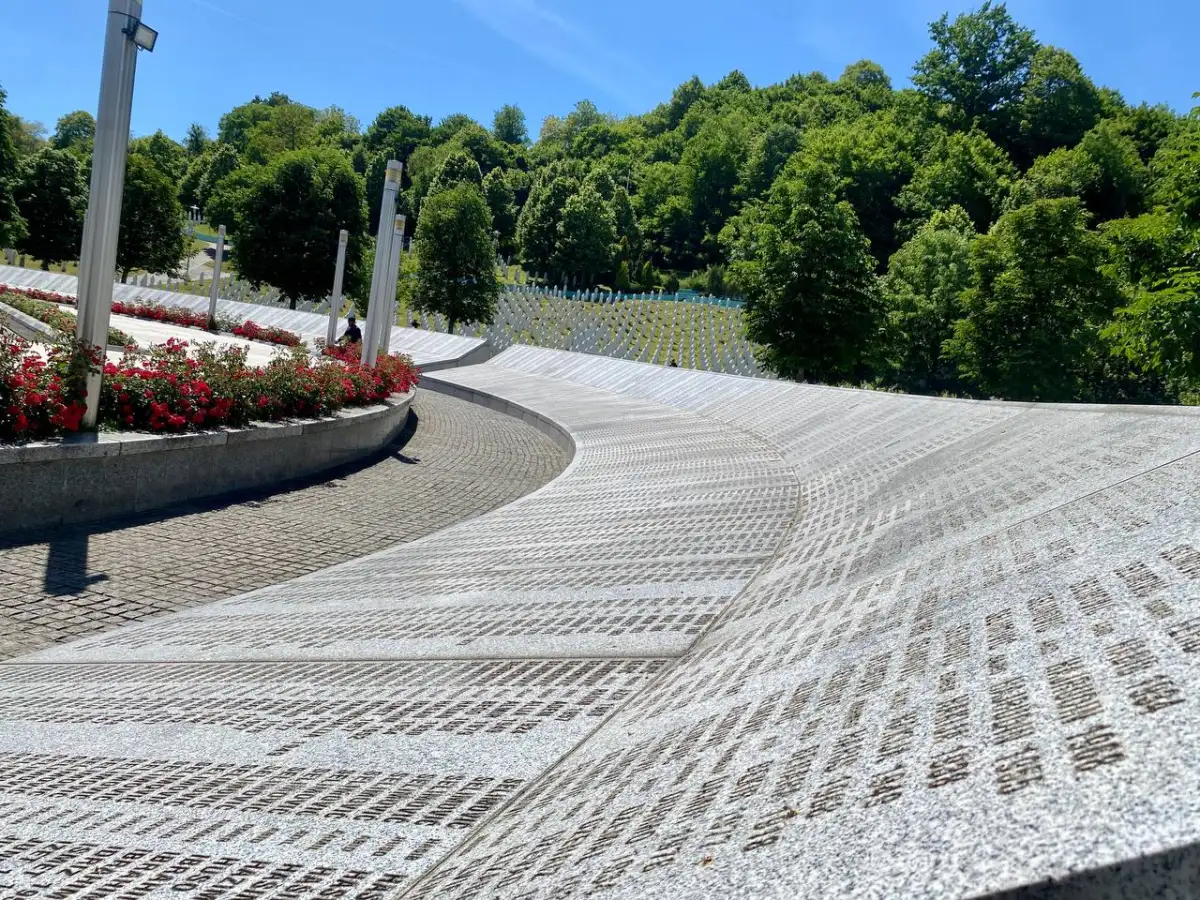
The City Among the Mountains
We entered Srebrenica at around eleven o’clock in the morning. The sky that day was heavy with grey clouds, as though they were mourning garments spread over the city for thirty years and never lifted since. It is a small city, leaning on the mountains of eastern Bosnia in solemn silence, where you do not hear the noise of cities or the clamour of markets, but something else that language can scarcely describe. You hear a silence like the silence of graves after the mourners have gone, when each returns to his house and leaves death alone in the open.
The dense trees surrounding the city stood on the slopes like veteran soldiers on guard, keeping watch over a memory heavy with tears and blood. Looking at those mountains, one might think that the very rocks held the cries of children in their crevices, and that the wind, when it rose in the evening, carried the echoes of that old groaning back into the valley.
Before the war, Srebrenica was a peaceful town that people visited to seek healing in its mineral waters, taking refuge in its mountains in search of rest and serenity. Life went on quietly there, as it does in small villages that know of the world only the fatigue of work and the simplicity of living. Then the hand of man, which is at times crueller than the hand of time, chose to turn that quiet spot into an open wound on the face of history.
Translation note: This article was translated by AI. View the original Telegram post.