Journey to Turkey
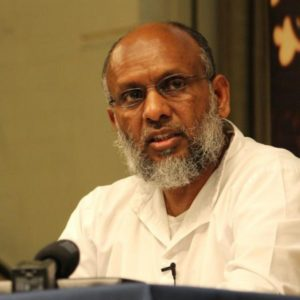

In the morning we convened a sitting to review and discuss the fatāwā. It became an assembly in which juristic reflection met scholarly dialogue, where opinions converged in an atmosphere of seriousness and fairness. Two researchers from the university then approached me seeking an ijāzah in ḥadīth. I recited to them the musalsal ḥadīth of “awwaliyyah” and granted them a general ijāzah, asking God, Exalted is He, to make the knowledge they had received a light in their hearts and to bless them in seeking and acting upon it.
When midday came, at half past twelve we set out on a coach that would take us around the city of Wān. Our guide on this excursion was the esteemed Dr Muṣṭafā Dādāsh, accompanied by his energetic colleagues, the two researchers Muḥammad Fātiḥ and Muḥammad ʿAlī; we were later joined by the researcher Yūnus al-Wānī from Wān University. These gracious gentlemen introduced us to the landmarks of the city, explained the scenes through which we passed, and answered our questions with patience and composure. They were the best of companions on a journey where knowledge blended with tourism and history with contemplation.
I sat in the coach beside the esteemed Dr Akram Keleş, querying him about certain matters concerning the city and its history. He mentioned that this was his first visit, a fact that might arouse surprise: a person may live his whole life in Turkey, hearing reports of a city, yet his eyes do not behold it until much later, only then discovering the distance between what he had learnt from books and what he now sees—a gap bridged only by travel and direct observation.
Wān is a city whose roots plunge deep into history, storing in its soil the relics of successive civilisations, so that its pages resemble an open register in which one may read the news of nations that have passed through here and the dreams of kingdoms that once arose and then folded away. It is one of those cities that does not suffice with presenting its past to the visitor; rather, it arrests him as if to ask: what remains of man after his states have vanished, his banners have changed, and the names of his dominions have been altered?
Lake Wān was what most held our gaze and opened widest before our souls the gates of wonder. It stretched before us to the horizon in an expanse whose farthest limit the eye could scarcely reach. One might imagine he was standing before a sea, not a lake: the shore recedes, the water widens, the horizon dissolves into a blue that returns to the heart a measure of that tranquillity which is neither bought nor borrowed. Volcano-formed mountains surround it, adding majesty and beauty, as though an ancient sentinel had been guarding this water for thousands of years.
This is the largest lake in Turkey and one of the most prominent in the region. It is distinguished by its alkaline waters rich in salts, granting it a special character and preventing most of it from freezing during winter. Scattered upon its surface are islands, pearls cast by nature’s hand into that spacious firmament. It is famed also for the inci kefalī fish, known as “pearl fish,” whose life is bound inextricably to these waters.
We did not look at the lake alone; we looked also at the land, the mountains and the sky encircling it, feeling that nature had gathered here to compose a poem needing no rhyme, with the water taking on the task of a poet, pouring upon the eyes from its beauty what speech cannot express. We marvelled at the city’s elegance and the splendour of its vista, recalling the proverb current among people: “In this world Wān, and in the Hereafter īmān.” This saying couples the name of the city, with all the admiration it evokes, to the faith toward which souls aspire in the Abode to come.
Passing by Wān University, the sight of it stirred within me the memory of a number of scholars and muḥaddithūn who were ascribed to this city, each of whom was called al-Wānī. Among them were ʿAlī ibn ʿUmar ibn Abī Bakr al-Wānī; the shaykh, muḥaddith and Ṣūfī Nūr al-Dīn Abū ʼl-Ḥasan; al-Amīn Muḥammad ibn Ibrāhīm al-Wānī, who compiled forty aḥādīth of Imām Ibn Taymiyyah; his son ʿAbd Allāh ibn Muḥammad ibn Ibrāhīm ibn Muḥammad, the eminent imām, jurist, muḥaddith and scholar Sharaf al-Dīn Abū Muḥammad al-Wānī al-Dimashqī; likewise the Ḥanafī jurist Muḥammad ibn Muṣṭafā al-Wānī, and others whose names and works the biographical dictionaries have preserved.
While speaking of the circumstances of the city’s people in former times, we were told that religiosity had a strong presence in their lives, to the point that some would refrain from listing the names of daughters in official censuses, content with recording only the sons, disliking that women’s names be mentioned before non-maḥram men. This led me to ponder the effect of social customs when they intertwine with people’s religious perceptions, and how societies differ in their expressions of modesty and safeguarding of privacy, even while they share veneration for the values they deem worthy of preservation.
We next alighted at the Wān Cats Centre, a place dedicated to protecting that rare breed for which the city is renowned, such that one cannot complete speech about Wān without mentioning it. We witnessed marvels of these cats that stirred our wonder and brought to the journey a measure of familiarity and cheer. They are cats with snow-white fur, as though ice had taken living form, and many of them have eyes of differing colours—one blue, the other green or honey-coloured—so that the observer might fancy in each eye an independent world, as if nature desired to gather within a small creature two hues of its secrets.
What drew our attention was the report that these cats love to swim, a trait unusual among most felines and now part of their fame. We saw a cat whose right eye differed markedly from its left, a sight that invited astonishment, though such heterochromia does not mean the eye changes colour from time to time; rather, it is an inborn characteristic of some of these cats.
Perhaps when a human stands before such creatures he realises that beauty is not a single form repeated in existents; it is an unending diversity, and that nature still conceals in its recesses what surprises the eyes and awakens the minds. This centre testifies that caring for rare creatures is not merely the preservation of a distinctive strain; it is also the safeguarding of part of a place’s memory and identity.
We then made for Ḥūr Ḥūr Mosque, where Shaykh Badiʿ al-Zamān Saʿīd al-Nūrsī studied for several years of his life. Entering it, we beheld its ancient structure and its madrasa, and sensed something of that awe which lingers in places that have witnessed gatherings of knowledge and worship. Though the walls are silent, they carry in their stillness the impression of those who passed by, just as old pages retain the scent of the eras in which they were written.
The mosque has a section set aside for women, and in its simplicity the place seemed nearer to the image of the old madāris in which learning was closely bound to the daily life—no ostentation in construction, no separation between worship and study, only walls sheltering worshippers and students, and a roof uniting them upon a single purpose.
Upon the mountain overlooking the mosque there is a cave where it is said Shaykh al-Nūrsī used to dwell. We ascended in our minds before our eyes to that spot, imagining a man who chose retreat, not so much fleeing from people as preparing to confront them with what he believed to be the truth. Caves, in the history of ascetics and scholars, have a particular significance: places where the clamour of the world recedes so that a person may hear his own voice and review his thoughts in a solitude interrupted only by the silence of nature.
At the foot of the mountain there is a spring of water from which we drank. It is said that whoever drinks from it will marry someone from the city. We received this tale with a gentle smile: the water is water, while the legend confers upon it something of the people’s imagination and heritage. It is common for locals to weave around springs, mountains and fountains stories that render the place nearer to the heart and longer-lasting in memory.
As for Shaykh Badiʿ al-Zamān Saʿīd al-Nūrsī, he was among the foremost reformers whose name became linked to the city of Wān. He was known for his scholarly and reformative project, including the idea of Madrasat al-Zahrā, which he wished to unite the religious sciences with the modern sciences and to make a beacon of learning in the East. This idea was bound to the hope that education would raise the community and that the divergence between branches of knowledge might be overcome, so long as their aim was the service of humankind and the rectification of society.
How often do scholars leave in cities traces that cannot be measured by stones alone! The mosque may remain standing, a school may crumble, the mountain’s features may alter, yet a thought planted by a sincere scholar can stay alive after him, passing from generation to generation, like a hidden river whose flow does not cease even though its sources are unseen.
As we walked, Shaykh Khālid Ḥanafī said to me: in Egypt there is a television programme entitled “Qul walā taqul” concerned with correcting common linguistic and customary errors. He mentioned that during the days of President Ḥusnī Mubārak the phrase “alf mabrūk” was corrected on the programme: one should say “alf mubārak” and not “alf mabrūk,” because the word “mabrūk” is incorrect in that context. Some shuyūkh commented: “A mistake in language is better than a mistake in creed.”
Thus the journey carried us from one scene to another, from a discourse on history to a linguistic anecdote, from contemplation of nature to a discussion of thought, as though the city had gathered for us in a single day multiple images of life, united only by the fact that it is man who grants them their meaning through his knowledge, his memory and the questions that looking and reflection stir within him.
We then visited the mosque and mausoleum of Khusraw Pāshā, one of the Ottoman monuments attesting to the care taken in those lands for symmetry and beauty of composition. The mosque is linked to an architectural complex comprising religious and educational facilities, reflecting the Ottomans’ keenness that worship and learning be adjacent and that architecture serve the needs of both spirit and intellect. The design is attributed to the celebrated Ottoman architect Miʿmār Sinān, who left throughout the Ottoman realm works indicating a genius in organising space, erecting domes and arranging stone masses in a form that combines strength and delicacy. The mosque was constructed in the sixteenth century CE, its building dated about 1567, at a time when Ottoman architecture had reached an advanced stage of artistic maturity.
We passed by the city wall, one of the witnesses reminding the visitor that cities were not always the open spaces we know today; rather, they were fortresses protecting their inhabitants and separating them from whatever might threaten their security. The wall occupies a singular place in the memory of cities: it is a boundary between the inside and the outside, yet at the same time a testimony to the fears people endured and the efforts they expended to safeguard their lives.
After that we climbed the mountain, where the fortress awaited us at its summit like a stone crown history had placed upon the city’s head. There we saw the Mosque of Sulaymān Khān, associated with Sulṭān Sulaymān al-Qānūnī, and then we proceeded to the old Fortress of Wān, that edifice perched upon a great rock overlooking the lake and the wide land surrounding it.
This fortress is among the foremost remains of the ancient kingdom of Urartu; the city known as Tušbā was the capital of that kingdom. In its rocks there still remain cuneiform inscriptions dating back to distant ages, bearing the traces of people who lived here centuries before us, who looked upon this very lake, perhaps stood where we stood, yet saw the world with different eyes and were encompassed by concerns and hopes of which nothing remains save what stone has preserved.
How powerful are the places that have witnessed the vicissitudes of time! The rock upon which the fortress stands is still firm, while kingdoms have succeeded one another upon it, tongues have changed, banners have been raised and then lowered. In this scene there lies a lesson needing no teacher: history is not written by the victors alone; it is also written by the traces they leave and the ruins that remain after their voices are extinguished.
During our ascent of the mountain Shaykh Amīn al-Ḥazmī preferred to take a path other than that to which people are accustomed; he left the paved road and began climbing the rugged rocks, his resolve unmoved by the roughness of the way or its hardship. We looked at him and soon followed, as though drawn by the same spirit of adventure, eager to reach the goal by a shorter route, however harder and harsher. We climbed among the stones, feeling for footholds and steadying our steps, until, having overcome the road’s obstacles, we found ourselves having shortened the distance and attained the summit in less time. In this brief adventure there was something of the pleasure of the journey: often a person abandons the prepared path, opening for himself a way amid difficulties, and the very hardship he had thought a barrier becomes a bridge drawing him nearer to his aim.
The height of the fortress allowed us to behold the lake in its finest form, stretching to the horizon, its blue meeting the blue of the sky, encircled by mountains like a frame nature had drawn around a vast painting. The view from the mountain defied description: buildings below diminished, expanses widened, and one felt he was facing a world larger than the details of his day, realising that much of what occupies him in life is but a small dust motes in the vastness of existence.
There, upon the rock, past and present seemed to meet in a single moment: the remains of Urartu telling of an ancient kingdom, the mosque reminding of an Islamic era, the modern city below spreading with its motion and people, and the lake remaining as it is, receiving all these epochs in profound silence, as though the place wished to say that man departs and states change, whereas the earth continues to guard in its depths what the human memory cannot wholly keep.
At half past four we returned to the hotel, our souls filled with diverse images of the city’s scenes. We dined, and at half past six reassembled to resume work. Thus the session returned us from the vastness of the lake to the precision of fatwā, from breadth of horizon to the confines of the juridical question, from the spectacles of history to the responsibility of reflection and ijtihād.
We continued to review certain fatāwā, exchanging views on what required further research and scrutiny, until we reached the final decision at a quarter past nine. This reminded us that scholarly gatherings, however extended their discussions, derive their worth from sincerity of intention, accuracy of examination and cooperation in arriving at that which the evidence reassures.