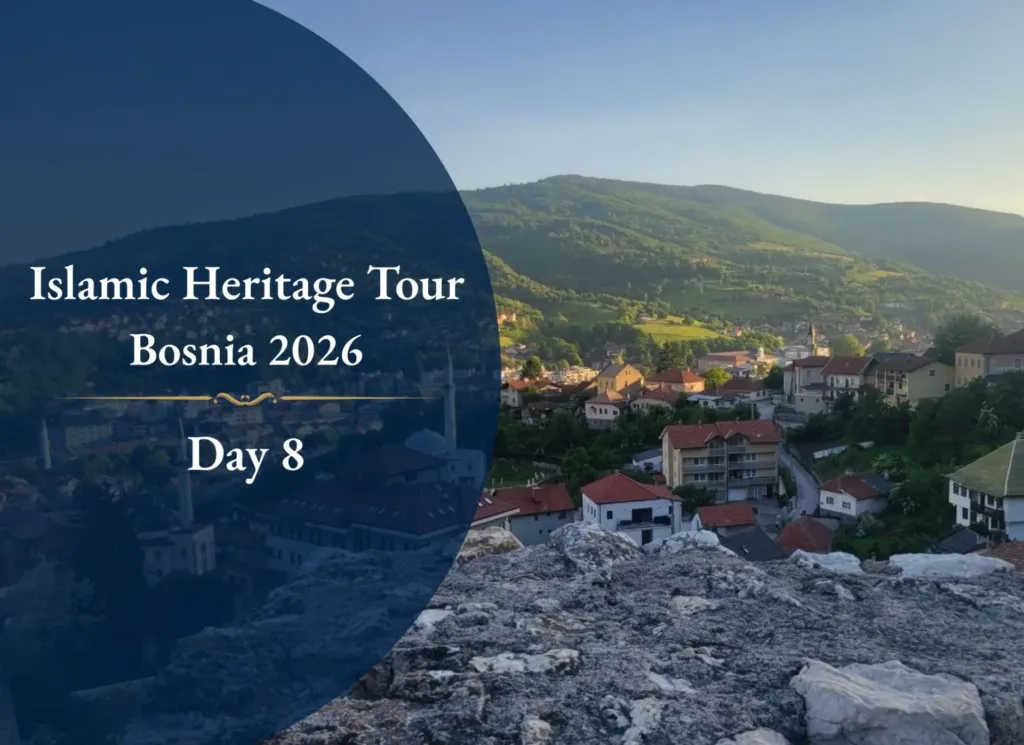
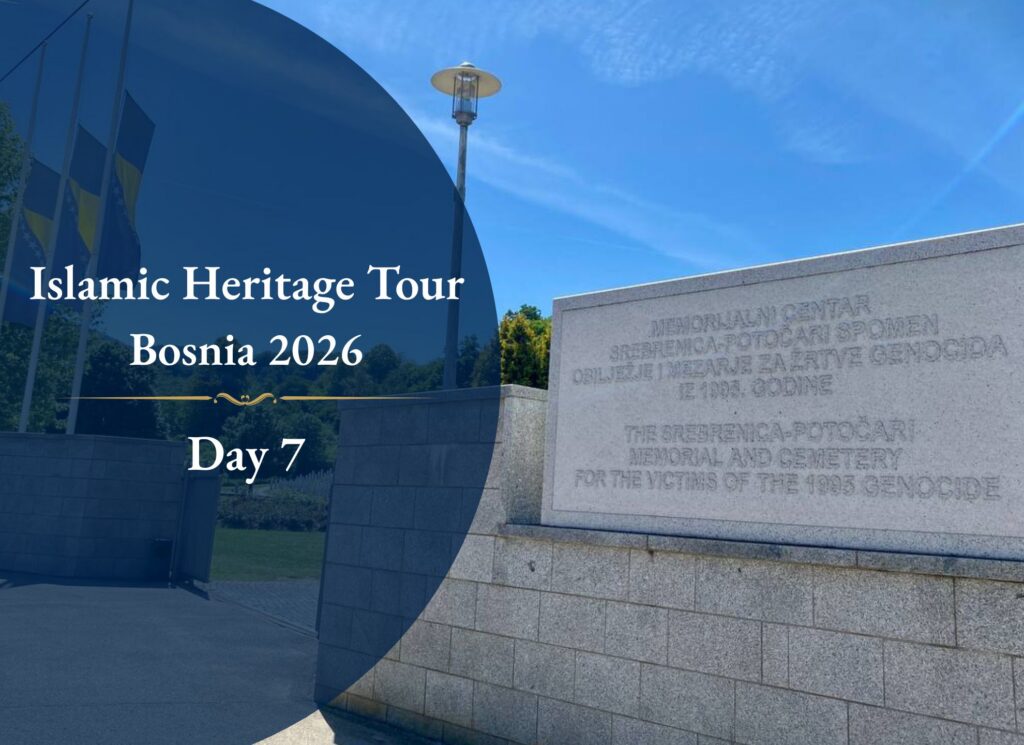
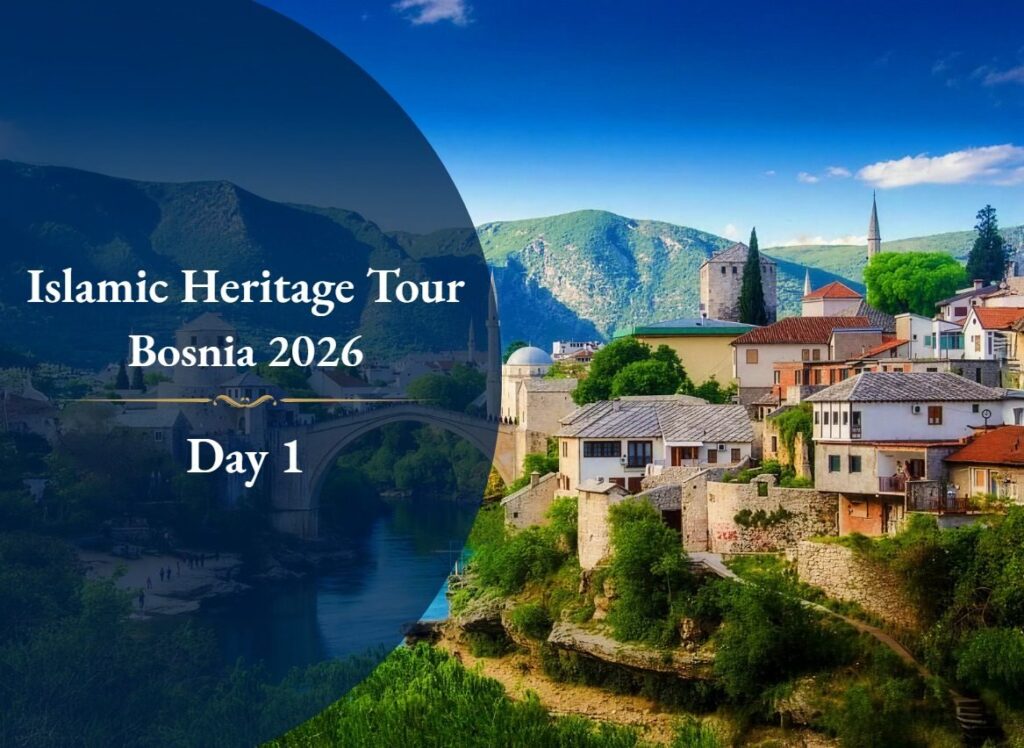
Bosnia Journey 2026 — Day 1
Bismillahir-Rahmanir-Rahim
This is my second journey to Bosnia. I had shared memories of the first journey in six articles, recording what I saw of the country's conditions, the people I met, and the impressions the journey left in me, impressions whose traces remain with me to this day. A person does not return to a place they love without carrying two images at once: an old one stored in memory, and a new one waiting to be discovered. They live between remembrance and anticipation, between what they once knew and what they hope to see afresh.
The Journey from Oxford
We set out from Oxford at one of the quiet hours of the night, when the darkness grows thin and the dawn begins to breathe gently. It was a quarter to three in the morning. My wife was with me, along with my two daughters Aisha and Hala, and Hala's children Amani, Usama and Maryam. We had prayed Fajr before leaving, and then took to the road in a stillness that resembled devotion, as though the whole city were sunk in a deep sleep it did not wish to wake from.
Oxford was strangely quiet at that hour. One could hear nothing but the footfall of a passer-by, or a car driving past and then melting into the distance. It was as if this ancient city cared neither for those who left it nor for those who returned, for it is older than all its people and more lasting than their fleeting journeys.
We boarded a large car that carried us all together, and it set off, cutting through the long road to Luton Airport. The road stretched ahead in a monotonous quiet, flanked by dark trees that looked, in that dim light, like silent ghosts. Above us lay a still grey sky, neither bright enough to lift the heart nor rainy enough to sadden it, but that typically English sky of mild weather that calls the soul to quiet reflection and stirs a vague sense of estrangement.
We reached Luton Airport at four o'clock, where my daughter Fatima joined us with her husband, Dr Imran Naveed, and their young daughter Aisha. Then my daughter Sumayya arrived with her children Asim, Asia and Ibrahim, together with her husband Abu'l-Farhan and a group of students from the Al-Salam Institute.
We found crowds we had not expected. The airport was small and limited in space, yet it was teeming with people, as though the whole world had gathered there. Perhaps the school holiday that had just begun had pushed families and students to travel, for faces and languages mingled, children's voices rose, and long lines stretched before the check-in counters and the security gates. We waited for hours in a queue that moved slowly. Fatigue began to show on the children's faces, but the joy of travel was stronger than their tiredness, and they stayed cheerful and excited.
We took the plane from Luton to Sarajevo by way of Istanbul, with a stop of about an hour at the airport there. The Istanbul airport is one of the largest I have seen, and its architecture is striking, but I will not dwell on describing it. The traveller's soul does not rest on these stones or in this grandeur, but in the city to which he is going. I sat in the waiting area in silence and prayer, and what occupied me most was that God would grant me and my companions a successful journey and bring us safely to our destination.
Arrival in Sarajevo
The plane landed in Sarajevo at about half past three in the afternoon. Abu'l-Farhan's relatives and friends received us at the airport. They had prepared accommodation for us in a comfortable hotel near the centre of Sarajevo, with spacious rooms and a panoramic view of the city. We settled in after the long journey, and our tiredness began to dissolve in the warmth of the welcome and the beauty of the place.
After a short rest, we went down to dinner together, for we were many this time, more than thirty people between women and men. The conversation at the table was rich and warm. Each of us asked after the other's news, and memories of the previous journey began to surface among us, memories that gave this new arrival a sense of continuity with all that had passed.
After dinner, we held our first meeting in the hotel conference room at half past eight, following the Maghrib prayer. The Al-Salam Institute had brought a large number of students from different countries: from Britain, Europe, America, Canada and Australia. They all attended, eager for a journey of knowledge and acquaintance as much as a journey of place. The gathering was intimate yet radiant, the faces warm with welcome and the hearts ready to listen and to learn.
I welcomed them, introduced myself, and then gave them a brief introduction to Sarajevo as a starting point for what we would share in the coming days. I told them that Sarajevo is not merely a city on a map but the memory of a civilisation that once extended across these mountains and valleys, and that the Bosnian Muslim has lived through centuries of hardship and hope, through two great world wars, and through the most recent catastrophe that devastated this country and left wounds in its body and soul that have not healed to this day.
I told them, too, that God had blessed this country with a rare religious and historical diversity. The Bosniaks are Muslims, the Serbs are mostly Orthodox, and the Croats are mostly Catholic, and there is in addition a Jewish community of long standing. They have lived alongside one another through long centuries, at times in harmony and at times in severe tension, until the war came and tore the country apart, leaving behind thousands of martyrs, displaced people, prisoners and orphaned families. The war ended with the Dayton Accords in 1995, which divided the country into two entities: the Federation of Bosnia and Herzegovina, and Republika Srpska, each with its own government. Yet the wounds of war are still visible in every corner of this country, in the abandoned houses, in the war cemeteries, in the ruins that overlook the streets, and in the scars that mark the walls and the faces of the people.
I concluded my talk by saying that this journey is not tourism alone, but a journey of knowledge and acquaintance, a journey of standing with people who deserve support and a voice to carry their cause to the world. The meeting ended at about half past ten at night, with fatigue plain on every face after a long day that had begun before dawn and only now was drawing to a close. We returned to our rooms quietly, each of us carrying a thought and a reflection, and then we surrendered to rest, preparing for a new day of this journey.
Translation note: This article was translated by AI. View the original Telegram post.