Turkey Journey: Economic and Legal Discussions
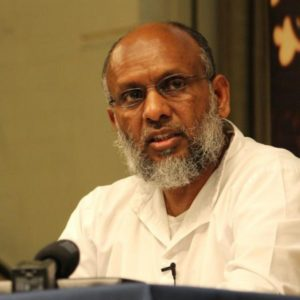

The first morning session convened at nine o’clock, during which papers were presented that addressed a range of economic and juridical issues imposed by the transformations of the age, revealing the need of Islamic thought for a renewed examination of the problems of contemporary life in the light of the principles and objectives of the Sharīʿah. Among the papers delivered were that of Dr Ṣuhayb Ḥasan, entitled “The Islamic Economic System and the Problem of Inflation and Its Effects”; Dr Jāsir ʿAwdah’s paper, “Conceiving the Present Capitalist System as a Ribā-Based System”; and Dr ʿAlī al-Qaraḍāghī’s paper, “The Rulings on Bayʿ al-Ājāl in Islamic Fiqh and the Effect of the Deferment in Its Classification.” I then presented my own study entitled “Constructive Possession (al-Qabḍ al-Ḥukmī) in Digital Financial Transactions.”
The second morning session, which I chaired, followed thereafter, and further papers were read concerning currency, gold and emerging financial transactions. Dr Muṣṭafā Dādāsh presented a paper entitled “The Widespread Hardship in Dealing with Banknotes to Avert Embarrassment and the Accusation of Sinning Muslims.” Shaykh Amīn ʿAlī al-Ḥazmī delivered “Buying and Selling Gold over the Internet: Conditions of Possession and the Rulings on Contemporary Patterns, with an Applied Study on Gold-Backed Digital Tokens.” Dr ʿAlī Muḥyiddīn al-Qaraḍāghī offered “The Rulings on Dealing in Gold and Silver and Their Contemporary Applications: A Juristic-Economic Study that Includes Several New, Applicable Products.” Shaykh Akram Kulish presented “The Juristic Problems Arising from the Decline in the Value of Money in Deferred Debts: The Main Trends in Turkey.”
Despite the diversity of their subjects, these papers shared a manifest concern for the questions raised by the new economic reality and for the ijtihād required to link the principles of fiqh with the facts of transactions, neither halting at their surfaces nor neglecting their subtleties and consequences.
At five o’clock we entered the restaurant for a meal; the organisers had combined lunch and dinner into a single sitting. I approved of this arrangement, for an excess of food weighs the body down, breeds idleness and distracts a person from mental clarity and intellectual vigour.
One pleasant surprise of that gathering was finding Shaykh ʿAlī al-Qaraḍāghī seated on my right. An academic conversation ensued between us, during which he mentioned that he had read some of what I had translated for him in certain of my works. We also spoke about Shaykh Khālid al-Kurdī al-Naqshbandī; he remarked that Shaykh Khālid had read some books to one of his forefathers before departing for India. This exchange was of real interest, for it shows how the chains of knowledge connect one to another, and how learning passes between scholars and generations, leaving its imprint present even when places are distant and times successive.
The evening session then convened, in which various papers were presented. The first was by Shaykh Murād Suleymanov, the Muftī of Ukraine, entitled “The Obligation of Witnessing at the Time of Divorce.” During the meeting he asked me about the ḥadīth concerning the Prophet’s ﷺ momentary thought of taking his own life; I directed him to an article I had written on the matter, which he read, admired and accepted its conclusion. He then spoke about the phenomenon of divorce in Ukraine, describing it in a manner that indicates a specificity deserving study; I concur with him regarding the requirement of witnessing at divorce, having written an article on it years ago.
Also presented in the session was Dr Ḥafīẓah Rabīʿ’s paper, “The Ruling on Stipulating Family Arbitration before Considering Petitions for Khulʿ and Ṭalāq in Islamic Centres and Sharīʿah Councils in Europe”; Ms Nadā’s paper on “Monetary Inflation”; and Dr Jāsir ʿAwdah’s paper, “Questions Western Muslims Pose on the Fiqh of Inheritance and Bequests.”
Thus the themes of the day ranged over economics, currency and gold, the rulings of sales, family and divorce issues, and matters of inheritance and wills. This diversity testifies to the widening circle of questions that confront Islamic fiqh in the present age, and to the fact that ijtihād can no longer content itself with considering inherited issues in their old forms; it must rather penetrate to the realities of new occurrences, distinguishing between what changes with time and place and what remains constant, unaffected by changing circumstances.
My own paper in these sessions was connected to a matter that may at first appear one of modern technology, yet in truth it is an old, ever-renewed juristic question: when is wealth considered to be in one’s possession if it has not passed through the hand, nor come within the sight, but has moved from account to account and its transfer appears merely as a numeral on a small screen?
I concluded that possession (al-qabḍ) in Islamic fiqh was never restricted to taking by the hand; rather, it revolves around the realisation of ḥiyāzah and the enabling of disposal, according to the nature of the asset, the contract and prevailing custom. Hence Islamic fiqh is capable of accommodating the forms of modern banking transactions without abandoning its principles or confusing changes of means with changes of rulings.
The International Islamic Fiqh Academy has resolved that a bank entry constitutes a form of constructive possession when the amount settles in the beneficiary’s account and he is able to dispose of it. The mere appearance of a digit in a banking application, or the arrival of a notification that a transfer has commenced, is insufficient to establish possession; not everything that appears on a screen is a settled financial reality, nor has every so-called transfer fully taken effect.
The importance of this distinction is accentuated in currency exchange and gold transactions; in ṣarf the requisite mutual possession stipulated by the Sharīʿah must be verified, and a suspended entry or an unsettled entitlement does not suffice. As for gold traded through digital platforms, it is not enough for the purchaser merely to see a balance indicating the grams he owns; it is imperative to ascertain the existence of the gold, the validity of its ownership and the enabling of the owner to dispose of and take delivery of it in accordance with the established Sharīʿah regulations.
In essence, constructive possession is not a loophole to evade the condition of qabḍ; rather, it is an acknowledgement that this condition has been fulfilled by another means whenever its reality and effects are realised. Therefore, ijtihād in these matters can only stand upright when it unites fiqh with its principles and maxims and a precise knowledge of what occurs within banking systems by way of transfers, settlements, entries and empowerment.
Perhaps the most significant conclusion I reached is that technology does not generate a Sharīʿah ruling merely by its speed, just as the absence of physical possession does not negate the establishment of possession in law. The criterion lies in the reality behind the image, the right behind the numeral, and the enabling behind the entry.
Herein appears one of the aspects of the breadth and flexibility of Islamic fiqh: it neither freezes upon the means familiar to earlier generations nor recklessly follows everything invented in later times. Rather, it weighs the new in the scales of the Sharīʿah, accepting from it what accords with its principles and rejecting what contradicts its rulings. Forms change and means are renewed, yet the realities to which rulings attach must be verified; for not every apparent transfer is an actual transfer, nor every seeming ownership genuine ownership, nor every account entry possession.
In this sense, research into digital possession is not merely an investigation into technology; it is an inquiry into the capacity of fiqh to penetrate from the outward aspect of things to their inner realities, and to preserve its constants without converting them into shackles incapable of embracing a life that is perpetually renewed.