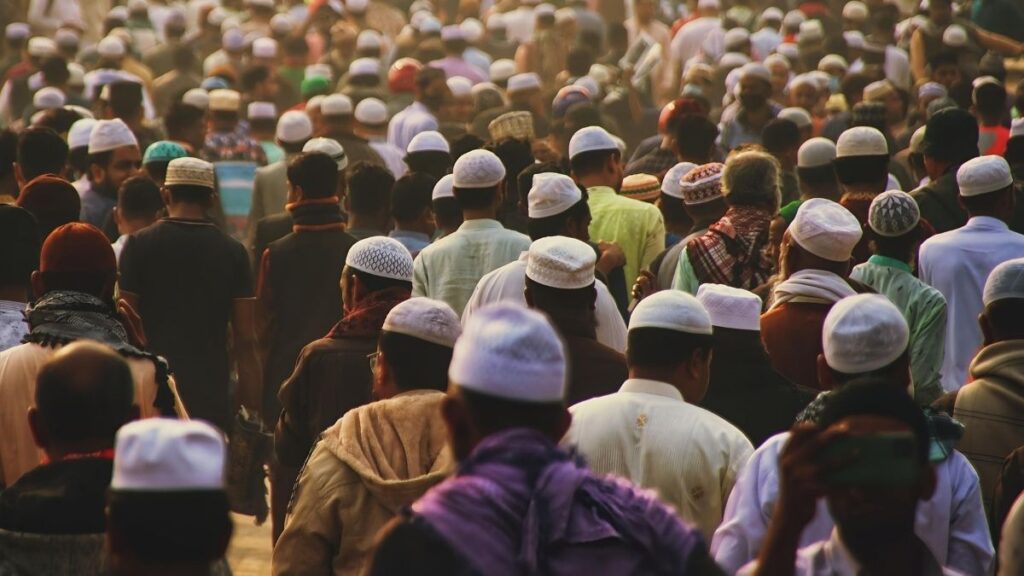
Tablīghī Jamāʿat deserves our appreciation

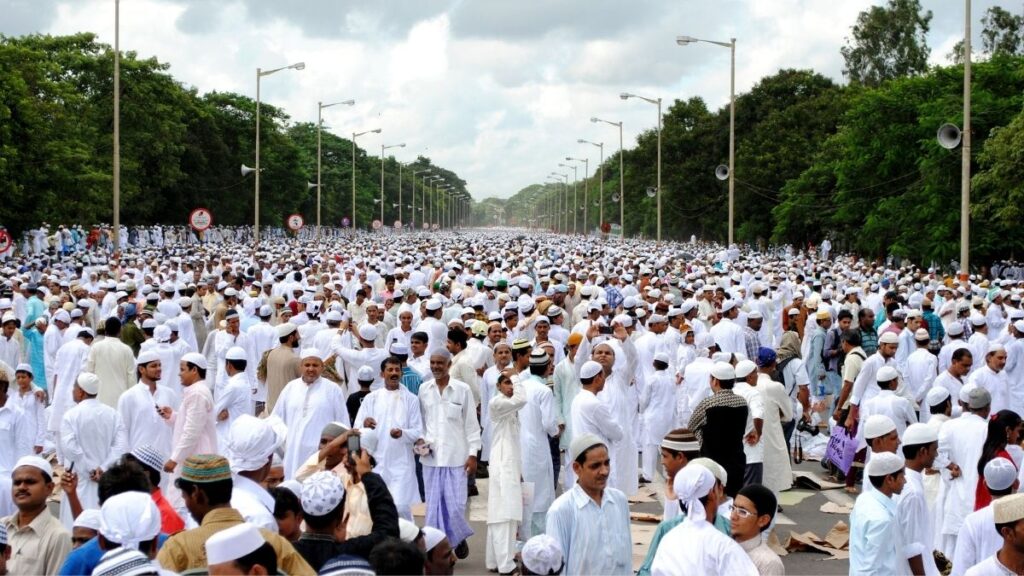
In the history of Islam, Tablīghī Jamāʿat occupies a luminous and effective chapter that bears witness to sincerity, simplicity, and a deep connection with Allah. This movement is neither a battleground for jurisprudential disputes, nor a platform for political or ideological clashes. It is a quiet, selfless, and non-representational movement that came into existence to awaken the warmth of īmān and love for dīn in the hearts of ordinary Muslims. It carried the message of Islam to people who had long been immersed in heedlessness, inaction, and material indulgence. When the subcontinent—once fragrant with the gardens of knowledge and spiritual insight—began to wither in spiritual dryness, it was the Tablīghī Jamāʿat that turned its attention to those very alleys, neighbourhoods, and towns where mosques were deserted, prayer rows empty, and hearts bereft of the remembrance of Allah.
The essence of Tablīghī Jamāʿat’s daʿwah is that dīn is not to be revived through academic polemics or intellectual disputation alone, but through action, character, and sincerity. It speaks less with the tongue and more through states. It is a way of being—one that leaves the marks of prostration on the floor of the masjid, inspires awe of God in the hearts, and manifests a conduct that rises above the glitter of the world. This is the true splendour of their daʿwah.
Even if someone holds reservations about a particular statement or mode of the Jamāʿat, such disagreements should never cross the bounds of justice and fairness. Divergence of opinion does not imply insult or mockery. Rather, it should be an opportunity to engage with depth of understanding and magnanimity of heart.
The movement of Mawlānā Muḥammad Ilyās Kāndhlawī (raḥimahu Llāh) was not the result of a temporary reaction or a strategic group policy. It was a spiritual inspiration—an inner anguish stirred by the condition of the ummah. He resolved to carry the dīn into the hearts of the masses—without grandeur, without propaganda. The impact of his call was so profound and lasting that it seemed to pierce through centuries of neglect in an instant. He taught us that when the light of action, the fragrance of dhikr, and the strength of simplicity come together, even the densest darkness is dispelled.
In my own life, the effect of this daʿwah was nothing short of a spiritual revolution. From my days as a student at Dār al-ʿUlūm Nadwat al-ʿUlamāʾ to my academic journey in a place like Oxford, I witnessed many dimensions of knowledge. Yet whenever I joined the caravans of this daʿwah, I felt the doors of the heart open toward another realm. Knowledge was found in the realm of proofs, but tranquillity was found in the realm of remembrance. The majestic buildings of Oxford, its intellectual gatherings, and scholarly circles all had their place. But the sweetness I tasted while sitting in a village masjid beside a simple worshipper, remembering Allah, could not be found in any academic institution.
The brothers of the Tablīghī Jamāʿat were, to me, like angels—neither seekers of worldly gain nor desirous of fame. Their hearts were alive with the remembrance of Allah, their tongues marked by humility, their faces radiant with sincerity. Travelling with them—sometimes in old buses, sometimes in crowded train compartments, and sometimes on foot through narrow lanes—we would gently invite people, introducing them to the essentials of dīn: īmān, ṣalāh, ṭahārah, and akhlāq. We had no fear of opposition, no worry about outcomes. For us, true success lay in lighting even a single heart with the remembrance of Allah.
Those moments are still etched deep within my soul—when the silence of the masjid would be filled with dhikr and duʿāʾ from dawn until sunrise, and one would feel a new world being established within. In such seclusion, a pain and tenderness would emerge that even a thousand pages of learning could not produce.
I witnessed men drowning in sin returning in repentance, turning to righteousness—and the transformation was such that its effects were visible in their faces, audible in their speech.
Upon returning, I found myself able not only to teach people sūrahs of the Qurʾān, the adhkār of ṣalāh, the rulings of wuḍūʾ and the sunnahs, but also to instil in their hearts love for this message of truth. This daʿwah taught me that dīn is not merely a matter of intellectual reasoning or legal intricacies—it is a way of life that softens the heart, brings tears to the eyes, and elevates the soul. The methodology of Tablīghī Jamāʿat has always been unifying. It honours the ʿulamāʾ, and never makes doctrinal differences a basis for hatred. For them, the true criterion is sincerity and intention—and that is a matter known only to Allah.
From my own observations, I learned that to confine the teachings of dīn to academic discussion or textual debate is to imprison its spirit. Dīn comes alive when it settles in the hearts—and only what is simple, pure, and practical can penetrate the heart. This daʿwah taught me that the reform of the ummah does not depend on entangling ourselves in the complexities of philosophy or the rigidity of political ideologies. Rather, what is needed is self-reflection, purification of the nafs, and making sincere goodwill towards others our principle.
Today, when I remember those days, a strange yearning rises in my heart—a nameless thirst, a voice from deep within the soul—declaring how pure those days were, how radiant those nights, how blessed those moments. The heart longs to return to that path again, to sit once more on the mats of a masjid and engage in the remembrance of Allah, to live again in that same sincerity, simplicity, and purity.
This daʿwah taught me that dīn is not merely knowledge—it is a living, breathing reality, illuminated by action and fragrant with character. And this is the lesson which, if we truly internalise, can lift the ummah once more to spiritual heights.
Original source: