Gustave Le Bon and Religious Movements in India

Biography and SeerahCommunity and Society
Placeholder Image

Gustave Le Bon, the Psychology of the Crowd, and the Religious Movements of the Indian Subcontinent: A Critical Study

11/6/2026

While examining the contemporary religious movements of the Subcontinent, the question repeatedly presents itself: how did these movements succeed in attaining, at the popular level, an extraordinary degree of stability, expansion and influence? The question is important, for the popularity of any religious movement cannot be comprehended solely on the basis of its juristic argumentation, theological discussions or scholarly resources. History bears ample witness that certain intellectually intricate and academically robust ideas have remained confined to a limited elite, whereas notions comparatively simple or weaker in scholarly foundation have managed to achieve astonishing popularity among wide circles of the laity. From this it becomes evident that popular acceptance and intellectual soundness are two distinct phenomena that cannot always be mapped one upon the other.

An initial survey suggests that many religious movements in the Subcontinent have been notably successful in organising public emotions, religious affiliations and collective identities. The notions of akābir, madhhab, mashrab, taqlīd, riwāyah and religious heritage are not merely technical terms or historical references; they are also potent symbols of collective consciousness. These symbols connect individuals with a broader spiritual and historical community, instil within them a pride of affiliation, nurture a sense of belonging, and endow them with the feeling of being custodians of a particular intellectual tradition. Moreover, various religious movements have sought to reinforce their collective identities through a diversity of means—polemic literature, doctrinal and juristic disputations, refutational writings and the delineation of intellectual boundaries. The outcome is not merely the formation of a set of dogmas; rather, it is the emergence of a psychological and social sphere that consolidates loyalty, distinctiveness and group consciousness among its members.

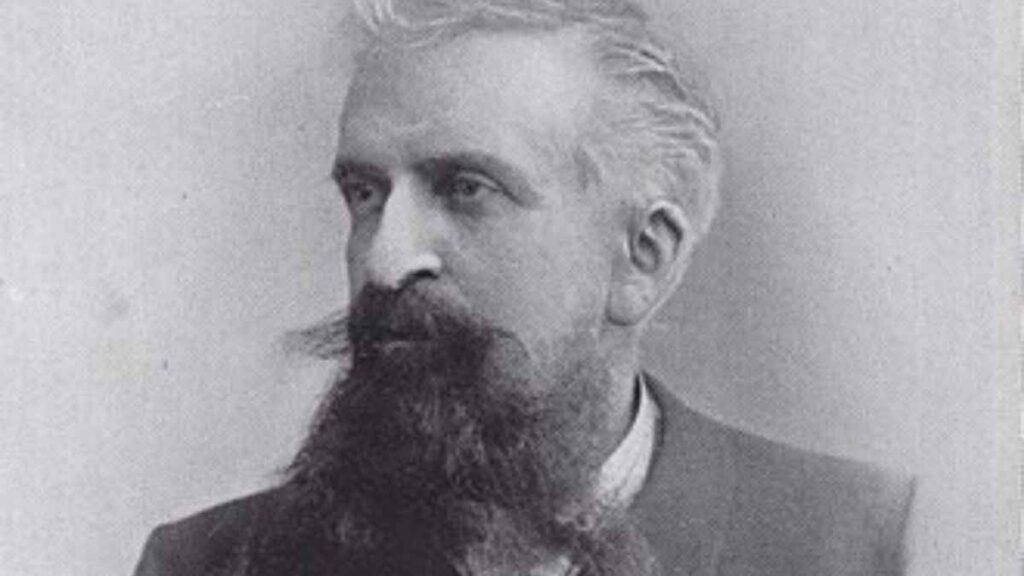
In this very context, I perused the essay of Mawlānā Tawqīr Aḥmad Nadwī, “On the Desk of Mawlānā ʿAbd al-Salām Nadwī in the Monthly al-Nadwah (The Logical Definition of the Jamaʿat, i.e., the True Meaning of al-Jumhūr and al-Sawād al-Aʿẓam).” In that piece there is an indication that Mawlānā ʿAbd al-Salām Nadwī had considered certain discussions of Gustave Le Bon’s renowned work, The Crowd: A Study of the Popular Mind, to be worthy of attention for an understanding of the concepts “jamaʿat”, “jumhūr” and “al-sawād al-aʿẓam”. That indication prompted further examination, and thus an opportunity arose to review the book. Although it was written at the close of the nineteenth century and many of its conclusions are disputed by modern social psychology, nevertheless the foundational questions it raises remain of unusual significance for the study of religious, political and social movements today.

Gustave Le Bon’s The Crowd: A Study of the Popular Mind is counted among the classical and influential works of modern social psychology. The central question of the book is: when an individual becomes part of a crowd, what change occurs in his psychology, and what are the factors that transform an aggregate of individuals into such a collective force as possesses the capacity to exert profound effects upon social and historical processes? According to Le Bon, in order to understand the modern world it is more necessary to study the psychology of the crowd than that of the individual, because in the modern age the centre of political and social power has shifted from limited aristocratic classes to public gatherings.

The point of departure for Le Bon’s thought is the conception that a crowd is not merely a physical congregation of persons. If thousands of individuals were to assemble in one place yet each acted according to his own independent thought and will, that would be no more than a gathering, not, in the true sense, a crowd. A crowd comes into existence when the distinct personalities of individuals merge in a shared mental state and they begin to think and act under the sway of a single emotion, a single belief or a single impulse. At this stage a new psychological unity arises, which Le Bon terms the “collective mind”.

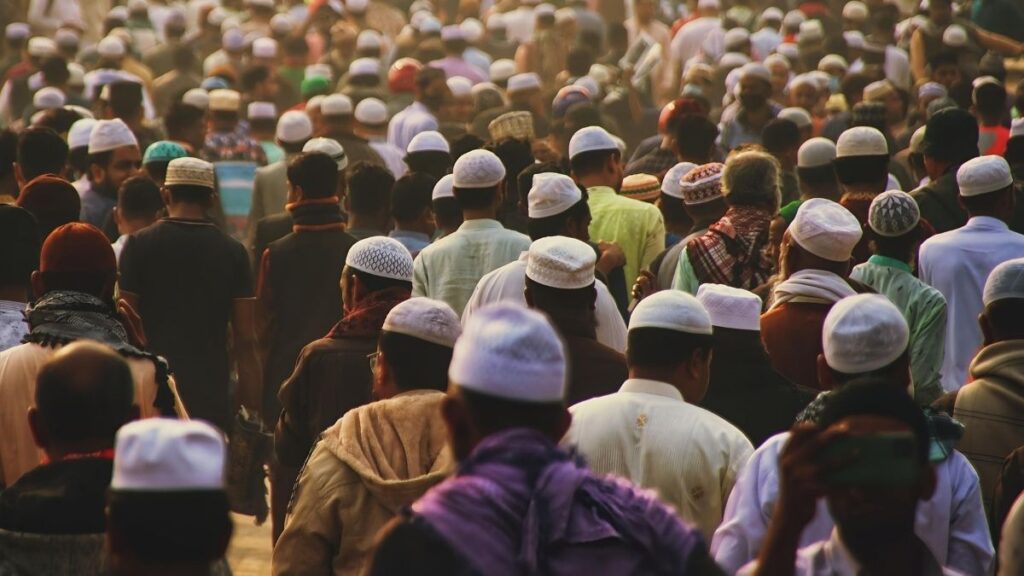
Viewed in the light of this theory, the strength of many religious movements in the Subcontinent appears to reside not only in their organisational structures or scholarly literature, but also in the formation of that collective mind which is generated through shared religious symbols, historical memories and communal affiliations. When the adherents of a movement begin to regard themselves as part of a broader religious community, their individual identity starts to dissolve into a larger collective identity.

Disclaimer: This article was translated by AI. Original post: https://t.me/DrAkramNadwi/9411
, , , ,

The Psychology of Crowds and Religious Movements

According to Le Bon, the first conspicuous feature of the collective mind is a temporary eclipse of certain dimensions of the individual personality. By entering the crowd a person forfeits part of his individuality and of his sense of personal responsibility. Because his deeds are lost among the actions of thousands of others, his awareness of accountability can diminish, and he may commit acts from which, in isolation, he would normally refrain. For Le Bon, this explains why, at times, educated, refined and cautious individuals, once absorbed into a crowd, display conduct that does not accord with their usual character.

Le Bon then analyses the emotional constitution of the crowd. In his view the crowd acts chiefly under the sway of emotion rather than under the guidance of logical reasoning. When alone, a person can compare different arguments and revise his decisions, but within the collective atmosphere the intensity of feeling restricts that capacity. Thus moderation may be replaced by extremism: love may swell into extraordinary devotion, hatred into intense enmity, hope into unrealistic expectations, and fear into shared panic.

This observation helps us to comprehend certain manifestations in the religious history of the sub-continent. The exceptional veneration surrounding leading figures, the fiercely emotional colouring that sectarian loyalties can sometimes assume, and the harshly negative images fostered regarding rival groups are phenomena that cannot be understood solely through scholarly disagreements; underlying them is the element of emotional attachment and collective identity.

Le Bon regards “psychological contagion” (nafsīyātī sarāyat) as a principal cause of this emotional intensity. Emotions and ideas, he argues, spread through a crowd in the same manner that infectious diseases pass among individuals. If a few people exhibit zeal, fear or anger, that state can swiftly permeate the entire assembly. In this process people do not accept an idea through conscious reasoning; rather, they are unconsciously influenced by the collective environment.

Within this perspective one may view the importance of rallies, mass gatherings, orations, religious slogans, collective adhkār and shared devotional experiences in the religious movements of the sub-continent. These activities are not merely channels for the transmission of information; they also play a crucial role in forming collective emotions and a common sensibility.

In this context Le Bon assigns fundamental significance to the notion of “suggestibility” (alqāʾ-pazīrī). In his estimation a crowd is, to some extent, comparable to a person under tanwīm-i nafsī (hypnosis). For that reason, intricate scholarly arguments and philosophical refinements seldom prove effective in influencing public assemblies, whereas simple slogans, powerful symbols and repeatedly invoked notions exert far greater impact.

Thus an important aspect of the religious movements of the sub-continent becomes evident. At the popular level a movement’s success often hinges not upon the complexity or strength of its scholarly proofs, but upon its capacity to cast its message in a simple, emotive and symbolic mould. Hence concise slogans, distinctive rituals, renowned personalities and historical references leave a deep imprint upon popular consciousness, while detailed academic discussions usually remain confined to limited circles.

Accordingly Le Bon places special emphasis on the potency of symbols and of the collective imagination. The public mind thinks not in abstract concepts but in symbolic and pictorial forms. Philosophical reasoning and logical analysis do not produce the same effect as a telling symbol, an historical narrative or a resonant slogan. A national flag, religious observances, legendary accounts and revolutionary emblems hold extraordinary importance in collective life precisely because they activate the public imagination and awaken shared emotions.

In the religious movements of the sub-continent, the personalities of the akābir, the madrasahs, khānqāhs, historical events, sectarian dress and appearance, specialised terminologies and sectarian emblems all possess this symbolic force. Their significance lies not merely in their outward existence but in the meanings that followers attach to them.

In Le Bon’s estimation leadership, too, is intimately tied to crowd psychology. Because the collective mind is moved more by conviction and passion than by critical thought, it inclines towards a leader who manifests unshakeable confidence in his vision and presents his message in a simple yet compelling manner.

This reality is also plainly visible in the religious history of the sub-continent. The influence of public figures resides not only in their scholarly attainment but also in the certainty, moral authority and spiritual or social prestige they display before their followers.

Le Bon extends his discussion to the study of civilisations and collective beliefs. Human societies, he argues, are not founded solely upon rational principles; rather, they rest upon shared beliefs, historical memories, traditions and collective representations. Religions, national traditions and civilisational myths provide people with a common consciousness and preserve social cohesion.

This point is especially relevant to the study of the religious tradition of the sub-continent, where religious identity is not merely a set of doctrines but also a repository of historical memory, cultural tradition and collective experience. Accordingly, purely logical critique or scholarly objection often fails to diminish the social influence of those movements that furnish their adherents with a strong spiritual and historical identity.

After its publication Le Bon’s work exerted a profound influence upon politics, sociology, collective psychology and media studies. Modern social psychology, however, has raised fundamental objections to many of his claims. Contemporary approaches, particularly Social Identity Theory, contend that individuals do not, upon entering a crowd, become entirely bereft of reason or individuality; rather, they act in an organised manner under a definite collective identity.

Hence it appears more fruitful to read Le Bon and modern theories in a complementary rather than a confrontational fashion. Le Bon enables us to understand the power of emotions, symbols and the collective imagination, while modern theories clarify that collective behaviour is not always irrational but can also be organised under shared identities and values.

Such a balanced perspective seems most appropriate for the study of the religious movements of the sub-continent. Explaining their success solely through crowd psychology or popular emotionalism would certainly be inadequate, for behind them operate scholarly tradition, religious heritage, social structures, political circumstances and historical experience. Yet it is equally impossible to ignore the roles of collective identity, religious symbols, emotional attachments, leadership influence and the delineation of intellectual boundaries.

Accordingly, it is preferable to regard Le Bon’s thought not as a definitive explanation of the religious movements of the sub-continent but as an interpretive lens. Its chief value lies in the reminder that the power of popular movements resides not only in their doctrinal or scholarly content, but also in their capacity to organise and mobilise the collective imagination, symbols, emotions, historical memories and group affiliations. In this aspect collective psychology becomes indispensable for the study of every major popular movement, including religious ones. The enduring significance of The Crowd therefore consists less in the answers it supplies than in the questions it poses concerning human collective behaviour, mass politics and religious movements.

Dr Muḥammad Akram Nadwī

Disclaimer: This article was translated by AI. Original post: https://t.me/DrAkramNadwi/9412