Bosnia Journey 2026 — Day 4

Bismillahir-Rahmanir-Rahim
To Fast or Accept the Traveller’s Concession?
We had breakfast peacefully at the hotel restaurant, taking our time, but there was still some uncertainty among us. Should we fast on the Day of Arafah, hoping for its great virtue and reward, or should we accept the concession Allah has granted to travellers and not fast? Allah, Glorified and Exalted, says in His clear revelation: "Allah intends for you ease and does not intend for you hardship".
We reflected that the Shariah, in its mercy and understanding, permits travellers to break even an obligatory fast in order to remove hardship. If that is the case, then surely the same allowance applies even more readily to a voluntary fast, particularly while travelling from one city to another, spending long hours on the road and taking part in activities that require considerable energy.
We discussed the matter quietly over breakfast, with the scent of coffee around us and the cool mountain air coming in from outside. It was one of those calm moments in a journey when the traveller finds himself between rest and movement, reflection and anticipation. In the end, we decided not to fast. This was not because we did not value the reward of the day, but because we wished to accept the ease Allah had granted us, trusting that the religion came as a source of mercy, guidance and tranquillity, not as an unnecessary burden.
The Road to Mostar
We left the hotel at nine-thirty in the morning and began our journey towards Mostar. At times the road followed the Neretva river, while at others it passed through small villages and towns. The landscape before us was magnificent. Mountains rose on either side, rivers sparkled beneath the sunlight, and houses were scattered across the slopes like scenes from an old story.
The further we travelled, the more we appreciated how generously this country had been blessed with natural beauty. Trees moved gently in the breeze, valleys stretched into the distance in complete stillness, and clouds drifted above the mountain peaks as though watching over the landscape below.
The road to Mostar had a character of its own. It did not feel like a simple journey from one place to another, but like a passage through the heart of nature. The views delighted the eyes and encouraged quiet reflection. At times, it seemed as though the world had put aside its noise and hurry, leaving the traveller with a rare space in which to breathe and think.
The Beauty of the Neretva
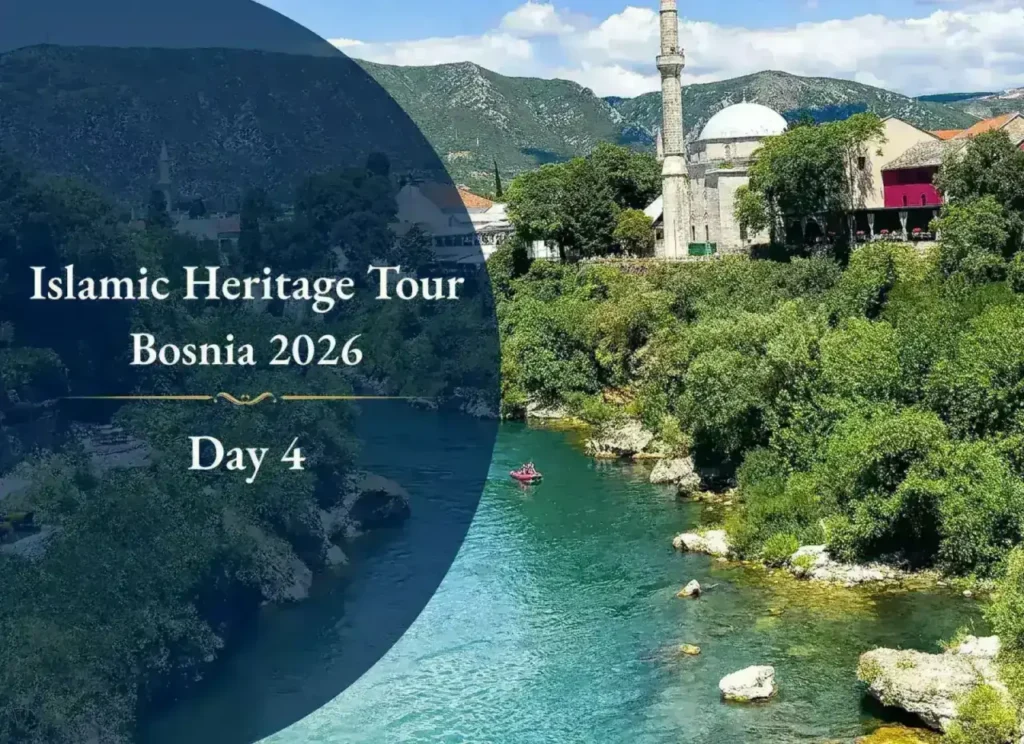
Shortly after passing Konjic, we reached one of the most beautiful places we had seen in Bosnia. Here, the water met the mountains, and stillness met grandeur. The Neretva appeared as though it had emerged from hidden gardens untouched by human hands.
The area, near Jablanica, was surrounded by mountains on every side, with valleys and springs running between them. There were also unusual karst rock formations, shaped gradually by nature over many centuries until they looked almost like the work of an artist patiently carving the landscape.
The water of the Neretva was so clear that we could see the stones beneath the surface. At times, it looked like flowing crystal. The river has long been known for its cold water, its trout and the striking mountain environment that surrounds it. The landscape combined ruggedness and beauty in a way that was difficult to describe. We simply stood and looked, because there are moments when beauty catches a person by surprise and words are no longer enough.
A River Marked by History
The river is not only a place of natural beauty. It has also witnessed some of the most painful chapters of the region's history. The famous Battle of the Neretva took place in this area in 1943, during the Second World War, when Yugoslav partisans fought Axis forces across these mountains and valleys.
In Jablanica, a broken iron bridge still stands over the river as a reminder of that conflict. It is a striking sight, showing that this peaceful landscape once witnessed some of the harshest moments in human history.
Rafting on the Neretva
We then prepared ourselves for river rafting, one of the most enjoyable activities available in this part of Bosnia. Small groups sit in inflatable boats and use paddles to guide themselves through the river's current. At one moment the boat rocks gently, and at the next it surges forward or rises over the water, making the passengers feel as though they have become part of the river itself.
There were nearly eighty people in our group, so several boats were hired and we divided ourselves between them. There was a mixture of excitement and nervous anticipation as we entered the water.
As soon as the boats moved into the current, the atmosphere changed completely. The sound of laughter and shouting filled the air. Cold water splashed onto our faces and clothes as the boats dipped and rose with the river. From a distance, they must have looked like small leaves being carried along by the current.
The water was so cold that it almost stung the skin. Some local people told us that the Neretva is among the coldest rivers in Europe, and this was easy to believe. Each time we placed our hands in the water, a shiver passed through us.
Yet the coldness was also refreshing. It sharpened the senses and brought a feeling of complete wakefulness. Some of us were not satisfied with remaining inside the boats and decided to enter the river itself. As the cold waves passed over us, we laughed like children who had unexpectedly discovered a new source of enjoyment.
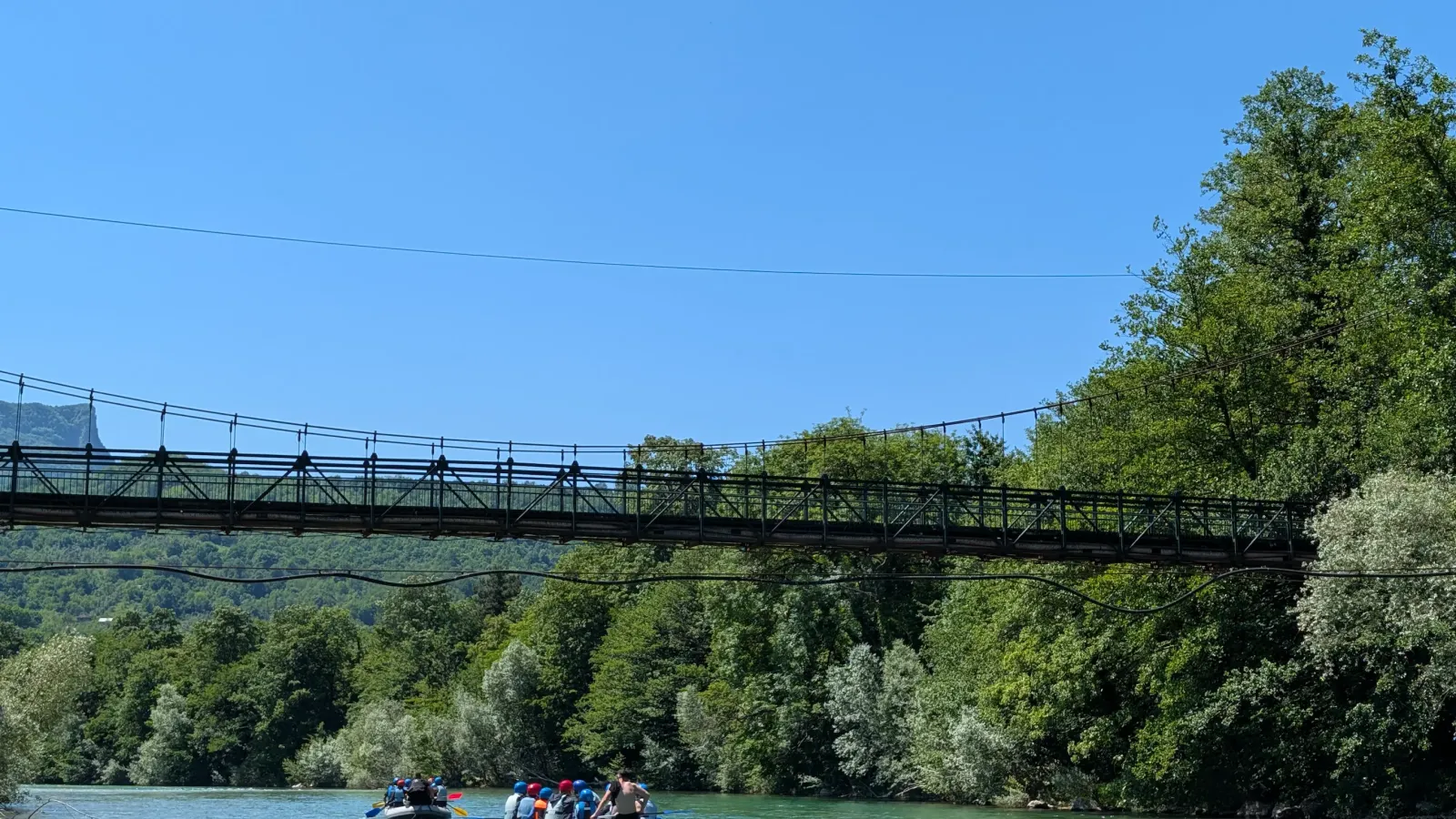
We continued rafting for more than two hours, although it did not feel that long. The surroundings absorbed our attention completely. The silent mountains, the sparkling water and the trees leaning over the riverbanks created a world of calm around us. For a while, the noise and concerns of ordinary life seemed very far away.
The river water was so clear that we drank directly from it. It was cool, fresh and pure, as though it had only just emerged from the heart of the mountain.
When the rafting came to an end, we felt a slight sadness. Some of the most beautiful moments pass quickly, but they leave behind a quiet sense of longing. Later, when a person remembers the place, the water and the companions who shared the experience, that feeling returns.
Lunch at Lamb House Jablanica
We left the river pleasantly tired and with a renewed sense of clarity. At three in the afternoon, we travelled to the "Lamb House Jablanica" restaurant. It has become a well-known stop for people travelling through Bosnia, particularly along the road between Sarajevo and Mostar. Few people seem to pass through the area without stopping there for food, rest and the surrounding views.
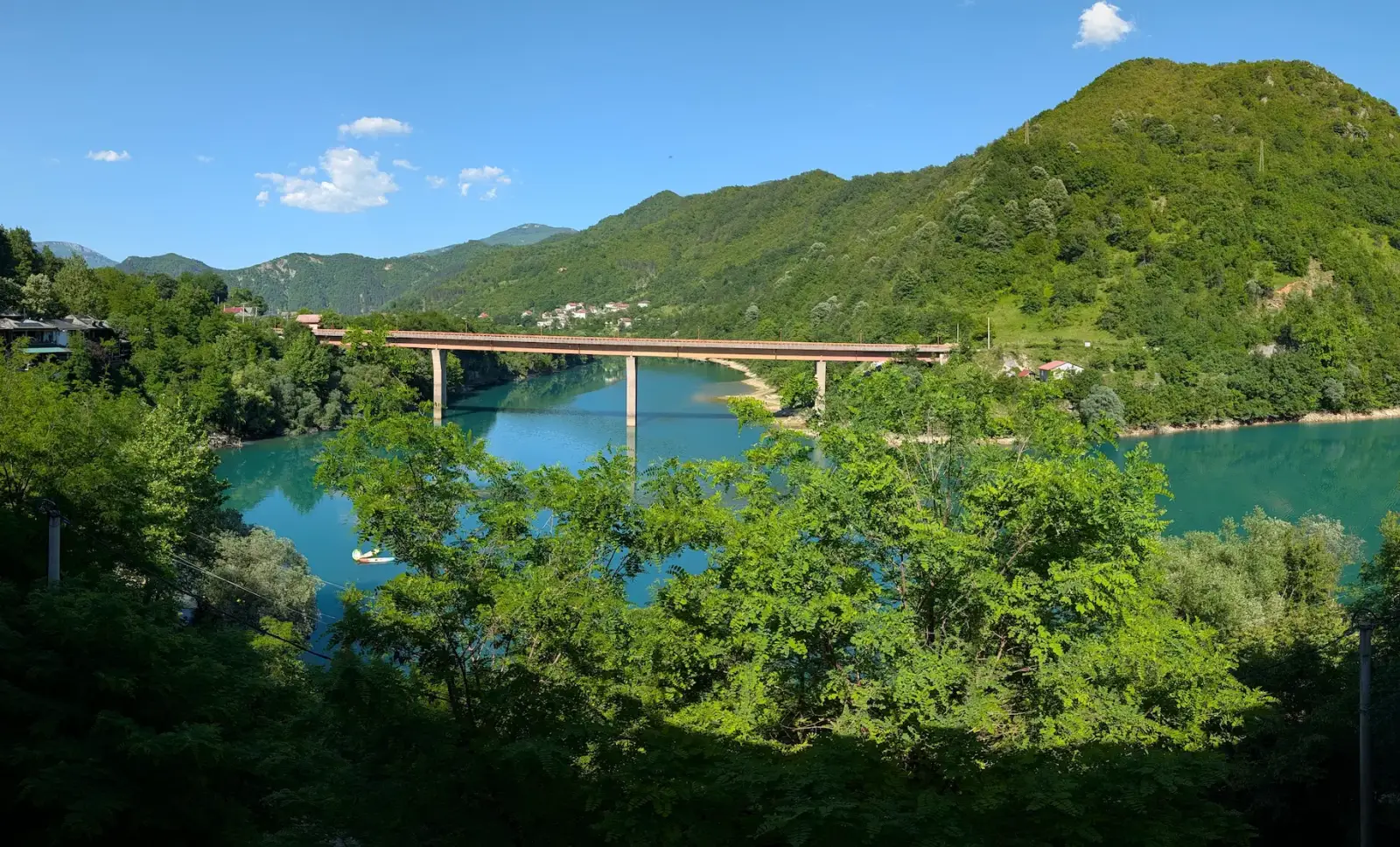
The road to the restaurant continued alongside the Neretva, a river that never became tiring to look at. It flowed quietly between the mountains like a green thread running through the valley.
The mountains surrounded the area on every side, tall and still, while Jablanica Lake stretched out below them. The lake was formed behind the Jablanica Dam and appeared like a vast mirror, reflecting the sky, clouds and mountains on its surface.
People do not visit the restaurant for the food alone. They also come for the scenery and the sense of openness it brings. Diners can sit looking out over the water and mountains while a cool breeze rises from the valley and softens the heat of the day.
When we arrived, the restaurant was full of visitors from different countries. They sat on terraces overlooking the river, talking quietly and enjoying the combination of natural beauty and simple food.
Jablanica’s Famous Roasted Lamb
The restaurant is particularly famous for its whole roasted lamb, a tradition for which Jablanica has been known for many years. The lamb is prepared carefully and placed over the fire, where it turns slowly for several hours until the meat is fully cooked. The aroma of the roasting meat mixes with the smoke from the wood and spreads through the restaurant.
We watched the lambs turning slowly over the glowing embers. Small drops of fat fell onto the fire, making a soft sizzling sound, while smoke rose into the air carrying the smell of the roasting meat.
There was something pleasantly traditional about the scene. It brought to mind village and mountain life, where food is prepared slowly and eaten without the constant rush and noise of the city.
We sat at tables overlooking the valley. After the rafting and the long journey, we were extremely hungry and welcomed the meal with great enthusiasm.
The meat was tender and full of flavour, carrying the taste of the fire and the scent of the wood. Eating it there, surrounded by mountains and water, made the meal feel closely connected to the place and its traditions.
Before us, the Neretva continued flowing quietly, unaffected by the travellers, conversations and activity around it. It seemed to be continuing a journey that had begun thousands of years before our arrival.
From time to time, we looked out towards the river and felt how much the beauty of the surroundings added to the enjoyment of the food. Some meals are remembered not simply because of what was eaten, but because of the view, the companionship and the peace felt at the time.
Continuing Towards Mostar
We left Jablanica at seven in the evening, as the sun began to move towards the horizon. Golden and crimson light spread across the mountains and lake, giving the impression that nature itself was quietly saying farewell to the day.
The road towards Mostar was peaceful at that hour. Apart from the sound of the car, there was little to disturb the silence. During the journey, we spoke about the events of the day: the clarity of the Neretva, the coldness of its water, the laughter of our companions on the boats and the delicious meal beside the valley.
Arrival in Mostar
We arrived in Mostar at around eight in the evening. Under the evening lights, the city appeared calm and welcoming. Its buildings and streets carried something of both the East and the West, together with the presence of history and the memories of a war whose effects have not entirely disappeared.
We checked into a comfortable hotel where rooms had been prepared for us. Some of the group chose to rest after the exertions of the day, while others stood by the windows and looked out over the lights of the city.
A City Carrying the Memory of War
Mostar has a complicated history. The divisions between its Muslim and Catholic Christian communities remain visible in different parts of the city. The war also left behind a degree of caution and tension, even though the fighting ended many years ago.
To a visitor, the city may appear peaceful and reassuring. Beneath that calm exterior, however, lies a long history of suffering and many memories that remain difficult to forget.
The End of a Memorable Day
By the time we reached our rooms, night had settled over the city. We were exhausted, but there was also a deep feeling of contentment. Travel sometimes gives a person a particular kind of rest, especially when natural beauty is combined with good companionship and a day filled with memorable experiences.
Our exploration of Mostar, however, had not yet truly begun. The following day, after the Eid prayer, God willing, we would walk through the city, visit its landmarks and old bridges, and discover more of the beauty, history and stories it holds.
Translation note: This article was translated by AI. View the original Telegram post.