Reflections on Faith and Unity in Islam
“Whoever does not follow my words is an unbeliever.”
The morning of Eid in Mostar was not merely a religious event for me; it was an intellectual and spiritual experience that awakened long-dormant questions within my heart. This city, once engulfed in the flames of war, still lives with its scars. Its bridges were broken, its neighborhoods deserted, its people scattered, yet the call to prayer never fell silent. Perhaps this is the miraculous truth of Islam: civilizations may perish, empires may vanish, but even a faint glimmer of faith can rekindle life anew.
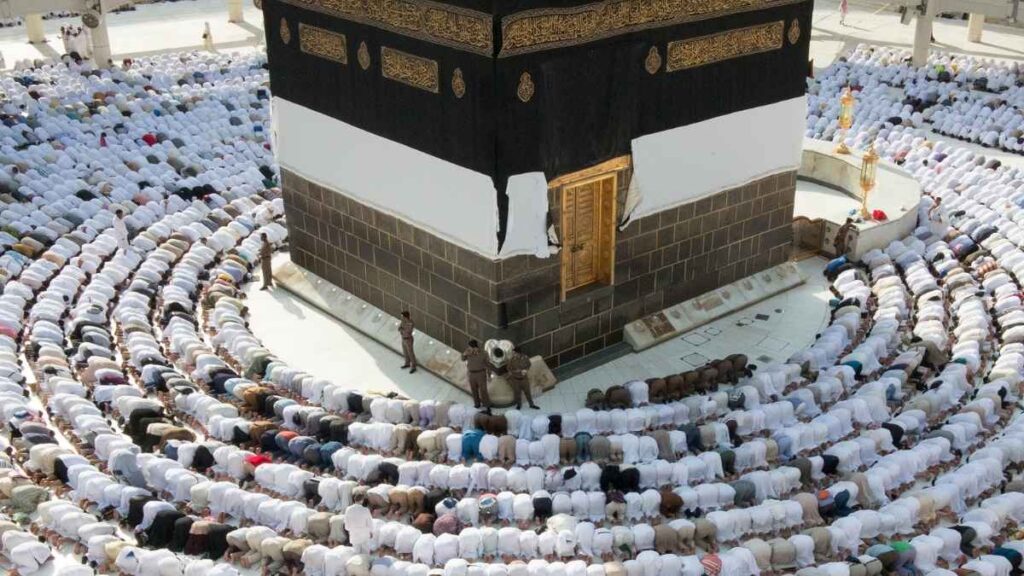
As people thronged towards the Eid prayer, I observed their faces for a long time. Among them were the elderly, the young, children, eyewitnesses of war, and a generation that had only heard tales of it. Yet, in that moment, all faces bore the same light: the light of servitude, the light of unity, and the light of the realization that no matter how divided humanity may be, when standing before God, all distances dissolve.
The prayer was completed. The sound of the Takbir echoed in the air, and then the sermon began. The Imam recited verses from the Quran, including the words of Prophet Ibrahim ﷺ that stirred a storm within my heart: “Whoever follows me is of me, and whoever disobeys me, indeed You are Forgiving and Merciful.”
Hearing these words, I suddenly realized how vast, how merciful, and how elevated the true spirit of Islam is, and how we have confined this spirit within narrow bounds. These are the words of Prophet Ibrahim ﷺ, whom the Quran calls “Imam of the people,” who forsook his father, family, and homeland for the sake of monotheism, yet his lips did not curse his opponents but hoped for mercy. He did not say, “Whoever does not follow my words is an unbeliever,” but rather, “Even if they disobey, Your door of mercy remains open.”
At that moment, the religious history of the Indian subcontinent began to unfold in my mind like a long and painful tale. I recalled how many walls have been erected in the name of religion over the years. Each group has built a fortress around itself, proclaiming that the truth resides solely with them. Every school of thought has assured its followers that salvation’s vessel departs only from their shores. If one is with them, they are a believer; if they differ, they are at least “misguided,” and often labeled “unbeliever.”
It seems we have made religion less a path to God and more a marker of group identity. Now, a person’s ethics, worship, honesty, and service to humanity matter less than which circle they belong to, which seminary they studied at, which elder they revere, and which terminologies they use.
This ailment gradually developed in the religious atmosphere of the subcontinent. Initially, differences were scholarly, jurisprudential, interpretative. But then power, leadership, public influence, donations, and institutions became entwined with these differences. Consequently, every group erected a wall of sanctity around itself for self-preservation. Differences ceased to be merely scholarly and became existential. Thus, each faction felt that acknowledging the other’s truth would shake their foundations. Gradually, “difference” turned into “excommunication.”
Madrasas, once beacons of knowledge and wisdom, in many places became sectarian fortresses. When a student enters, they are taught not the Quran and Hadith first, but who “we” are and who “they” are. From the outset, a division is instilled in their consciousness. They are told that the measure of truth is not research but affiliation. Thus, when they grow up and sit on the pulpit, their sermons contain less knowledge and more sectarian zeal.
The tragedy is that in this entire journey, the moral spirit of Islam was left behind. The Quran repeatedly invites humanity to justice, mercy, wisdom, and good character, but we have turned religion into a battlefield for debates. Now, the greatness of a scholar is measured not by their forbearance but by their harsh tone. The harsher the fatwa, the greater the popularity. The harsher the statement, the louder the applause.
Yet, if Islamic history is read with justice, it will be found that the Imams of the Ummah never let differences turn into hatred. There were differences between Imam Abu Hanifa and Imam Malik, but there was also respect. Imam Shafi’i refrained from expressing certain jurisprudential opinions near Imam Malik’s grave out of respect. Imam Ahmad ibn Hanbal prayed for his opponents. They did not wield their knowledge as a weapon of ego. For them, the search for truth was important, not the victory of their group.
But we have separated religion from ethics. Now we fight less for God and more for our circles. This is why sectarianism within the Ummah is no longer just an intellectual issue but has become a psychological ailment. People are now ready not to listen to another Muslim but to refute them. Everyone has a scale with which they weigh the faith of others.
This Eid in Mostar made me realize that perhaps the greatest crisis of the Muslim Ummah is not intellectual disagreement but the lack of a broad heart. We have made our hearts small. We trust our fatwas more than God’s mercy. Yet, the prayer of Prophet Ibrahim ﷺ teaches us that the door of guidance is not closed, and one should not despair of God’s mercy.
After the Eid prayer, as people embraced one another, I pondered for a long time: if Islam is truly the religion of “mercy to the worlds,” then why is there so much harshness in our tones? If God is “Forgiving and Merciful,” why have His servants become so merciless? And if Prophet Ibrahim ﷺ hoped for mercy even for his opponents, then with what audacity do we pass judgments on each other’s faith over minor differences?
Perhaps the Ummah today needs not new debates but new hearts. Hearts that have breadth; scholars whose knowledge is accompanied by humility; and a religious atmosphere where differences do not expel a person from the fold of Islam but rather broaden thought.
For the true power of religion lies not in hatred but in mercy; not in excommunication but in wisdom; and not in breaking people but in uniting them.
Translation note: This article was translated by AI. View the original Telegram post.