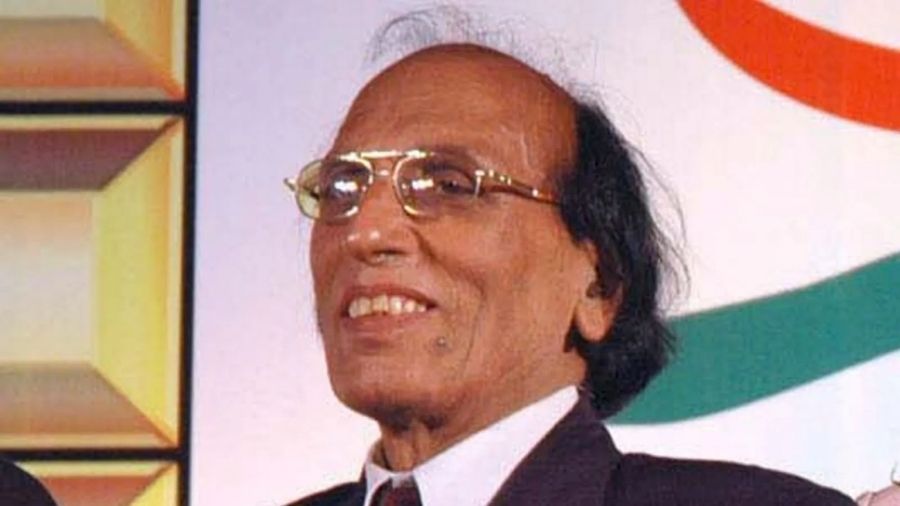
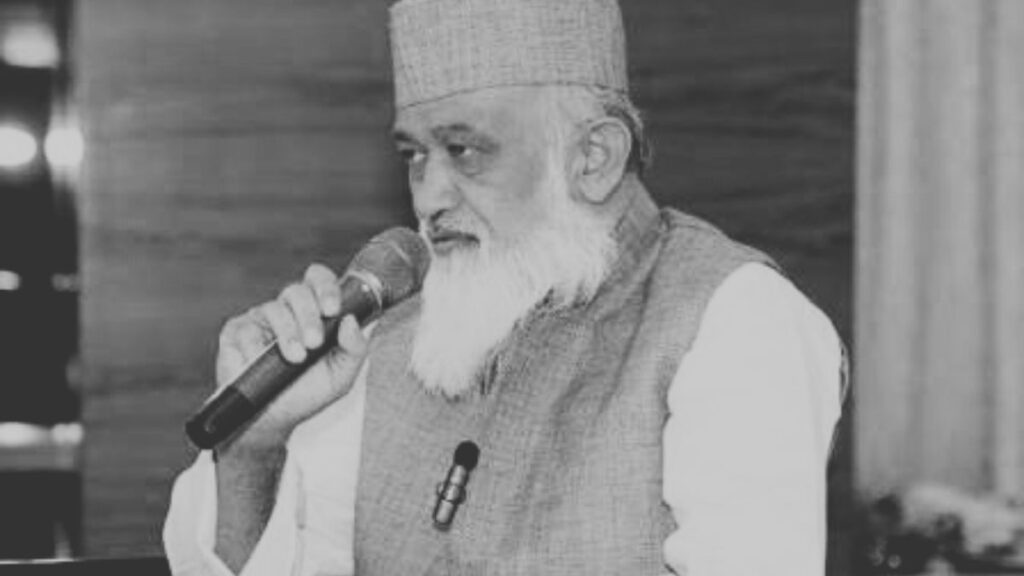
Tribute to Maulana Shafiq Rahman Nadwi
A Radiant Beacon of Knowledge and a Sincere Mentor
A Radiant Beacon of Knowledge and a Sincere Mentor
I had documented a brief biography of the esteemed teacher, Maulana Shafiqur Rahman Nadwi, may Allah have mercy on him, in my book “Al-Jami’ Al-Mu’in.” Now, his proud son, the writer and poet Mr. Tariq Shafiq Nadwi, is compiling a comprehensive book on his father’s life and works. He expressed a desire for my contribution to this collection. I accepted this not merely as a literary request but as a heartfelt honor; for writing about certain personalities is akin to revisiting a luminous, fragrant, and tranquil period of one’s own life. Some names reside not in memory, but in the heart; Maulana Shafiqur Rahman Nadwi was among such individuals.
Personal Reflections and the Writing of This Tribute
Maulana was not merely a “teacher” or “instructor.” He was the custodian of an entire scholarly tradition—a tradition where knowledge was not merely an accumulation of information but a beacon of character, a refinement of language, a purity of thought, and a nurturing of the soul. His persona embodied the depth of jurisprudence, the subtlety of literature, the seriousness of wisdom, and a silent spiritual influence that was conveyed more through presence than words. He was among those lamps recognized not by noise, but by their light; among those rivers that flow silently yet irrigate entire regions.
He was born in the fertile region of Champaran, Bihar. At his birth, no palaces were illuminated, nor did any noblemen sound drums of joy; for such honors were traditionally reserved for the wealthy and the aristocratic. Yet, what did the world know that this silent newborn would one day join the ranks of those sovereigns of the realm of knowledge whose grandeur far outlasts worldly thrones and crowns? Some children are born in cradles of gold, and some in the lap of knowledge; history always bows at the feet of the latter.
He then arrived at Darul Uloom Nadwatul Ulama, Lucknow, and graduated from there in 1380 AH. At that time, Nadwa was not merely an educational institution but a cultural caravan, an intellectual atmosphere, and a living scholarly tradition. There, knowledge was not confined to books but was visibly embodied in the character of the teachers. Maulana was nurtured in this environment. Among his peers, he was distinguished by his extraordinary intelligence, profound study, and quiet seriousness. His silence was filled with thought, and his study seemed as though he was not merely reading a book but conversing with the soul of the author.
His Birth, Lineage, and Early Education
He possessed such mastery over both Arabic and Urdu that few are fortunate to achieve. His prose flowed like a river; words moved as if clear water, even when striking stones, carved their own path. His writing carried scholarly dignity and literary sweetness. When he picked up the pen, it seemed as though meanings themselves donned the attire of words and descended onto the page.
In 1392 AH, he was appointed to teach at Darul Uloom Nadwatul Ulama, and he remained associated with this institution until his last breath. However, the truth is that he was not merely an instructor but a nurturer of souls. He did not merely teach books; he shaped minds. He did not merely explain texts; he cultivated taste. Sitting in his company felt like witnessing a master sculptor gradually revealing hidden forms within raw stones.
Maulana was a relic of that era of Nadwa when the lives of teachers revolved around education and training. In those days, being a teacher was not merely a profession but a sacred trust. The hearts of teachers beat within the classroom, and their intellectual energy was devoted to the development of students. Thus, the institutions of that era produced not only graduates but scholars, writers, and thinkers. I always saw Maulana as a teacher who considered teaching the greatest service after prophethood.
Maulana was also well aware of the realities of the world. He knew that “the entire world is a circle of the snare of imagination,” and thus he never fell prey to worldly delusions, while many mistook this mirage for reality and wandered in pursuit of it. Today, the number of such deluded individuals has increased. People have become captives of fame, display, position, and crowds, but Maulana’s vision soared far above this superficial glitter. His contentment was like that of a dervish who rejects kingship and sits in a corner of tranquility.
His Studies at Darul Uloom Nadwatul Ulama
Tribute to Teacher Shafiq Rahman Nadwi
I had the honor of being a student under his tutelage, and this relationship was not merely an academic connection for me but a continuous journey of intellectual and moral training. I studied the “Diwan al-Hamasah” by Abu Tammam with him and practiced composition and writing for nearly a year. His teaching was extraordinary. He brought texts to life as if breathing vitality into an abandoned building. He did not merely explain words but illuminated the emotions, historical awareness, and cultural spirit behind the text.
When we read the opening verse of the “Diwan al-Hamasah”:
“If you were of the tribe of Mazin, the sons of al-Laqitah from Dhuhl bin Shayban would not have raided my camels,”
he provided an explanation that was not only literary but also moral and psychological. He clarified that the poet was not disparaging his people but awakening their dormant pride and honor. His explanation felt like the sun emerging from behind dense clouds, illuminating the entire scene. At that moment, we realized why Abu Tammam placed this verse at the beginning of the “Book of Valor.”
My relationship with him was not confined to the classroom. Outside of lessons, his kindness was like the shade of a tree accompanying me. I would almost daily present Arabic essays and translations to him. He read them with exceptional attention, scrutinizing every sentence, weighing every word, and then not only correcting mistakes but also suggesting ways to enhance the style. The next day, the same writing would be returned fully revised. This process continued for a whole year. Reflecting today, it seems he was not merely correcting text but silently nurturing my taste, thought, and penmanship.
His Death and the Mourning
There is no exaggeration in saying he was a most sincere, serious, and extraordinarily dedicated teacher. Today, when teaching has become merely a means of livelihood for many, people like Maulana remind us of an era when teachers considered the intellectual formation of their students as their life’s purpose. Sitting in his company felt like knowledge was not dry information but a living light transferred from heart to heart.
Another beautiful aspect of his personality was his close friendship with my respected teacher, Maulana Shahbaz, may Allah have mercy on him. They were neighbors, walked together, went to the market together, and shared in each other’s daily routines. Their companionship always reminded me of two rivers flowing from different directions towards the same sea.
From these two elders, I learned the lesson of contentment. Today, people are often seen complaining: “This is a passage of trials, what is our abode?” But seeing these two teachers, it felt as if they were inhabitants of a serene valley of paradise in this world. Despite low salaries, limited resources, and simple living, the contentment on their faces was enviable. Moreover, outside of Nadwa, they had no pursuits. They did not establish any Sufi lodge, did not wander for donations, did not seek disciples, nor set traps for fame. They were far above all these things, as if saying:
“Go, set this trap for another bird,
for the phoenix’s nest is high.”
In today’s era, when teaching is gradually moving away from its true stature, and many educators have shifted their passion from teaching to other engagements, the effects on the intellectual and cognitive structure of the new generation are clearly visible. Previously, a teacher devoted his full attention to the development of students. His life revolved around the classroom, the lamp of his nights was study, and the heartbeat of his heart was linked to the academic progress of his students. But now the situation has changed. For many, teaching is no longer a permanent purpose but a secondary occupation. Minds are entangled in other pursuits, and teaching is becoming merely a formal responsibility.
As a result, those being prepared today have less depth in their knowledge and more dispersion; they have information but lack mature thought, have expression but lack spirit, have voice but lack weight. Listening to their conversation often feels like the strong chain of thought that distinguished the scholars of old has broken. This state brings to mind the verse: “Ask about the earth, and it speaks of the sky,” meaning the question is about one thing, and the answer wanders in another direction. Neither consistency remains in thought, nor the depth in knowledge that leads one to the core of the subject. Previously, teachers cultivated the minds of students like an expert gardener tending every branch of a plant, but now in many places, this relationship has become merely formal. The result is that neither the taste is being developed, nor the scholarly dignity, nor the intellectual balance that once distinguished our scholarly tradition worldwide.
In such times, the memory of teachers like Maulana Shafiqur Rahman Nadwi, may Allah have mercy on him, feels even more precious because they belonged to a generation that considered teaching an act of worship, not a ladder to fame; a means of human development, not a path to self-promotion.
Maulana was also an excellent administrator, although he was not the head. He was counted among the most trusted associates of Maulana Mohibullah Lari Nadwi, may Allah have mercy on him, the head of Nadwatul Ulama. At the beginning of the year, the entire schedule of the seminary, teachers, books, and timings was organized in his mind like a master architect’s blueprint of a building. He would arrange the annual timetable, and it was astonishing that it rarely needed any major changes.
Similarly, the editing of articles and translations published in the Arabic journal “Al-Ra’id” was also his responsibility. His focus was not limited to grammatical or lexical errors; he refined the text, breathed life into it, and bestowed literary beauty upon a raw sentence. His editing was like the pruning of a gardener who does not cut branches but brings new spring to them.
Then came a day when Maulana Shafiqur Rahman Nadwi, may Allah have mercy on him, also departed from this world. Before him, his compassionate mentor, Maulana Abul Hasan Ali Nadwi, may Allah have mercy on him, had already passed from this transient world. But some people do not end even after death. They live on through their writings, their students, their gatherings, and their silent influence. Maulana was among those fortunate people.
Even today, when I remember him, it feels as if a lamp still burns in a bright chamber of the past, and its gentle, silent, and peaceful light continues to illuminate the paths of those who come.
Translation note: This article was translated by AI. View the original Telegram post.