Bashir Badr: The Last Lamp of the Urdu Ghazal

His death and the loss of the last lamp
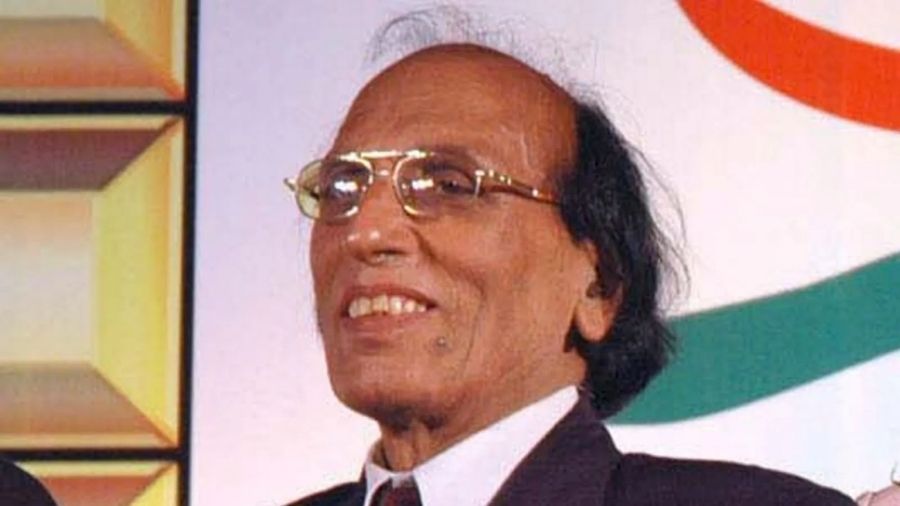
Today, on 28 May 2026, with profound sorrow and grief, came the news that the celebrated and renowned Urdu poet, the magician of the ghazal, the Alexander of words, Janab Bashir Badr, has departed from this world.
Indeed, to Allah we belong and to Him we shall return. May Allah Almighty forgive the deceased and overlook his shortcomings.
It feels as though the last lamp of the evening of the Urdu ghazal has also been extinguished. He was a poet who did not allow the ghazal to remain merely an ornament of books. Rather, he carried it into streets, crossroads, colleges, mushāʿirah gatherings, radio programmes, the letters of lovers, and even the speech of ordinary people. He was among those rare poets whose verses settled upon people’s tongues like spring buds blossoming upon a tree.
When I heard the news of his passing today, somewhere deep in my heart the world of forty years ago awakened. Those were the days when we were students at Nadwat al-ʿUlamāʾ. The atmosphere of Urdu mushāʿirahs in those days was entirely different. A mushāʿirah was not merely a poetic gathering. It was a living festival of culture, refinement, voice, rhythm, emotion, and language. Two of the greatest attractions of those gatherings were Bashir Badr and Malikzada Manzoor Ahmad.
Bashir Badr and the mushāʿirahs of Nadwat al-ʿUlamāʾ
Wherever they sat, the gathering seemed illuminated. Young people memorised their verses in the same way Qurʾān memorizers retain sūrahs. Students in colleges and universities, literary circles, tea houses, and railway platforms, everywhere one could hear Bashir Badr’s poetry. Some couplets seemed to arise not from the tongue, but directly from the heart.
Who has not heard this famous couplet?
There must have been some compulsions;
No one becomes unfaithful without a reason.
A couplet that became the anthem of broken hearts
This was not merely poetry. It became the anthem of broken hearts. How many lovers preserved their dignity through this verse, and how many people draped this couplet over their disappointments to console themselves.
Then there is his immortal verse:
Let the lights of your memories remain with me;
Who knows in which alley the evening of life may descend.
This couplet will perhaps remain alive forever in the history of the Urdu ghazal. Within it lies the fragility of life, the sanctity of memory, the gentle warmth of love, and the cruelty of time. That is why this verse did not remain confined to books. It became the title of radio programmes, appeared in films, and became part of people’s private lives.
And then there is that celebrated couplet he composed during the 1972 Shimla Agreement:
Let there be intense enmity, but leave room enough
That if we become friends again, we need not feel ashamed.
His broader legacy in Urdu letters
This was not merely a couplet. It was a summary of the entire psychological tragedy that followed the Partition of the subcontinent. Politicians may have delivered thousands of speeches, but what Bashir Badr expressed in two lines could not be conveyed in diplomatic declarations.
The true greatness of Bashir Badr was that he saved the ghazal from the burden of excessive complexity and artificial philosophy. There was no exhibition of vocabulary in his work, nor the noise of pretension. His poetry flowed like a soft evening breeze passing through trees. There was pain in his verses, but not screaming; love, but not vulgarity; philosophy, but not dryness.
He was among the last poets of the ghazal who kept alive the tradition of Mir Taqi Mir and Mirza Ghalib in the modern age. After him, the ghazal either became a slogan, a fashion, or a literary puzzle. Bashir Badr was perhaps the last great popular poet of the classical-style ghazal in India. In him there was both tradition and contemporaneity. He illuminated the darkness of the present with the lamp of the past.
His own life was no less than a ghazal. Born in 1935 in a town of Uttar Pradesh, he studied at Aligarh Muslim University, taught there, and later served for many years at Meerut College. But the Meerut riots of 1987 transformed his life. His house burned, his books burned, and many of his unpublished verses were reduced to ashes. What greater tragedy can there be for a poet than to see his memories, words, and dreams consumed by fire?
Yet perhaps it was precisely this pain that deepened his poetry further. He moved to Bhopal, but the sadness of exile always lingered in his tone. Reading some of his verses, one feels as though a man is standing silently before his burning home, gazing at the sky.
The popularity of his poetry was such that it did not remain confined to literary circles. His verses lived on in Indian films, radio programmes, and everyday conversation. A younger generation that perhaps never read Mir or Fānī still knew Bashir Badr. Young lovers, lonely old men, failed romantics, displaced migrants, all found their own pain reflected in his poetry.
There was a strange gentleness in Bashir Badr’s poetry. Even when he wounded, he did so with the petal of a flower. His verses did not knock upon the heart. They quietly descended into it.
Closing tribute
Today, with his passing, it feels as though the last elegantly dressed, eloquent, refined poet has risen and departed from the gathering of Urdu ghazal. Mushāʿirahs will still take place. There will still be microphones and applause. But that refinement, that grace, that slow-burning warmth, and that nobility of sorrow may now rarely be seen.
One of his ghazals is presented below:
Do not wander aimlessly every evening;
Sometimes remain at home.She is the true book of ghazal;
Read her quietly, little by little.No one will even shake your hand
If you embrace people too warmly.This is a city of new temperaments;
Meet people with a little distance.There are still many turns upon the road;
Some will come and some will leave.The one who erased you from his heart,
Pray for the ability to forget him too.These tales of love seem to me like advertisements.
Listen to what was never spoken;
Speak of what was never heard.Sometimes beauty too should remain veiled,
Clothed in the attire of lovers.And when I walk somewhere adorned and prepared,
Walk beside me as well.That moon-like face is not unveiled
Without leaving an effect upon the gaze.Do not stare so passionately
For too long.Wrapped in the yellow shawl of autumn,
Beside that sorrowful tree,There stands the springtime of your home;
Revive it with your tears.
Bashir Badr has departed, but his verses will remain alive for a long time yet. Perhaps because good poetry never truly dies. The poet descends into the grave, but his words continue walking through people’s hearts.
Tonight, as I remember his poetry, my heart involuntarily repeats:
Let the lights of your memories remain with me;
Who knows in which alley the evening of life may descend.
And now indeed, an evening of the Urdu ghazal has come to an end.