Journey to Turkey
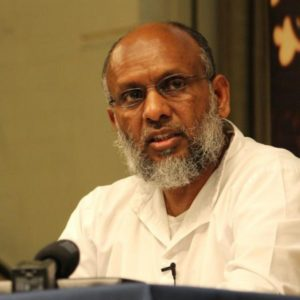

I took breakfast at seven o’clock in the morning with the elders of the Majlis—Shaykh Muṣṭafā Dādāsh, Shaykh Khālid Ḥanafī, Shaykh Amīn al-Ḥazmī, Dr Jāsir ʿAwda and a group besides. In the course of conversation they expressed their deep grief and intense sorrow at the division and dispersal that has afflicted the Muslims, to the point that some refuse to pray behind others merely because of a difference in madhhab; indeed, at times the disagreement concerns minor, subsidiary matters hardly worthy of contention, such as the length or shortness of the beard, or whether the head is uncovered or covered.
They asked me about the manhaj of Nadwat al-ʿUlamāʾ. I replied: this Nadwah was established solely to unite the word of the Muslims, to bring their hearts together and to ward off from them the evil of division and dispute. Its guiding principle, upon which it arose and along whose path it proceeds, is firmness in the foundations of the dīn and expansiveness in its branches. You will not find a Nadwī who makes divergence of madhāhib a cause of schism, nor who feels constrained to pray behind this imam or that, so long as the affair is open to ijtihād and the disagreement does not touch a root of the religion. Some of them remarked: “Shaykh Yūsuf al-Qaraḍāwī used to extol the Nadwīs abundantly and would mention their distinguishing quality of forbearance and moderation.”
I then had a sitting with Shaykh Jāsir ʿAwda. He spoke to me about his maqāṣidī tafsīr, the effort he has devoted to it, and the other works and activities he has undertaken. It was a session from which I benefited, coming to know aspects of his scholarly and intellectual concerns.
I spent most of the morning hours reviewing my own tafsīr. How often a person, whenever he turns to the Book of Allah, finds himself before a matter unlike all other matters and beyond comparison with what people are accustomed to of human speech! The Qurʾān possesses a reality distinct from all discourse; it exercises over souls an authority and penetrates to the depths of hearts in a way that no other book or utterance can. A person continually encounters within its āyāt a majesty that returns him to himself and unveils for him the truth of this life with which people amuse themselves, heedless of its secret and its end.
I am indeed astonished—most astonished—at a human being who endows created things with sanctity, raising them to a station they do not merit. It is as though some folk might weep over a tree uprooted from its place, with bells perhaps tolled in temples mourning it and announcing grief for wounded nature! Where is such a person from his own self? Where is he from the reality for which he was created and the goal towards which he ought to strive?
How wretched, how miserable is man! Allah created him in the best of moulds, honoured him and raised his rank; yet he cast himself to the lowest of the low, descending into the abysses of misguidance until he loses the greatest realities, grieves over what warrants no grief and aggrandises what ought not be aggrandised. Alas for the child of Ādam—what the two recording angels inscribe in his scroll, what the two weighty orders, humankind and jinn, lament over his evil deeds! Ruin to you, O son of Ādam, for what the angels write of your actions; disgrace to you for what mankind and jinn censure of your ill conduct. What loss is greater than that a person stray from the truth of his own self while imagining he is guided, and distance himself from his Lord while supposing he has drawn near?
At twelve o’clock I set out with Shaykh Murād Sulaymānūf towards the airport after we had prayed ẓuhr and ʿaṣr combined and shortened in the hotel musallā. Shaykh Murād is the Muftī of Ukraine upon the Ḥanafī madhhab, yet he is unfamiliar with rigidity and does not incline to constriction in the dīn; rather, he is closer to the Nadwī method in its forbearance, moderation and concern to unite the word and reconcile hearts.
We boarded the plane bound for Istanbul shortly before three o’clock. During the flight I turned to my work, making use of the time available, for a person should not allow the hours of his life to pass in vain so long as he is able to benefit from them in useful endeavour.
The plane landed us at Istanbul Airport at five o’clock. We prayed maghrib and ʿishāʾ in the airport mosque, then I returned to my work before sitting with Shaykh Murād in a quiet place. We conversed on various matters and exchanged views on some issues until the time of departure arrived. I bade him farewell, still carrying within myself a pleasant impression of his companionship and a good memory of our sitting.
Then I boarded the plane headed for London at seven-thirty, and once again I applied myself to my work, as though wishing to reclaim from the journey what travel might consume of time, turning the hours of transit into hours of accomplishment, not hours of idleness.
The plane set us down at Heathrow Airport, London, at a quarter to nine. I then returned to Oxford in the car of my dear brother Fayḍ Allāh; with us were his two grand-daughters, ʿĀliyah and Hibah.
Thus passed a day filled with meetings, conversations, journeys and work, interspersed with reflections on the condition of the Muslims, meditations upon the truth of man, and a continually renewed return to the Book of Allah, where a person finds what he does not find elsewhere and draws from its guidance a light that illuminates the path for him, no matter how the ways become turbulent or the faces diverse.
Praise belongs to Allah, first and last, outwardly and inwardly. To Him is gratitude for what He has favoured, to Him is praise for what He has made easy, and unto Him is the return and the ultimate resort.