Journey to Turkey (26)
(26)
Saturday, 22 Dhul-Qa’dah 1447 AH
I awoke early, a habit I have cultivated over the years, for there is no time clearer for the soul or more generous to the mind than the early hours of the morning. In these moments, the noise of the world subsides, and the mind resembles a serene pond, untouched by the footsteps of people and the burdens of life. After the Fajr prayer, I sat down to attend to some of my tasks, reviewing what I had written and contemplating ideas I intended to include in my research. With each step forward in my work, I felt that the morning bestowed an invisible strength upon my thoughts, as if the light spreading across the horizon also illuminated the soul.
At eight o’clock, I descended to the hotel restaurant, where the guests had dispersed around the tables like birds at a watering hole. I joined some of them, and we shared a quiet breakfast interspersed with brief conversations about the conference sessions and the scholars arriving from various countries. We then proceeded to the conference venue, where the city had fully awakened, bustling like a river flowing after the stillness of night.
I attended the three morning sessions, listening to the speakers, most of whom spoke in Turkish, while some used Arabic. In the diversity of languages, I saw a reflection of the vast Islamic world, divided by languages yet united by a single Qibla. At times, it seems to me that languages are merely different garments for the same spirit.
I met with Sheikh Khalid Hanifi, who had come from Germany. He is a member of the European Council for Fatwa and Research and specializes in the jurisprudence of contemporary Western issues. His speech exuded the calm of scholars refined by experience, neither excessive in his fatwas nor rigid in his views. I found great solace in his company, for kindred spirits recognize each other as birds do in the sky.
We sat for tea with Sheikh Bashir Haddad al-Halabi, who mentioned that our late teacher, the esteemed scholar Abdul Fattah Abu Ghuddah, used to say: “The intention of a believer is better than his action.” He explained that intention is also an action, but it is the action of the heart. I pondered this deeply, realizing the profound wisdom in it. People often focus on outward deeds, neglecting those hidden acts seen only by Allah, which are the foundation from which visible actions derive their meaning and value.
I had lunch with the esteemed Dr. Mustafa Dadas, a member of the European Council, accompanied by his noble colleague, researcher Muhammad Fatih, both from Konya, the city of Mawlana Jalaluddin Rumi. The city where the spirits of dervishes still roam its alleys, even if its people have settled. Sheikh Mustafa Dadas was the one who encouraged me to attend this conference and facilitated my invitation, so I felt it was only right to acknowledge his kindness, for he who does not thank people does not thank Allah.
In the afternoon, I presented my paper titled: “Muslims in Western Societies Between Civilizational Witness and the Pressures of Integration: A Critical Reading of the Reality of Islamic Minorities.” I began with an old Persian proverb that I have always found pleasing to the ear: “Zaban yar man Turki, wa man Turki na mi danam,” meaning, “The language of my beloved is Turkish, and I do not know Turkish.” The audience laughed warmly, easing the initial tension, and I felt that a kind word opens hearts in ways that lengthy speeches cannot.
I then discussed the reality of Muslims in Western societies, not as a transient political issue but as a profound civilizational and human question, connected to the meaning of identity and existence and the ability to balance between constancy and change. I stated that Muslims in the West no longer live in a world where Sharia is the supreme reference for public life. Instead, they have become part of modern societies that redefine humanity, freedom, and values daily. Hence, there arises a need for a new jurisprudence that combines fidelity to the roots with a precise awareness of the nature of the age.
I emphasized that the real problem does not lie in raising the banner of identity, for slogans are the easiest things to utter. The challenge lies in transforming faith into life, character, and daily conduct that people witness before they hear about it. I noted that the crisis in some forms of contemporary religiosity is that the voice has become so loud that it overshadows the true structure, whereas Islam initially spread through the sincerity of the Muslim individual before the eloquence of the preacher or the abundance of debate.
I further addressed the Islamic identity in the West, stating that speaking of a “single identity” overlooks the complexity of reality. Muslims there are nations, cultures, and diverse experiences, and identity is not a static stone but a river continuously shaped by language, family, education, and social institutions. The issue is not the existence of differences, for diversity is a human nature, but the inability to manage this diversity and turn it into a source of strength rather than a cause of division and conflict.
Nature of Modern State and Muslim Identity
I then addressed the nature of the modern state, highlighting that it is not as neutral as some might imagine. It carries its own philosophical and ethical conception of humanity and life, manifesting in education, media, culture, and law. This places Muslims between two opposing dangers: the danger of isolation leading to seclusion, and the danger of assimilation resulting in the loss of identity. The most balanced path, which I termed “conscious critical presence,” involves Muslims participating positively in their society without losing their insight or moral compass.
I proceeded to discuss religious freedom and human rights, explaining that modern freedom is often understood as individual freedom of belief, but it does not always mean accepting religion as a reference for public life. I rejected the confrontational view that sees the relationship between Islam and the West as a perpetual war, as well as the complete assimilation into the majority culture. Instead, I advocated for a balanced awareness based on dialogue, participation, and self-confidence without compromising on core principles.
I concluded the discussion by emphasizing that the greatest challenge for Muslims in the West is not merely asserting their right to exist, but transforming this existence into a meaningful moral and cultural presence. Faith is not a constant state of defense, nor merely a set of protest slogans; it is a project for building humanity and guiding life.
I found the audience to be attentive, and I saw signs of reflection and interest on many faces. They then presented me with a certificate for delivering the paper, which I accepted with gratitude and appreciation—not because papers confer the value of knowledge, but because they remind us that sincere words do not go to waste.
Afterward, I headed to Istanbul Airport, arriving at half past four in the afternoon. I sat in a corner, engaged in research and writing, while planes took off and landed around me in ceaseless motion, like migrating thoughts that know no rest or settlement. The airport was a microcosm of bustling languages, faces, and footsteps, each person heading to a destination known only to them, as if all were travelers on divergent paths, united under one roof.
Shortly before the flight, officers conducted thorough searches of passengers, men and women alike, leaving no stone unturned. I was placed in the same queue, and when they opened my bag and saw the certificate from the conference, their demeanor changed remarkably. What had been strict caution turned into courtesy and politeness, showing a level of respect that astonished me, as if they were entirely different people from moments before.
We boarded the plane just before eight in the evening. I immersed myself in reading and writing, praising Allah for occupying me with knowledge in a time when its value has diminished for many, to the point where engaging in it seems to some like volunteering for something unbeneficial. I am amazed by students and scholars who collect books and go to great lengths to acquire them, yet seldom open them or persevere in reading them with the devotion of a lover to their beloved’s conversation. Such people are like a man whose beloved is near, with every opportunity for meeting, yet he does not approach her, making her proximity and distance, presence and absence, all the same to him.
I had a light dinner and slept for two hours, as fatigue had taken its toll on me. It was only a short while before the plane landed at Heathrow Airport at a quarter to eleven at night. I thanked Allah for His countless blessings and felt a sense of tranquility after the long journey and travel.
True blessings are not in wealth or the ease of comfort, but in Allah granting a servant a heart that knows gratitude and a tongue that never tires of praising its Lord. How can one adequately praise the Lord of the worlds when His favors are too numerous to count and too great to encompass? Every step a person takes is surrounded by blessings, and every moment lived holds a hidden grace from Allah, discernible only to those whose hearts He has awakened to gratitude and reflection.
Reflections on a Conference in Turkey
Journey to Turkey
Saturday, 22 Dhū al-Qaʿdah 1447 AH
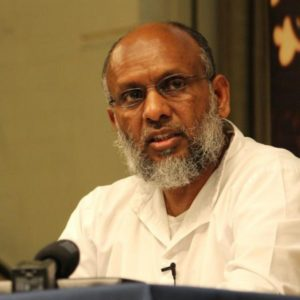
By Muhammad Akram Nadwi
I rose early, as is my long-standing custom. I have never found a time more pure for the soul or more generous to thought than the early hours of the morning. In these moments, the world’s clamor subsides, and the mind becomes like a clear stream, untainted by the footprints of people and the burdens of life. After the dawn prayer, I immersed myself in reviewing my writings and reconsidering ideas I wished to solidify in my research. As I delved deeper into my work, I felt that the morning bestows upon the intellect a hidden strength, as if the light spreading across the horizons also spreads within the soul.
At eight o’clock, I descended to the hotel restaurant. The guests were scattered among the tables like birds gathered around watering places. I joined some of them for a quiet breakfast, interspersed with brief conversations about the conference sessions and the scholars arriving from various lands. Afterwards, we headed to the conference venue. By then, the entire city had awakened, movement flowing through it like a river released after the night’s stillness.
I attended the three morning sessions, listening attentively to the speakers. Most spoke in Turkish, while some spoke in Arabic. In this diversity of tongues, I saw an image of the vast Muslim world — divided by languages, yet united by a single qiblah. At times, I imagine that languages are merely different garments for one spirit.
I met the esteemed Shaykh Khalid Hanafi from Germany, a member of the European Council for Fatwa and Research and a specialist in the jurisprudence of Western Muslim minorities. His speech bore the calmness of scholars refined by experience: neither excessive in his legal verdicts nor rigid in his outlook. I found great comfort in his company, for kindred souls recognize one another just as birds recognize each other in the sky.
We sat drinking tea with Shaykh Bashir Haddad al-Halabi, who mentioned that our teacher, the great scholar ʿAbd al-Fattāḥ Abū Ghuddah — may Allah have mercy on him — used to say: “The believer’s intention is better than his action.” He then explained: “The intention itself is also an action, but it is the action of the heart.” I paused long at this statement and thought to myself: how profound this insight is! People often look only at outward deeds while neglecting those hidden actions seen only by Allah, even though they are the very source from which outward deeds derive their meaning and worth.
I sat for lunch with Professor Mustafa Dadash, a member of the European Council, accompanied by his noble colleague, the researcher Muhammad Fatih. Both were from Konya, the city of Mawlānā Jalāl al-Dīn al-Rūmī — a city in whose alleys the spirits of the dervishes still seem to whirl, even though the people themselves have become still. It was Shaykh Mustafa Dadash who had encouraged me to attend this conference and had worked to arrange my invitation. I therefore felt it only proper to acknowledge his favor, for whoever thanks people has indeed thanked Allah.
In the afternoon, I presented my paper entitled: “Muslims in Western Societies Between Civilisational Witness and the Pressures of Integration: A Critical Reading of the Reality of Muslim Minorities.” I began with an old Persian proverb whose sound I have always loved: “Zabān-e yār-e man Torkī ast wa man Torkī namī dānam” — “The language of my beloved is Turkish, yet I do not know Turkish.” The audience laughed warmly, easing some of the tension of the opening moments, and I felt once again that a gentle word can open hearts in ways long speeches sometimes cannot.
I then spoke about the condition of Muslims in Western societies, not as a passing political issue, but as a profound civilisational and human question connected to identity, existence, and the ability to balance permanence with change. I said that Muslims in the West no longer live in societies where the Sharīʿah serves as the supreme reference for public life. Rather, they have become part of modern societies that redefine the human being, freedom, and values every day. Hence arises the need for a new fiqh — one that combines fidelity to foundational principles with a precise awareness of the nature of the age.
I emphasized that the real problem does not lie in raising slogans of identity — for slogans are the easiest things upon the tongue — but in the ability to transform faith into life, character, and daily conduct that people witness before they hear about it. I mentioned that one of the crises of some contemporary forms of religiosity is that the voice has become so loud that it has drowned out genuine construction and moral formation, whereas Islam first spread through the sincerity of the Muslim individual before it spread through eloquent preachers or abundant disputation.
I then discussed Islamic identity in the West and said that speaking of a “single identity” ignores the complexity of reality. Muslims there consist of many nations, cultures, and experiences. Identity is not a rigid stone but a river continually shaped by language, family, education, and social institutions. The problem is not diversity itself — for diversity is part of human nature — but the inability to manage this diversity and transform it into a source of strength rather than division and conflict.
Thereafter I addressed the nature of the modern state and how it is not entirely neutral, as some imagine, but rather carries its own philosophical and moral conception of humanity and life, visible in education, media, and culture just as it is in law. Thus the Muslim finds himself between two opposing dangers: the danger of isolation, which ends in withdrawal, and the danger of dissolution, which leads to the loss of distinctiveness. The soundest path, I argued, is what I called “conscious critical engagement” — that the Muslim participate positively in society without losing moral clarity or ethical reference.
I then moved to the subjects of religious freedom and human rights. I explained that freedom in its modern form is often understood merely as individual freedom of belief, but this does not always entail accepting religion as a guiding framework for public life. Nevertheless, I rejected the confrontational reading that views the relationship between Islam and the West as one of perpetual war, just as I rejected total assimilation into the dominant culture. Instead, I called for a balanced awareness built upon dialogue, participation, and self-confidence without compromising essential principles.
I concluded by saying that the greatest challenge facing Muslims in the West is not merely proving their right to exist, but transforming that existence into a meaningful moral and civilisational presence. Faith is not a perpetual state of defence, nor merely a set of protest slogans; rather, it is a project for building the human being and directing life itself. The audience listened attentively, and on many faces I saw signs of reflection and interest. Afterwards, they presented me with a certificate for delivering the paper, which I accepted with gratitude and appreciation — not because papers create the value of knowledge, but because they remind a person that a sincere word is never lost.
Afterwards, I departed for Istanbul Airport, arriving there at half past four in the evening. I sat in one of its corners occupied with research and writing while planes took off and landed around me in ceaseless motion, like migrating thoughts that know neither rest nor settlement. That day the airport resembled a small world in turmoil: languages, faces, and footsteps intermingling. Every person was travelling toward a destination unknown to others, as though all humanity journeys along separate roads beneath a single roof.
Shortly before departure, the officers subjected passengers — men and women alike — to extremely strict searches, overlooking neither small nor large matters. They placed me in the same queue and opened my bag, turning over its contents. But when their eyes fell upon the certificate of my conference paper, their attitude changed remarkably. What had been stern caution turned into gentleness and courtesy. They showed such respect and hospitality that I was astonished, as though they had become entirely different people from those of only moments before.
We boarded the aircraft shortly before eight at night. I returned to my work, reading and writing. Praise be to Allah who has occupied me with knowledge in an age when its status has diminished in the eyes of many people, until pursuing it has become, to some, like volunteering in something of no benefit. I am truly amazed by students and scholars who acquire books and take pride in collecting them, yet rarely open them or endure reading them with the patience of a lover listening to the speech of his beloved. Such people are like a man whose beloved has drawn near and for whom the means of meeting her have been prepared, yet he does not approach her; her nearness and distance, her presence and absence, all become the same to him.
After eating a light supper, I slept for two hours, for fatigue had weighed heavily upon me. Before long, the plane descended at Heathrow Airport at a quarter to eleven at night. I praised Allah Most High for His countless blessings and felt in that moment a measure of tranquillity after long travel and constant movement. True blessing does not lie in wealth, nor in the ease of comfort and convenience. The purest blessing of all is that Allah grants a servant a heart that knows gratitude and a tongue that never tires of praising its Lord. And how can a human being ever fully praise the Lord of the worlds when His favours are too numerous to count and too immense to enumerate? Not a single step a person takes except that it is surrounded by blessing, nor a single moment he lives except that within it lies a hidden favour from Allah — unseen except by one whose heart Allah has awakened to gratitude and reflection.