Visit to Farangi Mahal School
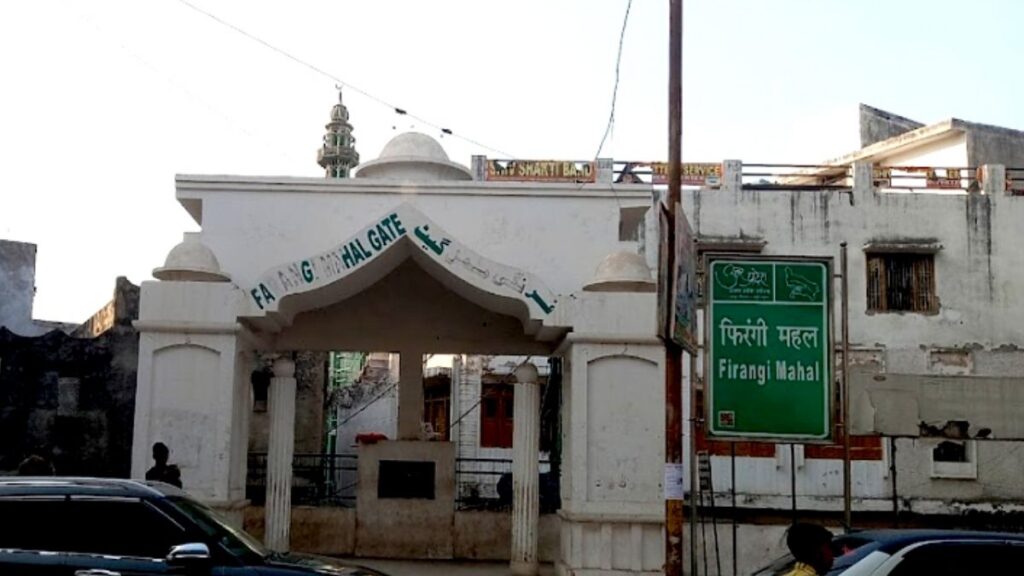
In the Realm of Firangi Mahal
On the morning of Monday, April 6, 2026, we set out for the Firangi Mahal School in the city of Lucknow. I cannot say that we approached it as one would a familiar tourist spot or a place for casual sightseeing. Not all places hold the same significance in the heart, nor do all sights leave the same impression on the soul. Not every wall that the eye passes by leaves the same mark as those walls etched with the passage of centuries and imbued with the secrets of spirits.
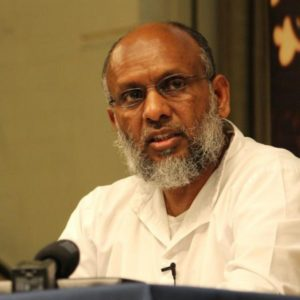
We—myself, Zaid, Professor Muhammad Wathiq Nadwi, and Saud Azami—were journeying to a place we had known before our eyes had ever seen it, a place we had become acquainted with through books before our feet had ever trodden its grounds. We had heard its name echoed in the annals of scholars, in the biographies of men, and in the chains of scholarly transmission long before we heard it spoken in the streets and neighborhoods of Lucknow. In truth, it felt as though we were not merely walking towards a structure of stone or an ordinary school, but towards a living memory, a manifest spirit, and a page of history that remains unturned, for it was not written with ink alone, but with minds and hearts together. This was the university that attracted students from all over India and beyond, before the advent of modern schools and the establishment of new institutions, many of which emerged as reactions to British colonialism rather than as natural extensions of that original, authentic source of knowledge.
There is nothing more profound for the soul, nor more deeply impactful on the consciousness, than reaching a place long imagined, long painted by the mind’s eye, only to find it older, more venerable, and more alive than imagination had ever conceived. Such was our experience upon entering Firangi Mahal; as soon as we crossed its threshold, we felt as though we were shedding the noise of the present era and stepping into the tranquility of bygone centuries. The city’s clamor faded around us, the din of Lucknow’s streets ceased, and we found ourselves in another world—a world where the whispers of scholars, the turning of pages, and the echoes of lessons taught here centuries ago were heard not with the ear, but with the heart, still suspended in the space of this place, never to vanish.
We were welcomed by Maulana Abu al-Hasan Firangi Mahali, who greeted us with the kind of warmth and gentle hospitality that only those who have dedicated their lives to the service of knowledge, who have befriended books, and who understand that history is not narrated by words alone, but by the mingling of tongue and heart, of narrative and emotion, can offer. His conversation with us was not that of a guide enumerating the landmarks of a building for visitors, but of a faithful heir opening a door of memory for a guest, inviting him into the lineage and meaning of the place, making him a partner in its spiritual heritage.
He began to tell us about this palace that became a school, about this house that was initially the residence of a European merchant, which destiny transformed from a worldly trading house into an eternal endowment for knowledge when Sultan Aurangzeb Alamgir gifted it to the descendants of the martyred Sheikh Qutbuddin Sahalwi. How wondrous are the workings of fate upon buildings! A house may be constructed for worldly purposes, only for Allah to bestow upon it another meaning, transforming it into a sanctuary for minds, a refuge for spirits, and a dwelling immortalized not by its original purpose, but by the knowledge it housed and the remembrance it embraced.
Maulana Abu al-Hasan then spoke of Imam Sheikh Nizamuddin Sahalwi Lucknawi, and as we listened, it felt as though we were not merely hearing the biography of a single man, but the story of an entire era, a translation of one of the most fertile periods of Islamic thought in India. This imam, unparalleled in his time in the fields of principles, logic, and theology, was not just a name mentioned and then forgotten, nor a distant figure hidden within the pages of history. He was present in every corner of the place, as if his spirit had never left this school since he sat here teaching students, explaining “Sharh al-Mawaqif,” unlocking the complexities of “Musallam al-Thubut,” bringing the subtleties of wisdom closer, and guiding them through the labyrinths of logic.
How often does the soul tremble when it sees names, once encountered as static in the pages of books, come to life in reality! These halls we passed through, these corridors we stood in, are the very ones that witnessed the birth of the “Dars-e-Nizami,” the curriculum that shaped the scholarly life of the Indian subcontinent, molding its religious and cultural intellect for centuries, making Firangi Mahal a destination for students from diverse lands. As Maulana Abu al-Hasan recounted the subjects of this curriculum—from “Al-Kafiya” and “Sharh al-Jami” in grammar, to “Al-Tahdhib” and “Al-Qutbi” in logic, to “Sharh al-Aqa’id al-Nasafiyya” and “Sharh al-Mawaqif” in theology, to “Al-Hidaya” and “Nur al-Anwar” in jurisprudence and its principles—it seemed as though we were traversing not a school, but a map of the Islamic intellect as it was drawn in India over the centuries.
Each of us, in those moments, had his own silence, shared with no one else. As for me, I was overcome by a strange awe, for which I can find no more precise name than a blend of sorrow and joy together: sorrow that this scientific grandeur that once filled the world with light has left behind only scattered ruins in our modern world, and joy that even these ruins still have the power to inspire and to make the visitor feel connected to an unbroken chain of glory, even if some of its links have weakened.
I saw in the faces of my companions a reflection of this same feeling: Zaid gazed long at the walls as if he wished to compel them to speak, to reveal the secrets they had stored; Professor Muhammad Wathiq Nadwi stood in the calm of a contemplative who had found in the place what he sought of the legacy of the predecessors; and Saud Azami listened to the conversation with genuine attraction, as if hearing for the first time the stories of people he had known for a long time, as if old knowledge had been resurrected anew within him.
We then entered some of the old rooms, and we were struck by their simplicity, which astonished and perplexed the soul. There was no ornamentation to catch the eye, no artifice to entice superficial admiration, nothing of what the eyes have grown accustomed to seeing in modern buildings; rather, there was a pure awe that came solely from knowledge and the feeling that these walls had witnessed minds that changed the face of culture in the subcontinent. There, we felt—without metaphor—that when books are sincere, and when their owners are devoted to them, they create for a place an undying spirit, making the very stones alive and pulsating with memory.
Maulana Abu al-Hasan recounted to us, as we moved from corridor to corridor, what the scholar Abdul Hayy al-Hasani said about this school: “Many distinguished individuals graduated from it, and their blessings spread to the people of India.” In that moment, this statement was not a mere quoted text to be cited, but a tangible truth before us, visible to the eye. The school was not merely a structure standing on the ground, but a great river from which streams of knowledge branched out to all parts of India.
How numerous are the scholars of Firangi Mahal, and how great are those who filled the world with knowledge, literature, research, and scholarship! Though I cannot mention them all here, nor enumerate each of the eminent figures one by one, I cannot overlook mentioning the scholar Abdul Hayy Firangi Mahali, a man whom death claimed before he reached forty, after he had left behind more than a hundred works, all of exceptional value, as if his brief life was too narrow for the knowledge it contained, prompting him to expand it through his books.
When we left Firangi Mahal, we did not leave as we had entered. We departed carrying within us a reverence akin to that of a visitor who has completed a long prayer, feeling that we had not merely visited a place, but touched a layer of time beyond the grasp of clocks and calendars. We walked through the streets of Lucknow, the city around us the same city, the people the same people, the noise the same noise; yet we were no longer the same as we were before that visit.
Some places do not merely allow themselves to be seen; they reshape those who see them, leaving an indelible mark on their spirit. Firangi Mahal, on that day, was one of those rare places that one does not visit once and then move on, but rather it continues to visit him, as long as there remains a vestige of memory.
Translation note: This article was translated by AI. View the original Telegram post.