Two Winters, One Man

Title: Two Winters, One Man
6 January 2026
بسم الله الرحمن الرحيم
I arrived in Oxford, England, from India in January 1991. At the time, I was entirely convinced that I was travelling from one country to another. It was only later that I realised I had, in fact, entered from one temperament into another. My academic papers were in my hands, but the weather did not trouble itself to look at them. It treated me not as a human being, but as an experiment—and experiments, as a rule, are not handled gently.
When I stepped outside, the cold welcomed me as a stern disciplinarian might enter a classroom without warning: watching every movement of the students and imposing new rules and regulations from the very first moment—rules so exacting that one is left wondering which action will incur punishment and which will merely earn a reprimand. In such moments, a person feels utterly helpless, and the impression settles in the heart that every breath will be accounted for, that there will be no margin for error. At once I was reminded of my first day at Nadwat al-ʿUlamāʾ, when I entered Sulaymāniyyah Hostel and Mawlānā ʿAbd al-ʿAzīz Bhaṭkalī, upon seeing us, subjected us to our first appearance under a new set of regulations. The rules were so strict, so detailed, and so astonishing that one could not help but wonder whether they were intended to guide us or merely to intimidate us. And I? I was a new student, still unaware of where it was safe to sit and where only the book of regulations would be opened.
In truth, this entire experience—combined with the cold—was producing a strange kind of irony. On the one hand, the body was trembling; on the other, the mind was persistently asking what lesson these rules and this cold were trying to teach me.
This cold was not a guest, nor a temporary intrusion; it was a permanent resident—one with no flexibility in its principles, announcing its presence with every breath. At every step it circled around me, entering me with each inhalation, informing me that life here must be lived according to its laws, no matter how much one laughed or spoke.
The cold did not shout, did not create a commotion, did not make announcements. It entered silently and settled within, like a quiet listener who speaks little but draws decisive conclusions. Thereafter, a person himself begins to speak less. And even when he does speak, he takes his words out carefully, as though from the pocket of his coat, lest they fall or freeze.
On the very first day I understood that in England, the cold is confronted less with the body and more with temperament. The body can be managed with clothing; temperament requires time. And my temperament was still at customs clearance—showing papers, offering explanations, repeatedly insisting that I was temporary.
In England, the days of January are so short that daylight itself becomes a moral claim—one that even the sun cannot fully substantiate. If the sun does appear, it seems like someone attending a long and purposeless meeting merely to register presence, the first question on his mind being when permission to leave will be granted. Here, the difference between morning and evening is not told by the sun but by the clock—and even the clock appears somewhat despondent, as though it too is unhappy with this responsibility, quietly waiting for the day to end so that the civilised umbrella of night may descend.
Daylight here does not arrive with enthusiasm or joy; it comes like a polite guest—offers greetings, and immediately prepares to depart. And night? Night arrives like a subordinate who takes a seat after the meeting, knowing that his presence is necessary, yet unseen and unacknowledged.
I had come from a village where winter was a collective activity. When the cold arrived, people would naturally gather around a fire. That fire burned not only wood, but subjects.
No topic was forbidden: world affairs, village concerns, last year’s winter, and the perennial question of why this year’s cold was worse—as though the cold itself had a personal agenda.
Sitting by that fire was no less satisfying than a fine meal. The only difference was that plates did not change; conversations did. And sometimes, along with the conversation, the person himself would change. There, the cold touched the body, not the heart.
In Oxford, the idea of winter proved different. Here, the cold was not collective but private—and private to such an extent that acknowledging it was considered bad manners. Each person bore his own cold, as though it were a personal examination. People wrapped themselves in coats, but folded their complaints away, as though they too were official files.
No one was prepared to admit that it was cold. One merely said that the weather was “a little chilly”. This “a little” is a remarkably powerful phrase in England. It transforms full-body shivering into decorum and grants a person permission to remain civil even in discomfort.
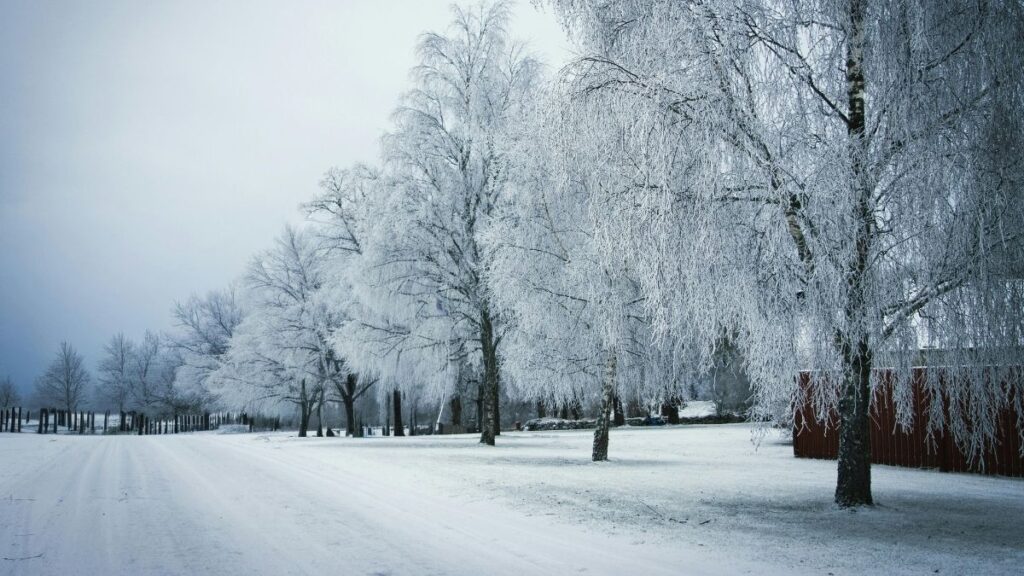
Then the snow began to fall—and this snow was not the product of a poet’s imagination, but a steadfast reality. For two weeks it fell continuously. Oxford turned white: rooftops, roads, trees—even silence itself. At first, it seemed as though the city had politely draped itself in a white sheet. A few days later, it became clear that walking in this sheet—and especially living in it—was no easy matter.
Life almost came to a standstill, yet no one acknowledged that it had stopped. Here, stopping is not called stopping; it is termed an “administrative delay”, and the problem is thus resolved—at least linguistically.
It was during these days that I began learning English. My teacher was an Englishman through and through: orderly in dress, measured in speech, and so frugal with emotion that one occasionally suspected emotions themselves were hired on lease. One day, with utmost politeness, he asked me to write an essay in English. The topic was: “England in Winter”. I thought that if honesty was required, it should begin with the title. And so, with complete sincerity, I wrote: “From a land where the sun never set, to a land where the sun now never rises.” The teacher read the title and remained silent. That particular English smile appeared—the one that surfaces when a person is displeased but manners do not permit expression. He said nothing, merely adjusted his spectacles, as though the real problem lay not in the title but in the angle of vision.
I immediately understood that the teacher was displeased—yet displeased in such a way that if you did not grasp it yourself, no one would inform you. This is English anger: present, yet intangible; felt, yet unreferable.
At that moment, I fully realised that in England, weather and emotions belong to the same family: muted, misty, and exceedingly polite. Here, neither cold nor anger is openly acknowledged. Everything is kept within the bounds of endurance, even if inside everything is slowly freezing.
I was reminded of the winters of my village. There, the sun emerged, people emerged, conversations emerged—and if something remained in the heart, it would come out while sitting by the fire. Here, even the sun emerged with permission, and conversations too were carefully calculated. Having arrived in England, even the sun had learned politeness: to appear less, linger less, and leave a greater impression.
Thus, that arrival in January 1991 was not merely an entry into a country, but into a temperament. On one side was the village winter—confined to the body, yet lighting fires in hearts. On the other was the English winter—slowly gaining access not only to the body but also to the emotions, teaching a person that here cold is not only a matter of touch, but of civilisation as well.
There, sitting around the fire and talking made us human: sparkle in speech, warmth in hearts, and laughter scented with our own world. Every sentence, every smile, was like a small light, dispelling the darkness of winter. And here? Here, sitting by the heater, silence proved us civilised—silence with manners, silence with rules, and silence with that gentle embarrassment that reminds a person that here warmth is not confined to the body; emotions too are subject to regulation.
Thus I learned that some places make us human through conversation, and some through silence. In some countries, the sun rises and hearts remain warm; in others, despite the sun’s presence, emotions freeze like snow. These two forms of cold were not merely meteorological; they reflected temperament, civilisation, and the discipline of silence.
Original source: