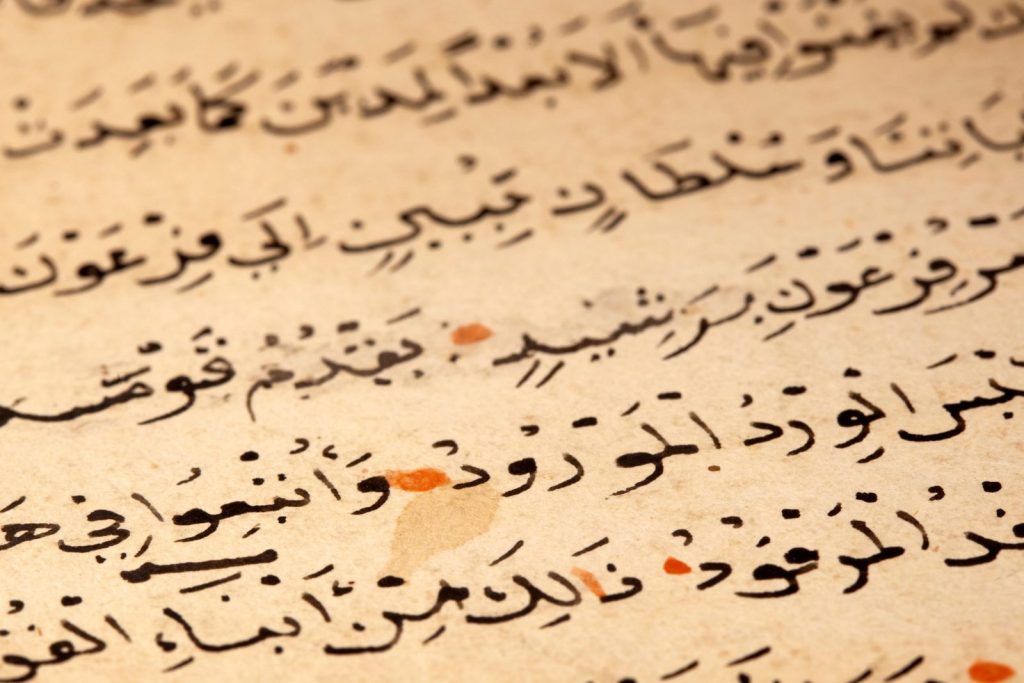
There Are No Limits to Praising Allah
In the Name of Allah, the Most Gracious, the Most Merciful
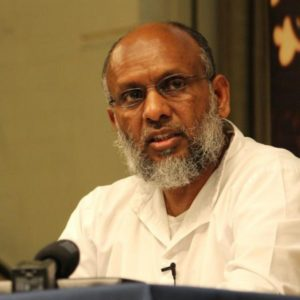
Maulana Syed Muhammad Wazeh Rashid Nadwi (may Allah have mercy on him) was one of the eminent teachers at Darul Uloom Nadwatul Ulama. He possessed an extraordinary talent for teaching Arabic translation and composition. We, the students, were not only influenced by his knowledge and literary prowess but also by his piety, humility, and asceticism, which served as a role model for us. I never heard him backbite anyone, nor did he ever engage in trivial talk. In fact, he was a man of few words. After his passing, I wrote his biography in Arabic and authored numerous articles about him in Urdu.
I had also written one or two articles during his lifetime, reflecting on his teaching and mentoring style. However, Maulana was not pleased with these writings. He was extremely averse to praise and seeking recognition. Despite his affection for me, he privately advised me in our last meeting not to write anything about him in the future, as it caused him discomfort. I am revealing this counsel for the first time today.
It is indisputable that praising Allah purifies the heart, enlightens the intellect, and increases righteousness and piety. In contrast, praising creation (especially when exaggerated) darkens the heart, clouds the intellect, and contaminates deeds.
Every attribute of creation is limited, and humans are no exception to this rule. Whenever someone is praised, it often leads to the misconception that the praised quality is inherent. In reality, humans are creations of Allah, and all their qualities are gifts and blessings from Him. If anyone deserves praise for a good quality, it is solely the Lord of the Worlds. However, in His grace, Allah has permitted a certain level of acknowledgment for humans. Therefore, whenever praising someone, it is necessary to include a phrase that clarifies that the attribute is not intrinsic but bestowed. To believe otherwise is nothing but a falsehood, and falsehood darkens the heart rather than illuminating it.
The second issue with human praise is that humans are inherently limited. Their faculties, time, and space are all restricted, making all their qualities inherently limited. When people praise a revered figure, they often err by elevating them beyond their natural limits. Such exaggerated praise inevitably leads to falsehood. Falsehood never brings blessings, nor does it refine the intellect or correct actions. These exaggerated praises later assume the status of sanctity, giving rise to idolatry, hero worship, and shrine worship—filthy streams of polytheism and disbelief.
Allah’s being has no limits, no beginning, and no end. He is the Creator and Owner of all things. He is the Lord of the Worlds and the Most Merciful of those who show mercy. His power and knowledge are boundless, and everything is subject to His will.
The limited vocabulary of our language is incapable of fully describing His attributes. Even the combined eloquence and rhetorical brilliance of humanity fall short of encompassing His praises.
If all the seas were ink and all the trees pens, and they were used to record His signs, the seas and trees would be exhausted, but His words would remain infinite. Even if these seas and trees were replenished repeatedly, they would still fail to capture even a fraction of His attributes. In fact, if the ink of these seas were solely used to enumerate the blessings Allah has placed within them, the seas would still be insufficient.
It is evident to those of sound intellect that if all scientists and doctors dedicated their lives to uncovering the mysteries hidden within a single little finger of a human being, they would never comprehend its entirety. The secrets within that small finger would surpass all human knowledge.
Who in this universe can unravel the enigma of life and death? Who can measure the vastness of the cosmos? Who can dissect the intricacies of the human brain? Who can unveil the meanings of love and hatred? Who can solve the puzzle of memory and forgetfulness? Who can define space and the spaceless?
Minds will be confounded, intellects suspended, eyes bewildered, and hearts frozen. Yet, the secrets of even the smallest of Allah’s creations will remain unfathomable.
How utterly foolish is the one who dares to praise anyone besides this All-Knowing, All-Powerful Being? Who but the enemy of reason would retain self-awareness in the presence of His majesty? Even if all the prophets lived as long as Noah, they could not articulate even a speck of His praises. Even if all the angels spent millions of years in prostration, glorifying Him, they would still fail to grasp any part of His knowledge and power.
Exalted is the One whose glorification nourishes the intellect. Blessed is the One whose praise is the lifeblood of hearts. Majestic is the One whose attributes elevate creation to higher ranks.
O Allah, the One beyond all and yet encompassing all, we are incapable of praising You as You deserve. We fall short in gratitude for Your blessings. We are ensnared in foolish arrogance and pride. We are nothing but creations of nonexistence. Lack defines us, as it defined our ancestors. We possess no virtues; we are utterly devoid of any merit. Whatever goodness we have is solely Your possession. Only You are worthy of all praise and glorification.
Forgive our shortcomings, overlook our sins, and shower us with Your special mercy in this world and the hereafter, by Your infinite grace and generosity. Ameen, O Most Merciful of those who show mercy.
Category: Islamic Creed, Biography
Original source: View the original Telegram post.