The Voice of ‘Qala Allah’
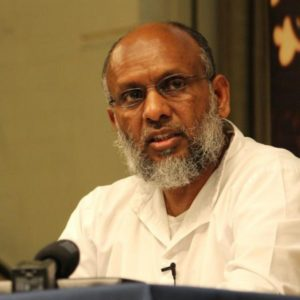
Every seeker of truth who traverses the madrasas and spiritual retreats of the Indian subcontinent often finds themselves engulfed in a strange melancholy and sorrow. Their heart seems to overflow with an inexplicable yearning, a silent ache that defies full expression in words:
“I emerged from the madrasa and retreat, sorrowful,
Neither life, nor love, nor knowledge, nor vision.”
Before their eyes lie centers of learning from which once flowed fountains of enlightenment, where the lamps of thought were lit, and the warmth of faith surged in hearts. But now, there is silence, stagnation, a joyless repetition, as if time itself has held its breath. Here, the recitation of the Book of Allah and the Hadith of His Messenger ﷺ takes place; words are spoken rapidly, yet the message lags behind. Letters are uttered, but meanings languish; voices rise, but impact is absent. The true interpretation of religion is scarce, while the teaching of sects and doctrines prevails. The same books are taught repeatedly, representing specific jurisprudential or theological perspectives, or preserving the sayings and letters of the elders, as if the original source has been sidelined and its interpretations have taken its place.
However, the day of April 4, 2026, proved to be a pleasant exception to this general state. On this day, the historic atmosphere of Farangi Mahal, which itself echoes centuries of scholarly tradition, was introduced to a new zest for life. Under the leadership of Maulana Khalid Rashid Farangi Mahali and the presidency of Maulana Ammar Hasani, overseer of Nadwatul Ulama, a Quran workshop was organized by the “Takreem-e-Insaniyat Foundation.” The blessed gathering was organized by Mr. Muhammad Khalid, and my participation was prompted by Dr. Faisal Iqbal, who had come from Delhi specifically to attend this program, a testament that the spark of desire still flickers in hearts.
This gathering was not merely an academic session but an effort towards spiritual awakening, a voice resonating from the depths of the past into the ears of the present, like an ancient melody played anew on fresh instruments.
Two scholarly papers were presented at the workshop: the first by Dr. Muhammad Nasrullah Nadwi, a professor at Darul Uloom Nadwatul Ulama, titled “The Objectives of Education in the Quran.” The second paper was presented by Maulana Zaki Noor on “The Quranic Concept of Charity, Zakat, and Alms.” Both papers were comprehensive, balanced, and thought-provoking on their respective topics, as if two bright windows had suddenly opened in the darkness, allowing light to pour in.
The participants included educated men and women from Lucknow, whose faces bore seriousness, eyes reflected curiosity, and hearts shone with a silent glow of desire. The atmosphere of the gathering was dignified, free from formal rigidity or undue noise; rather, it was a tranquil environment where each word seemed to plant its seed in the soil of the heart.
Maulana Khalid Rashid and Maulana Ammar Hasani highlighted various aspects of the contemporary relevance of the Quran with great eloquence in their speeches. Their discourse was rich in scholarly depth and awareness of the times’ demands, as if the past and present had become beads on the same string.
The significant session, held after the Dhuhr prayer, was initiated by Mr. Muhammad Khalid. I had met him several times at Nadwa, and his conversation always exuded a warmth, sincerity, and a living pain. In this workshop, he explained the importance of the Quranic call in a simple yet effective manner, devoid of pretension, but rather a true call from the depths of the heart, like a lamp willing to burn itself to illuminate others.
In my address, I mentioned the brief yet illustrious history of Farangi Mahal. It was the last madrasa in India where knowledge was purely knowledge, free from the narrow confines of sects and doctrines. Here, students of various inclinations studied together, presenting a living picture of Islamic unity. If Agra prides itself on the Taj Mahal, and Delhi on the Red Fort and other magnificent buildings, then Lucknow rightfully takes pride in Farangi Mahal.
Farangi Mahal was neither a mausoleum nor a silent, lifeless building; it was a living institution where the nurturing of intellect and thought continued for nearly three hundred years. Students from not only India but from various corners of the world were drawn here, thirsty for knowledge. The institution produced such high-caliber scholarly personalities that perhaps no other madrasa could present even a fraction of it.
I also clarified that today, in this very city, on the land of Farangi Mahal and Darul Uloom Nadwatul Ulama, the voice is rising that is essentially the echo of the revelation from the Cave of Hira—the melodious voice of “Qala Allah,” which, despite the distance of centuries, remains alive with the same freshness, impact, and warmth, as if it has just descended from the heavens and is knocking on the doors of hearts. This is a voice heard not just by ears but by hearts; it is more a state than mere words, and more a living reality than mere expression.
Hali, the compassionate and virtuous poet, depicted this message in a simple yet impactful manner:
“He descended from Hira towards the people,
And brought with him a manuscript of alchemy.”
This “manuscript of alchemy” is indeed the Quran, which united the scattered and fragmented people of the Arabian desert into a nation that became a shining example of morality, justice, knowledge, and spirituality. It was this alchemy that turned dust into gold, slaves into leaders, and a directionless people into the leaders of history.
But alas, today we have adorned this alchemy on shelves, made its recitation a ritual, and forgotten its contemplation. We repeat its words but remain heedless of its message; we labor over its pronunciation but are deprived of its guidance.
The truth is that the reform of Muslims does not lie in sayings or letters, nor in dry laws or soulless theology. All these are important in their place, but unless they are connected to the original source, they remain mere shells, devoid of spirit. The true reform of Muslims lies in the very book that was once made the diary of life, which was not just read but lived, whose commands were not just heard but transformed into action.
It is the book that gave birth to a truthful one like Abu Bakr, whose truthfulness became the measure of faith; produced a just one like Umar, whose justice became an example until the Day of Judgment; raised a loyal and devoted figure like Khadijah, whose love supported the initial burden of prophethood; and nurtured an intelligent and scholarly woman like Aisha, whose knowledge guided the intellectual direction of the Ummah.
This is the book that, if adopted today with the same sincerity, contemplation, and practical commitment, can once again breathe life into dead hearts, reunite scattered ranks, and return the Ummah to its original position.
The need is not to chase after new interpretations, but to once again listen to the primordial voice of “Qala Allah,” to let it descend into our hearts, and to mold our lives according to its framework. This is the path that grants unity to fragmented existence, and this is the light that transforms darkness into illumination.
Today, there is a need to make the lessons of the Quran common from city to city and village to village. Every home should be made a center for the contemplation of the Book of God, every heart illuminated by its light. Time should be spent on the Quran, it should be understood, and it should be pondered upon.
Allah Almighty has not commanded that the Quran be completed repeatedly, but has repeatedly emphasized that it be contemplated, its meanings delved into, and its message implemented in life.
Mr. Khalid is rightfully deserving of congratulations for lighting the lamp of this blessed endeavor, a lamp that, if preserved, can one day illuminate the horizons. Similarly, the administrator of Nadwa, Maulana Bilal Hasani, is also engaged in making the lessons of the Quran common, and his effort is like a silent yet fertile river carrying countless waves of life within it.
If these efforts are united, draw strength from each other’s light, and are threaded together, it is not far-fetched that they may herald a great intellectual awakening, an awakening that transforms not only minds but also hearts and characters.
This is the voice of “Qala Allah,” which, when it descends into the hidden chambers of the heart, changes not only a person’s thoughts but also their destiny; this is the light that transforms decline into ascension, and darkness into light.
Translation note: This article was translated by AI. View the original Telegram post.