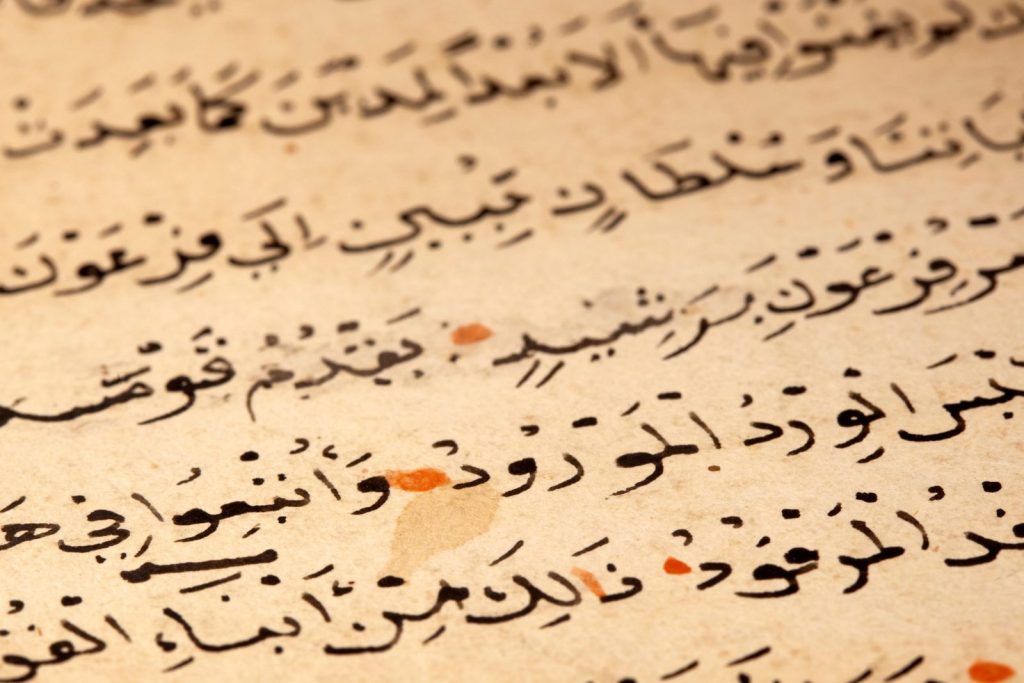
The Quran: A Living Dialogue of the Contemporary Age


The Quran: Historical Text or Living Address?
Regarding the understanding and interpretation of the Holy Quran, the most fundamental question is whether this book is merely a historical text—its relevance confined to the era of its revelation—or whether it is a living address that speaks directly to every subsequent reader, just as it did to its first audience, and actively shapes their lives. This question is not limited to academic discourse; rather, it has profound implications for human existence and practical life, because it determines the direction of Quranic contemplation, reasoning, and application.
The Quran itself clarifies its nature: it is guidance, insight, admonition, remembrance, warning, and glad tidings. It is not merely a collection of stories or historical narratives, but a practical and existential book that addresses the human being of every age in light of their circumstances, intellectual challenges, and moral decisions. History and narrative function only as mediums through which its guidance is conveyed.
The Purpose of Quranic Narratives
A study of Quranic narratives reveals that they are not ends in themselves but serve the higher purpose of guidance. Their division, occasional repetition, and apparent digressions are employed according to narrative structure and pedagogical wisdom. For example, the story of Prophet Joseph ﷺ is presented in full within a single chapter (surah), and this exception itself points to a specific wisdom.
In contrast, other narratives are dispersed across different surahs for varying purposes: sometimes for admonition, sometimes for warning, sometimes for glad tidings, and sometimes for moral instruction. The sentences and addresses that appear within these narratives—seemingly interrupting the narrative flow—actually propel the central current of meaning and guidance forward.
Direct Address to the Reader within Narratives
Consider, for instance, the dialogue between Moses ﷺ and Pharaoh in Surah Ta Ha. Pharaoh asks, “What then is the state of the former peoples?” Moses replies, “The knowledge thereof is with my Lord, in a record. My Lord neither errs nor forgets.” Immediately following this exchange, Allah states:
“He who has made the earth for you like a cradle, and inserted into it roads, and sent down water from the sky, and produced thereby categories of plants—eat and pasture your cattle…”
This statement is not part of Moses’s reply; rather, it is the Quran’s direct address to the reader. In this way, the narrative becomes not merely an account of past events but a living medium for teaching, training, and guidance—practical, moral, and existential—for every reader.
Similarly, in Surah al-A‘raf, the promise of divine mercy is made conditional upon faith, piety, and adherence to the Messenger. This condition is not restricted to the era of revelation; it applies equally to every reader who encounters the verse and understands it as a personal address. Likewise, in the mention of Jesus ﷺ, the declaration of his servitude to God followed by the negation of his divinity is not simply a doctrinal clarification but a means of guidance and correction for readers of every age.
Alignment with Modern Hermeneutics
This approach also aligns with key principles of modern Western hermeneutics. According to Hans-Georg Gadamer and Paul Ricoeur, the meaning of a text emerges not only from its historical context but through its interaction with the reader. Meaning is generated not solely in the past but in dialogue with the reader’s experiences, cultural background, and existential situation.
A similar dynamic is evident in the Quran. The reader is not a passive or neutral observer but an active participant in the emergence of meaning, bearing responsibility for how that meaning is received and enacted.
However, unlike open-ended hermeneutical models, the Quran does not leave this interaction indeterminate; it explicitly addresses the reader’s intention, moral agency, and accountability. Thus, every Quranic address operates simultaneously: it transforms past events into present instruction and future guidance. In this sense, the Quran becomes a living dialogue in which every reader participates and for which every reader is responsible.
Islamic Principles of Quranic Understanding (Usul al-Tafsir)
The Islamic principles of Quranic interpretation (Usul al-Tafsir) likewise affirm that the Quran should not be approached solely as a literal or historical text. Scholars have consistently maintained that Quranic address is purpose-driven and objective-oriented. Every verse and narrative possesses complete meaning within its immediate and broader context.
Foundational interpretive concepts—such as i‘tirad (parenthetical insertion), istiṯrād (purposeful digression), and iltifāt (grammatical or rhetorical shift)—enable readers to identify embedded addresses within the text and to relate them to their own lived realities. This hermeneutical approach is also evident in the scholarly tradition. When Shams al-Din al-Dhahabi cites Abu al-Hasan al-Ash’ari, he is not merely recording a historical position but extracting lessons relevant to the theological and intellectual challenges of his own time. Under this principle, both the Quran and the scholarly tradition remain alive and responsive to their audiences.
Conclusion: The Quran as a Living Dialogue
If the Quran is approached merely as a relic of the past, it remains a historical document. But if it is read as a living address—engaged through hermeneutical interaction and existential responsibility—then the reality of its revelation becomes present at every moment. Each verse, narrative, and address acquires renewed relevance and transformative power for the contemporary reader.
In this way, the moment of revelation is continuously re-enacted, and the Quran remains a source of guidance, admonition, insight, and practical direction for humanity in every age. It is not preserved history alone; it is enduring speech, alive at every moment, shaping lives and sustaining an ongoing dialogue with its readers.
Thus, the Quran is truly a living dialogue of the contemporary age. Understanding the depth of this dialogue—and holding one’s own existence accountable to it—is the responsibility of every reader. This is the foundation of the Quran’s contemporaneity and perpetuity.
⸻