Sighting the Crescent

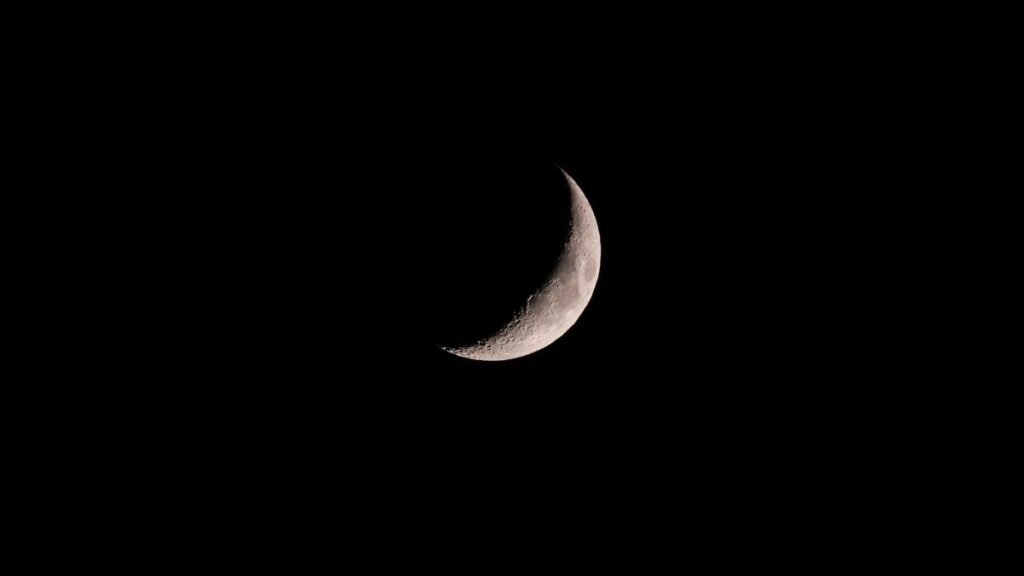
They said: The scholars have differed greatly regarding the sighting of the crescent, dividing the Muslims in determining the beginning of the month of Ramaḍān, the day of ʿĪd al-Fiṭr, and the day of ʿArafah and the Ḥajj. This has led to fragmentation and discord among them. Thus we see people in a single country—even within a single mosque—some fasting while others break their fast; some celebrating the ʿĪd while their brethren do not. Allah has made the ʿĪd a day of unity and closeness, yet we have turned it into a day of estrangement and division among families, relatives, and friends. Among the matters that bring us shame is that schools grant ʿĪd holidays to one group of students on one day, and to another group on the following day, such that non-Muslims mock us for it.
I said: The root of all this lies in the intrusion of some muftīs into matters that do not concern them, involving themselves in difficulties they neither know how to enter nor how to exit. It would have been incumbent upon them to teach people the affairs of their religion, to connect them to their Lord, to purify them from sins and wrongdoings, and to refine them from shirk, innovations, envy, and hatred. As for worldly matters, they should be left to those qualified to resolve them according to their own standards and measures, guided by their languages, customs, intellects, and methods.
They said: How have you made determining the beginning of the months a worldly matter, when the Prophet ﷺ himself undertook it and commanded his Companions and the entire Ummah to do so? I replied: It is so from two perspectives. They said: What are they? I said:
The first: Unifying the sighting is an organisational matter, not a religious one. People differed over crescent sighting in earlier times as well, but they were more intelligent in mind and purer in heart than we are. They recognised that the matter relates to social practice—fasting and ʿĪd—so they agreed upon one opinion among the various views. This is how all nations and peoples behave: they differ, then they seek a way to reach agreement in social matters. However, those who differ today regarding the sighting have failed to unite upon a single view. Had unity of the Muslims truly been their objective, they would have found a way—either through consensus, majority agreement, or even by voting.
The second: The sighting of the crescent is a linguistic matter, not a religious one. Linguistic expressions carry one of three meanings: a dictionary meaning, a customary meaning, or a technical meaning—of which the latter includes legal (sharʿī) terminology. Thus, ḥajj in the Book of Allah and the Sunnah of His Messenger carries a legal meaning; khimār is understood in its customary sense; and terms such as ghusl, masḥ, face, and hand in the verse of wuḍūʾ are understood according to their dictionary meanings.
I said: Jurisprudence (fiqh) concerns itself with the obligation of ghusl and masḥ, but the meanings of ghusl and masḥ themselves are not determined by fiqh; rather, their meanings are what people understand in their language—the language in which the Book of Allah was revealed.
Similarly, the sighting of the crescent is a linguistic matter governed by people’s conventions. In earlier times, people relied upon visual sighting; they would search for the crescent on the thirtieth night. If they sighted it, they judged the beginning of the new month; if they did not, or if it was obscured, they completed thirty days. They knew that the month would be either twenty-nine or thirty days.
Today, however, science has advanced greatly, and scholars are able to determine with precision the birth of the new crescent—what is called conjunction.
As for the Prophet ﷺ personally undertaking the sighting and commanding his Companions to do so, that was because a religious ruling depended upon it, and there was no means of determining it except by direct observation. In our time, however, the matter is known through astronomical calculation, and does not depend upon our seeing it.
They said: But the ḥadīth states: “Fast upon its sighting and break your fast upon its sighting,” thus linking it to sighting, whereas knowledge of conjunction is not sighting. I replied: If it is obscured from you and you complete thirty days, do you determine the month based on sighting? They said: No, there is no need for sighting, since it is impossible for the month to exceed thirty days. I said: Then when you possess certain knowledge, you abandon sighting. Likewise in our case: the knowledge of astronomers regarding the birth of the moon is as certain as your certainty that the crescent cannot appear on the thirty-first night.
They said: Have customs changed in other matters since the time of the Prophet ﷺ such that jurists have followed a new convention? I replied: Measures, weights, and units have all changed. People no longer weigh in raṭl, measure in ṣāʿ or mudd, nor measure length in cubits, nor distance in farsakhs or footsteps. Yet some of the gravest prohibitions—such as ribā—are based upon these measures. Despite this, we do not adhere to the measures of the Prophet’s time; rather, matters have reversed: what was measured by volume is now weighed, and what was weighed is now measured in many places.
They said: Your example concerns transactions; give us an example from acts of worship. I said: What is the greatest act of worship? They said: Prayer. I said: Its times are based on the rising, zenith, and setting of the sun—all of which relate to observation. Hence the Prophet ﷺ would command delaying Maghrib on cloudy days out of fear that the sun might not yet have set. It is reported from ʿAbd al-ʿAzīz ibn Rafīʿ that the Messenger of Allah ﷺ said: “Hasten the daytime prayer on cloudy days and delay Maghrib.” And from Buraydah al-Aslamī: “We were with him on an expedition, and I heard the Prophet ﷺ say: ‘Pray early on cloudy days, for whoever misses the ʿAṣr prayer, his deeds are nullified.’” Similar reports are narrated from the Companions and the Successors.
I said: Yet Muslims for a long time now have relied on calculation, not sighting, in determining prayer times across the world. Scientific calculation is precise and reliable; therefore, they no longer recommend hastening Ẓuhr or delaying Maghrib on cloudy days, because they rely on knowledge, not observation.
They said: Then what do you command us? I said: Do not waste your energies on these fruitless disputes that do not bring you closer to your Lord. Entrust matters to those qualified for them, and rely upon the precise determinations of astronomers in establishing the beginnings of months.
They said: Would it harm you if agreement were reached upon visual sighting? I said: It would not harm me, but it will never be achieved. Be servants of Allah in humility, and do not be arrogant upon His earth. It is indeed a form of arrogance to deny the right of astronomers and to claim knowledge that you do not possess, thereby causing division and discord among the Muslims.
Original source: