Shibli Nu’mani: A Legacy of Scholarship and Reform
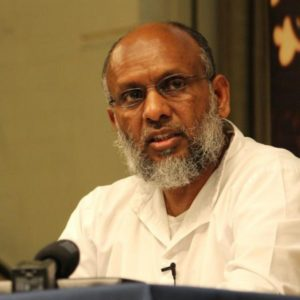
Shaykh Akram Nadwi
Muhaddith & Islamic Scholar

Shibli Nu’mani: A Legacy of Scholarship and Reform
by: Dr Mohammad Akram Nadwi
Oxford
In the intellectual and cultural history of South Asia, few names stand out with the brilliance and lasting influence of Shibli Nu’mani (d. 1914). A towering figure among Islamic scholars and historians, Nu’mani’s life and work represents a bridge between the classical traditions of Islamic scholarship and the urgent reformist currents of colonial India. His scholarship in Arabic, Persian, and Urdu, alongside his profound commitment to both intellectual rigor and educational reform, marks him as a central figure in shaping modern Islamic thought in the Indian subcontinent.
Nu’mani’s formative years showed a remarkable appetite for learning. He developed a strong command of Arabic and Persian, while refining his literary style in Urdu. This combination allowed him to engage with a wide range of classical and contemporary sources, positioning him as both a custodian of the Islamic intellectual heritage and a visionary interpreter of its relevance in a rapidly changing world.
In contrast to contemporaries like Sir Syed Ahmad Khan, whose style often reflected Western influence, Nu’mani’s writing style remained rooted in the idioms of Urdu and Persian, marked by clarity, simplicity, and elegance. His literary expression mirrored his intellectual clarity: purposeful, refined, and deeply resonant with a wide audience.
Nu’mani’s contributions to education were neither confined to the lecture hall nor limited to theoretical discourse. He was passionate about institutional reform, beginning with his early association with the Aligarh Muslim University. However, philosophical divergences led him to part ways with Aligarh in 1898, after which he founded the National English School in Azamgarh, an institution designed to balance modern education with traditional Islamic values.
His educational vision reached its height with his involvement in Nadwat al-‘Ulama, a groundbreaking initiative that sought to reimagine the curriculum of Islamic seminaries. At Dar al-‘Ulum Nadwat al-‘Ulama, Nu’mani played a central role in integrating traditional Islamic sciences with contemporary disciplines, reshaping how religious knowledge could be taught and internalized in a modernizing world. Later, he founded Dar al-Musannifin (The House of Writers), an academy dedicated to research, writing, and the cultivation of scholarly excellence, a legacy that continues to flourish.
Nu’mani was an ambitious scholar, committed to revitalizing Islamic intellectual life through rigorous historical research, literary criticism, and biography. He engaged with both Eastern and Western scholarly methodologies, resisting binary oppositions between tradition and modernity. One of his most enduring contributions is Sirat al-Nabi, a monumental biography of the Prophet Muhammad (peace be upon him). Though unfinished at his death, the project was lovingly completed by his devoted student, S. Sulayman Nadwi, and remains a landmark in South Asian Islamic historiography.
His works such as Al-Faruq, a detailed study of the Caliph ‘Umar ibn al-Khattab, and Al-Ghazali, a monograph on the renowned theologian, demonstrate Nu’mani’s ability to draw from classical sources while making them accessible to contemporary readers. These works not only demonstrate scholarly rigor but also serve as models for Islamic biography and historical analysis.
Perhaps his most celebrated literary achievement is Shir al-‘Ajam, a multi-volume critical study of Persian poetry. Published between 1908 and 1912, with its final volume appearing posthumously in 1918, Shir al-‘Ajam remains a seminal work in Persian literary criticism. In it, Nu’mani explores the richness of Persian poetic tradition and its influence on Urdu, setting a benchmark for literary scholarship in the subcontinent.
In works such as his critique of Jurji Zaydan’s Al-Tamaddun al-Islami, Nu’mani demonstrated an impressive command over comparative methodologies and put forward a spirited defense of Islamic intellectual traditions. These interventions marked him as an active scholar in shaping the intellectual discourses of his time.
Poetry, for Nu’mani, was more than ornamentation; it served as a vehicle for moral awakening and political consciousness. Throughout his life, he participated in poetic contests and gatherings, contributing verses that evolved in tone and content across four distinct phases. In his later years (1908–1914), his poetry increasingly reflected political, ethical, and emotional concerns, capturing the anxieties and aspirations of a colonized Muslim community.
One of his most poignant compositions, Shuhada-i Qaum (“The Martyrs of the Nation”), stands as a lament for the Muslims killed during the Cawnpore Incident of 1912. Free from the constraints of traditional poetic mentorship, Nu’mani’s poetic voice was original, capable of addressing both personal sorrow and collective trauma. His poetry resonated not just as literary achievement but as a form of social engagement.
Nu’mani’s life and legacy resist simple categorisation. He was a poet, historian, theologian, reformer, and educator. His vision of Islamic scholarship was expansive, rooted in a reverence for tradition yet always open to renewal. He understood the intellectual and cultural dilemmas posed by colonial modernity and worked tirelessly to respond to them with reformation.
His influence extended well beyond his own lifetime. The institutions he helped shape, the books he authored, and the students he mentored, including the eminent Sulayman Nadwi, continue to bear the stamp of his genius. My Arabic biography of Nu’mani, published by Dar al-Qalam in Damascus in 2001, offers an analysis of his intellectual contribution and remains one of the most comprehensive studies of his life and work in Arabic language. Part of a distinguished series on Muslim intellectuals, the biography situates Nu’mani within the broader currents of Islamic reform in colonial India.
In summary, Nu’mani was not merely a man of letters, but a craftsman of ideas, a builder of institutions, and a steward of an expansive intellectual tradition. He lived during a period of deep cultural and political upheaval, yet remained steadfast in his belief that Islamic scholarship could rise to meet the challenges of modernity. His works, deeply scholarly yet widely accessible, continue to inspire generations of students, scholars, and reformers.
In the evolving landscape of South Asian Islam, Nu’mani stands as a beacon: illuminating the path between fidelity to tradition and openness to reform. His life reminds us that true reform is never a rupture, but a renewal, and that the heart of such renewal lies in deep knowledge, principled thought, and a tireless commitment to the truth.
Follow the الشيخ محمد أكرم الندوي channel on WhatsApp:
https://whatsapp.com/channel/0029VbAxp2qGpLHHqQ3LoY0w