Al-Mahdi
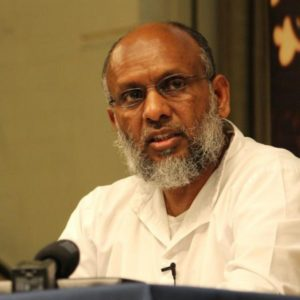
Shaykh Akram Nadwi
Muhaddith & Islamic Scholar

Al-Mahdi
By: Dr Mohammad Akram Nadwi
Oxford
Question:
As-salāmu ʿalaykum wa raḥmatullāhi wa barakātuh.
Respected Shaykh Dr Mohammad Akram Nadwī, may Allah protect and preserve you.
There has been a growing trend of dismissing the emergence of al-Mahdi and the return of Sayyidunā ʿĪsā (ʿalayhi as-salām), based solely on the claim that the hadiths about them are weak. Could you please clarify the correct Islamic stance on these two matters and explain whether these hadiths are reliable?
Jazākum Allāhu khayran.
Your brother,
Adeeb Shums
Imam and Teacher in Vancouver, BC, Canada.
Answer:
The belief in the emergence of al-Mahdi and the return of ʿĪsā ibn Maryam (peace be upon him) has occupied a significant place in Islamic eschatological discourse. While the second coming of ʿĪsā (ʿalayhi al-salām) is widely affirmed across the Sunni tradition and grounded in sound hadith reports, the narrative surrounding the figure of al-Mahdi remains the subject of scholarly scrutiny and divergent interpretations, particularly concerning the authenticity and doctrinal weight of the relevant textual evidence.
1. The return of ʿĪsā (peace be upon him):
The return of ʿĪsā ibn Maryam (peace be upon him) is established by numerous authentic (ṣaḥīḥ) narrations and has reached the level of consensus (ijmāʿ) among Ahl al-Sunnah. Reports found in the Ṣaḥīḥayn—Ṣaḥīḥ al-Bukhārī and Ṣaḥīḥ Muslim—alongside other canonical hadith collections, describe ʿĪsā’s eschatological descent. These narrations affirm his role in abolishing false doctrines, breaking the cross, killing the swine, abolishing the jizyah, and establishing global justice in alignment with the final prophetic message.
The doctrinal certainty surrounding this belief stems from both the strength and multiplicity of the reports, which include well-established chains of transmission and clear prophetic statements. I have addressed this subject in greater detail in a separate article, wherein the theological and hadith-based evidences are systematically presented.
2. The Hadith corpus on al-Mahdi – a review of sources:
In contrast to the case of ʿĪsā (peace be upon him), narrations relating to an independent eschatological figure named al-Mahdi are notably absent from some of the most rigorously authenticated hadith compilations, including al-Muwaṭṭaʾ of Imām Mālik and Ṣaḥīḥ al-Bukhārī. The only direct mention of the term “Mahdi” in Ṣaḥīḥ Muslim does not refer to a distinct future figure but rather appears as a descriptive title for ʿĪsā himself.
This usage aligns with the lexical meaning of mahdi—“the rightly guided one”—a term historically used to describe various righteous leaders, including the rightly guided caliphs: Abū Bakr, ʿUmar, ʿUthmān, and ʿAlī (may Allah be pleased with them). In the context of hadith literature, such usage may be honorary or descriptive rather than referring to a specific individual appearing at the end of times.
3. Assessing the Hadiths on an independent Mahdi:
Despite the absence of such reports in al-Bukhārī and Mālik, numerous narrations concerning al-Mahdi appear in secondary collections such as Sunan Abī Dāwūd, Jāmiʿ al-Tirmidhī, and Musnad Aḥmad. These narrations typically describe a man from the family of the Prophet ﷺ who will emerge before the Day of Judgment to restore justice after a period of widespread tyranny.
However, the majority of these reports are classified as weak (ḍaʿīf), primarily due to deficiencies in their chains of transmission, including the presence of unreliable or obscure narrators, disconnected isnāds, or textual anomalies (ʿilal). Some scholars have attempted to raise their status to ḥasan (acceptable) or even ṣaḥīḥ (authentic) on the grounds of the cumulative strength derived from multiple weak chains conveying a similar message.
Nevertheless, this methodological move is contested. A large number of weak reports does not necessarily result in reliability, particularly when the weaknesses are substantive and shared across chains. Authenticity, as the scholars of hadith have rigorously maintained, is not a matter of numerical accumulation alone but rests on the integrity, precision, and continuity of the isnād.
4. Theological significance: Is belief in al-Mahdi part of ʿAqīdah?
From a theological standpoint, it is noteworthy that belief in an eschatological Mahdi is not included among the essential tenets of creed (ʿaqīdah) in the classical literature of Ahl al-Sunnah. Foundational texts such as al-ʿAqīdah al-Ṭaḥāwiyyah of Imām al-Ṭaḥāwī (d. 321 AH), al-Ibānah of al-Ashʿarī (d. 324 AH), and al-Fiqh al-Akbar attributed to Imām Abū Ḥanīfah, make no mention of al-Mahdi as a creedal requirement. This consistent omission among the early theological authorities reflects a consensus that the belief, though present in some scholarly discourses, is not central to salvation or orthodoxy.
The later introduction of Mahdist doctrine into creedal frameworks has often been shaped by political or sectarian motivations. Historically, Mahdist expectations were instrumentalized by various groups, including certain Shia sects and fringe Sunni movements, to legitimize uprisings or claim divine authority. These developments frequently led to sectarian strife and communal instability, reinforcing the need for caution in elevating speculative eschatological claims to doctrinal certainties.
5. Pragmatic guidance – Avoiding sectarian division:
Even if one were to accept the probability of a future Mahdi based on cumulative narrations, this belief should not be used as a criterion for orthodoxy, nor as a source of division among Muslims. The ummah has always accommodated a broad spectrum of opinions on secondary and tertiary matters, especially those related to the unseen and the future. Contentious debate or preoccupation with the identity and timeline of al-Mahdi distracts from the more pressing imperatives of Islamic daʿwah: nurturing faith (īmān), fostering righteous conduct (ʿamal ṣāliḥ), purifying the soul (tazkiyah), and establishing justice.
In our current context, marked by profound moral, social, and intellectual challenges, it is counterproductive to fixate on ambiguous and contested eschatological narratives. The prophetic guidance is clear: focus on what benefits the soul and community in this life and the next. Prioritizing belief in Allah, adherence to the Sunnah, observance of the pillars of Islam, and pursuit of excellence in character and knowledge is of far greater consequence than speculating about end-time figures whose existence is neither unanimously affirmed nor fundamentally required.
Follow the الشيخ محمد أكرم الندوي channel on WhatsApp:
https://whatsapp.com/channel/0029VbAxp2qGpLHHqQ3LoY0w