Sharing Halwa in Return

On Wednesday, the 26th of Ṣafar, 1446 Hijrī, I went, as usual, to the hotel restaurant for breakfast. The place was alive with its usual bustle when suddenly my eyes fell upon our dear student and respected friend, Muḥammad ʿAlī Rasūl, sitting quietly in a corner, sipping coffee. His solitude was not mere solitude; he seemed immersed in a serenity and contemplation that belongs to the people of heart. I also took my breakfast and sat down opposite him, and so our conversation began.
At the outset, he mentioned my method of teaching and, with much sincerity, remarked that students were truly benefitting from it. This brought reassurance to the heart. But human conversations do not remain fixed on one subject. As the talk shifted, it turned towards Rabīʿ al-Awwal and the gatherings of Mawlid.
Rasūl spoke with seriousness: “For an entire month, in our countries, uproar will prevail. At times, this uproar takes hold with such intensity that all distinction between truth and falsehood is lost.”
I replied: “Indeed, if only those who believe in Mawlid were to observe it, perhaps the noise would be less. But the actual state of affairs is that some use this occasion to organise sīrah conferences or training programmes, while others dedicate their entire energy to rejection and opposition. Thus, the whole society, one way or another, ends up observing this month. The purpose ceases to be practising religion or worshipping Allah; rather, the chief concern becomes: my sect is superior and only I am upon the truth. It is this spirit that comes to dominate the whole activity.”
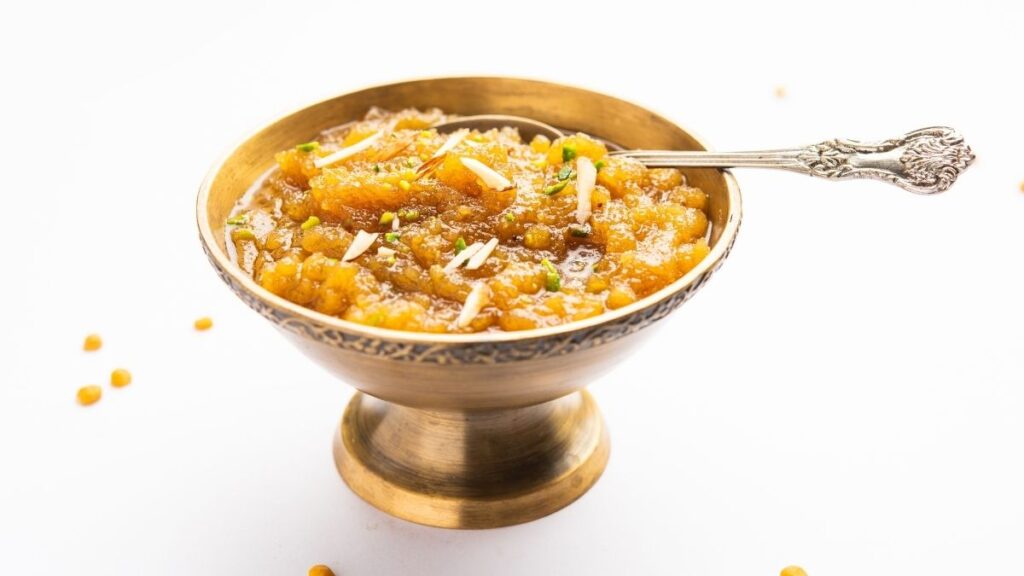
Hearing this, Rasūl shared a personal example. His words were simple but carried deep meaning: “Our family lived a modern lifestyle. Both my parents were in employment. In Rabīʿ al-Awwal, when those celebrating Mawlid in the neighbourhood would distribute halwa to every household, it would also reach us. My mother would say: we are neither Deobandī nor Barelwī. We have little to do with this uproar. Yet it always seemed distasteful that we should eat others’ halwa but give nothing in return. But since the demands of employment and household work left little time to prepare it ourselves, my father would buy halwa from the market and instruct us children: go and distribute it in the neighbourhood. Thus, our halwa was really only halwa of return or compensation; it had no true connection with the Mawlid gathering itself.”
At this I also recalled a personal memory. In our village there was a custom of cooking food and distributing it on the night of Barāʾah. Some families did it out of personal inclination or custom. My own family, thinking it unbecoming to eat others’ food while offering nothing themselves, began preparing and distributing food too. This practice had less to do with religion or worship and more to do with preserving social decency.
Both incidents, though seemingly small, expose a larger reality of our society: religious ceremonies and symbols are often driven less by the spirit of faith and more by the customs of community.
The motive for our actions, more often than not, is not to revive the religion, spread the Prophetic sunnah, or attain nearness to God through worship. Rather, the true concern becomes that our honour is maintained before our peers, that we not fall behind others, and that our sectarian identity remains intact.
This is why, whether Rabīʿ al-Awwal gatherings or Barāʾah feasts, what predominates in them is not religion but rivalry, sectarian pride, and social display.
This is the point we must not overlook. The essence of Islam is that the foundation of worship and good deeds lies in intention. If the intention is pure, even a small deed is magnified. But if the intention is custom or ostentation, then even the greatest deed is reduced to a mere ritual.
This reflection reminds us that we need to reassess our social activities and religious celebrations. Do we engage in them to revive the memory of religion and keep the sunnah alive? Or are we simply driven by communal pressure, social custom, and sectarian pride?
This question must awaken in the heart of every Muslim. For if the basis of action is not sincerity, then it becomes mere custom rather than religion—and this is the very danger that has entangled our community in the storms of subsidiary disputes.
Original source: