See the World Through the Eyes of Mawlānā Abū al-ʿIrfān Nadwī

In the history of human societies there is a strange yet repeatedly recurring tragedy: when a weakness becomes widespread, people begin to regard it as a standard. If the majority is ignorant, ignorance is renamed simplicity; and if most people avoid reflection, that lack of thought is disguised under the title of peace of mind. Yet sound reason demands the exact opposite. Numbers have never been a measure of truth. If thousands repeat the same mistake, the mistake may grow in scale, but its reality does not change. Falsehood, even when spoken by a crowd, remains falsehood.
The truth is that most people are afraid to think, because thinking is a responsibility. Reflection pushes a person to ask questions, and questions challenge many of the traditions and assumptions upon which societies build their collective psychology. For this reason, the crowd rarely likes the person who thinks. The crowd prefers only the echo of its own voice. History, however, testifies to the opposite. The crowd has never discovered the path; the path has always been shown by a few awakened hearts and courageous minds.
When an age was convinced that the earth was stationary, it was a single perceptive mind that looked at the heavens from a new angle and dared to understand the order of the universe differently. When the doors of knowledge and inquiry were being locked by the chains of blind imitation, a few people of insight tried to keep alive the tradition of independent reasoning and critical thought and challenged intellectual stagnation. Every great intellectual revolution in human history has in fact been the result of the courage of a minority to think. If that minority had bowed to the pressure of the crowd and remained silent, saying, “Since most people do not think this way, neither should we,” then humanity’s intellectual and moral progress would never have been possible.
Similarly, our judgments about people are often devoid of justice. We see a single mistake and pass judgment on an entire personality. Yet a human being is not completely defined by one moment of error. A thief does not remain a thief forever, and one who errs is not always an offender. Human history bears witness that many individuals made mistakes in the beginning, yet later became the very means through which doors of reform and goodness were opened.
A person is recognized not by a single act but by the entirety of their journey. Someone who was wrong yesterday may have returned to the truth today; and someone who stands upon truth today is not guaranteed to remain steadfast tomorrow. Therefore the fundamental principle of justice is that every matter should be evaluated in the light of its evidence, not permanently tied to someone’s past.
The same principle should apply to groups and sects. Human nature tends to regard its own group as the embodiment of purity and another group as the embodiment of error. Yet reality is far more complex and balanced. No group possesses the truth completely, and no group is the complete image of falsehood. Within every human community there are some correct ideas and some intellectual or practical errors.
For example, if one disagrees with certain beliefs or practices of the Shīʿa, it would be unjust to reject everything they say on that basis. If they stand against oppression or support a just cause in a particular matter, justice requires that such truth be acknowledged. Likewise, if someone from our own group says something wrong, it cannot be declared correct merely because he is “one of us.” Truth is not recognized through affiliations but through evidence and proof.
Prejudice is in fact one of the most dangerous diseases of the intellect. It teaches a person that “whoever is with us is always right, and whoever is against us is always wrong.” But truth is not so narrow. Its horizon is wide; wherever it appears, bearing witness to it is justice.
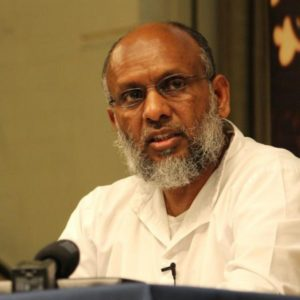
I remember an incident that engraved this principle deeply in my heart. I once asked my teacher Abu al‐Irfan Nadwi:
“Mawlānā, why do your students love you so much?”
He smiled and replied very simply:
“Because whenever I teach them, I try not only to deliver the lesson of the book but also to plant in their minds a new piece of wisdom and a new angle of thought.”
Then he explained a principle from his administrative life. He said that when he served in the administration of Nadwa, if a student committed a mistake he would discipline him, because an academic environment cannot survive without order and discipline. But he would never make that mistake the student’s permanent identity. If the same student later presented a sound suggestion or a reasonable idea, he would not keep the earlier mistake alive in his heart. Instead he would encourage the correct position and even reward the student for it.
This, in fact, is the true spirit of justice. Many people attach someone’s single mistake to their name forever, as if that lapse has become their destiny. Yet wisdom requires that a person be judged according to their present state. If someone speaks the truth today, their words should not be rejected merely because they made a mistake in the past.
In reality, societies begin to deteriorate when people stop thinking and hand justice over to prejudice. When decisions are based on affiliations rather than evidence, and when truth is rejected merely because it is spoken by “others,” knowledge is replaced by slogans and wisdom by noise.
A wise person is not one who seeks justice only for his own group. True wisdom is to keep justice alive in every circumstance. Perhaps this is humanity’s greatest test:
that amidst the noise of the crowd one can still hear the voice of reason, and within the darkness of prejudice one can still find the courage to bear witness to the truth.