Questions in relation to the war on Gaza
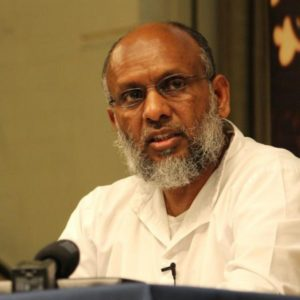
Shaykh Akram Nadwi
Muhaddith & Islamic Scholar

Questions in relation to the war on Gaza
by: Dr Mohammad Akram Nadwi
Oxford
I was sent three lots of questions from a scholar and imam in the USA, asking for my thoughts on how to cope with the Israeli war in Gaza and Palestine. The questions are quoted below, followed by my answers.
Questions #1:
Given the current crisis in the Middle East, especially in Palestine and Gaza, how should Muslims in general, more particularly Muslims in the West, respond; what can the Muslim masses do to help the Palestinians? How should Muslim community leaders, activists and imams guide their communities in this critical time, in light of long and short term goals, to gain Allah’s help and support, and to see change in the hearts and minds of people in favor of the victims of the war?
Answer:
Leaders and influential Muslims in the West should give priority to the interest of their communities. It is very important for them to be seen as peace-loving people, keen to respect their neighbors, and working for the development of the countries that they have made their home. All the positive words and deeds that can increase respect for the Muslim community should be encouraged, and those that make Muslims disliked and distrusted should be avoided.
Then, after that, they should be concerned to help oppressed people in other parts of the world. They should support them financially, raise awareness about them and draw public attention to their situation. All that should be done in coordination with other like-minded individuals and groups. If Muslims always rise up in support of the oppressed, regardless of their religion or other identity, then they will be seen as just people. Then, when they rise up in support of oppressed Muslims they will find enough supporters for their cause among the members of other communities.
In the case of this current crisis, Muslim leaders should study the conditions of their local community and draw up a good plan of action. They should, within the laws and customs of their countries, exert public pressure on their governing bodies to support justice and peace. They should also, of course, help Palestinians financially within the laws of their countries.
Questions #2:
When such crises emerge in the Muslim world we find some scholars and sincere Muslims understanding them in the light of signs of the End Time and the Day of Judgment – such as killing becoming widespread (and that is indeed happening) – in the land where the Prophet (sall-Allah ‘alayhi wa-sallam) predicted that signs of the End Time will take place. Could you explain how we should understand the ‘alamat as-sa‘ah, signs of the Hour, and why the Prophet predicted and warned about many signs before the End Time in imprecise terms? What is the benefit of those teachings without knowing the precise time and nature of those signs? Is it good to think about those signs when any thing unusual happens in the world? I see that sometimes some people become convinced about those signs and others remain confused.
Answer:
Here we have to understand three things:
Firstly, the purpose of the prophecies made by the Prophet, peace be upon him, is that when Muslims suffer major crises they should not lose hope; rather they should have confidence that one day these crises will be resolved, and the dignity and honor of the Muslim ummah will be restored.
Secondly, Allah has made it clear that the timing of the Hour is part of the unseen that is not revealed even to His Messengers. Therefore, the purpose of the Prophet’s warnings is not to present people with the means and authority to start making predictions about matters that Allah has hidden from His Messengers. Nevertheless, for centuries Muslim scholars and saints have been making predictions about the coming of the Mahdi, but their predictions never came true. Nearly 25 years ago I was in Syria visiting a shaykh who said to the audience in front of us that the Mahdi would appear in the coming month of Muharram, and he based his argument on his interpretation of certain hadiths. I was writing a travelogue of this visit, so I recorded all his predictions. I sent the book to the shaykh before its publication. The shaykh asked me to remove his prediction about the coming of the Mahdi from the book. I did as he asked. Since then, many Muharrams have come and gone and still there is no sign of the Mahdi.
Thirdly, the sayings about this matter are not expressed in ordinary language; rather, their language is very similar to the language of dreams. They need to be interpreted properly and this is not at all an easy task. Many preachers keep interpreting them, nonetheless, according to their own ideas and wishes, and their only achievement is to trouble and confuse the minds of people. We should always be suspicious of all of those interpretations.
Finally, it is important for people to be aware that many hadiths about the End Time are being circulated which are not authenticated. Muslims should be very cautious about publishing them.