Proof of the Cow against the Lion

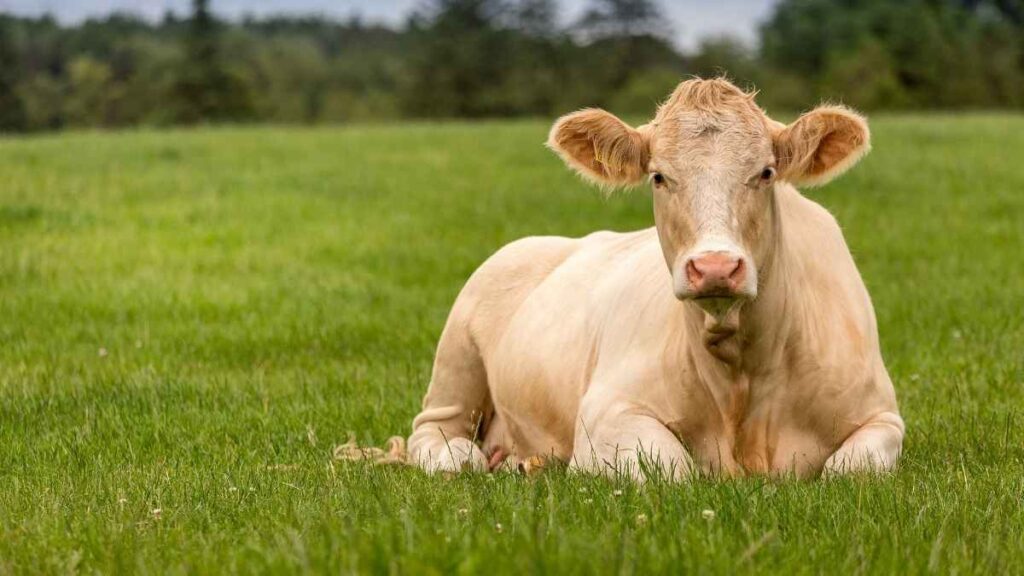
In a remote countryside, there lived a simple farmer. He possessed nothing of this world’s riches but a modest home, a small patch of land which he cultivated with his own toil and sweat, and a gentle cow that was dearer to him than some of his own children.
Every morning, he would approach her with gratitude and praise to Allah, milk her, and take from her milk that which sustained him. From it he nourished his wife and young children, who had known no food more wholesome nor drink purer than the milk of that cow. When they drank it, it was as though life itself had smiled upon them, and Allah’s bounty was flowing into their hands with mercy and tenderness.
The farmer, by the purity of his faith, did not regard this cow as a mere animal, but as a noble provision and a trust from Allah—one that must be honoured and cared for. He showed her compassion, treated her gently, and doted upon her as a mother does her child. If she ever fell ill, he would remain awake at night by her side, or rise at dawn in the biting cold if she was in need.
One morning, the cow wandered out to graze in the nearby forest—an abundant green woodland, as though Paradise itself had been spread upon the earth. It was steeped in stillness, its air mixed with the fragrance of purity. The grasses were lush, the air gentle, and the sunlight filtered through the trees like modesty upon the face of a chaste young woman.
Suddenly, without warning or sign, a hungry lion appeared. He was exhausted by loneliness and his belly burned with hunger. Fire blazed in his eyes, and his roar thundered with threat. When he saw the cow, he lunged toward her, overtaken by the law of the jungle and the instinct to kill.
The cow, sensing danger, did not hesitate nor falter—she fled, running with all her might, seeking escape from death. Ahead of her lay a patch of shallow water, a small glimmering pond reflecting the sunlight like a broken mirror. She leapt into it, hoping it would be her salvation—but it was a hidden trap. Her legs sank into the mud, and she became stuck, unable to move. All that remained was patience and hope.
The lion, having spotted her, also leapt into the pond—driven by greed and hunger. But no sooner had he entered than he too was ensnared, his feet stuck fast in the mire, panic seizing him like poison in the veins.
Time passed. The cow stood still, unmoved, a quiet calm within her, as though certain of an impending rescue. The lion, however, was frantic, looking about and seeing no saviour, seeking help and finding none. He looked to the cow, amazed by her stillness and awed by her patience.
He said to her, in desperation:
“O you! Why do I see you so calm and content, showing neither fear nor distress, while I, the king of the jungle, master of beasts, find no path to tranquillity nor access to peace?”
She raised her eyes to him, in which there shone a light, and replied:
“That is because I have a Lord who does not forget me. He knows where I am, counts my absence, and if I am not found by sunset, he will seek me, scouring every plain and valley, and he will not sleep until he returns me safely to my place of refuge, with a heart at rest and limbs at ease. I know that this man who tends to me will not allow me to sleep tonight in this pond—he will come, and he will rescue me, then praise Allah for my safety, and embrace me as one embraces a lost blessing returned.”
“But you, O lion, you have no one. No owner to care, no Lord to ask after you. If you remain here, you shall stay alone until you perish. If you call out, no one will respond. If you are afraid, none will hear. If you die, no one will mourn.”
At that, silence fell. The lion grew still—but it was not the stillness of peace, rather the silence of confusion and despair. The difference between them was vast, like that between life and death, between faith and ignorance.
And thus, dear reader, you see the difference between the believer and the disbeliever: between one who has a Lord who protects him, a Helper who aids him, and a Guardian who shelters him—and one who lives in this world abandoned to misfortune, lost in conjecture, and drowning in fear. The believer, when afflicted, knows that beyond the trial is mercy; and when surrounded by hardship, believes with certainty that relief will follow. But the disbeliever—he has no protector, no hope. If the earth beneath his feet shakes, he falls. If he calls, no one hears. If he weeps, no hand wipes his tears—neither man nor angel.
This is the wisdom of life, understood only by one who lives it with a heart that believes, a mind that reflects, and a soul that knows its Lord—just as the cow knew her farmer.
If the reader contemplates this story not merely through the lens of the narrator, but through the eyes of both heart and mind, he will realise that this is not a tale about a cow and a lion, nor a fable to pass the time or please the ear—but a profound allegory, in which what is outwardly simple conceals a depth of meaning.
In this story, faith appears not as a doctrine to be debated, nor as a slogan to be hung on walls, but as a way of life—tranquillity that dwells in the soul at the time of trial, and certainty that illuminates the heart when the paths grow dark.
Look at the cow—this weak creature—how faith gave her heart firmness, dispelled the terror of the beast, and quieted the storm of fear within, for she was not alone. She knew there was someone who would notice her absence, search for her, and care for her—great or small.
And look at the lion—the king of the jungle, full of might and force—how fear broke him, and the feeling of isolation drained his strength, for he was alone in this world: no call to answer, no help to expect, no Lord to turn to.
This is the great contrast the story wants to place in your hand, like a lamp in the hand of one lost in darkness: that tranquillity lies not in strength, but in faith. That peace does not reside in muscles or claws, but in the soul that knows it has a Lord who is present and never absent.
Then consider, my friend, the state of this farmer who, at day’s end, goes out in search of his cow—how he represents, in the simplest form, the essence of Lordship: mercy, care, and faithfulness. So is not the believer, when he places his trust in Allah, like one who entrusts himself to a Shepherd with whom nothing is lost, and no one is forgotten?
Perhaps the most profound meaning of the story lies in the statement spoken by the cow—a phrase uttered by an animal, yet entering the intellect of man:
“As for you, you have no Lord, and no Master to help you.”
As if she were saying to all of humankind:
Faith is not an ornament for the mind, nor a tale to be exchanged in gatherings—it is refuge in hardship, companionship in loneliness, and safety in drowning. So choose for yourself: to be like the believing cow, or the lion abandoned to his doom, though he may appear majestic and powerful.
Original source: