Journey to Turkey
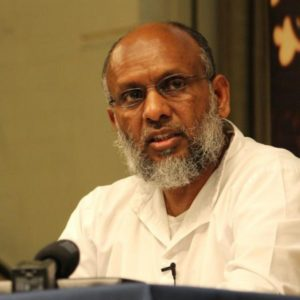

I departed at four o’clock this morning in the car of my dear brother Fayḍ Allāh, heading to Heathrow Airport to attend the thirty-seventh session of the European Council for Fatwā and Research, set to convene in the Kurdish city of Wan in eastern Turkey.
The road was almost empty save for the odd passer-by, as though the city had not yet roused from its sleep, or as if it had chosen to grant itself an extra hour of stillness before the clamour of movement and life commenced. We reached the airport shortly before five, leaving me ample time to make good use of those moments for some pressing work.
I sat to my task, yet my thoughts wandered into many directions until they brought me to compare my life before death with my life after it. God forbid that the comparison should equate the two states or overlook the vast distance between a little, fleeting enjoyment and an everlasting bliss that never perishes. How can a passing shadow weigh the same in the scales of reason and īmān as an abiding eternity? What prompted the comparison, rather, was my sensing within myself a persistent inclination towards the world, a strong attachment to it, preferring it over what lies with Allāh, beguiled by its adornment together with the beguiled, as though I did not behold behind its veil the realities of things.
So I said within: how great is a person’s need constantly to inspect his heart, to search out its weak points, and never to feel secure from its leaning towards the soul’s desire. For when passion seizes the mind it disables it, and when it takes root in the heart it blinds its insight; once the reins are loosed it corrupts a man’s dīn and honour, and may even ruin his worldly life before the next.
O Allāh, grant me my right guidance, aid me against my own self, give my reason mastery over my desire, and do not make me of those who recognise the truth yet are diverted from it by the cravings of souls and the allurements of the world. A man is not in want of knowledge alone; he needs, beyond that, a heart that submits, a soul that obeys, and a resolve not enslaved by caprice.
The aircraft moved on schedule at 6:30 a.m. and carried us until we landed at Istanbul Airport shortly before noon. There I prayed al-ẓuhr and al-ʿaṣr combined and shortened in the airport masjid, then returned to my work. The wait was long, scarcely ending before another wait began.
Whilst absorbed, a sharp hunger overtook me. I bought a light meal from one of the restaurants, yet it neither satisfied me nor dispelled the hunger. Nevertheless, I compelled myself to resume the work I intended to finish, marvelling at this sudden, intense appetite for food, whereas for some time I had shown little interest in it. Glory be to Him who causes the self to fluctuate in its states: a man cannot rely upon its strength when it is strong, nor upon its weakness when it is weak, nor knows when a desire will erupt which he thought he had settled.
At the airport I met Shaykh Aḥmad al-Rāwī, a member of the Council, also bound for Wan, and chanced upon Shaykh Fāʾiz arriving from Germany with the same destination. Their company lightened the solitude of waiting, imparting to the hardships and severance of travel something of the comfort of righteous companionship.
When five o’clock approached we boarded the plane to Wan. I surrendered to rest awhile, easing the body of the journey’s fatigue, then returned to my work as if seeking its help to pass the time or to flee into it from the intrusive thoughts that multiply when a traveller is left alone with himself.
We landed at Wan airport after seven in the evening, night having already spread its veils over the city. Wan is a Kurdish city in eastern Turkey, the centre of Wan Province, its population exceeding half a million. It possesses an ancient pedigree, having been among the foremost centres of the Urartian civilisation; the kings of Urartu made it their capital, leaving successive epochs to imprint upon it relics that testify to what civilisations have passed and what nations have risen and fallen. Its geographic position enhanced its significance, lying close to the old trade routes, among them the Silk Road, which was not merely a path for caravans but a bridge upon which peoples met and civilisations exchanged their legacies and learning. Thus, Wan combines the beauty of nature with the fragrance of history: mountains that lend majesty to the horizon, a wide lake that adds enchantment to the scene, and ruins that return the visitor to distant ages, like pages of a history book which time has refused to fold. These features have granted the city its touristic appeal, making it for many a city of beauty where nature and history embrace. The beholder finds his sense of beauty awakened there, and the student of the past finds his curiosity stirred.
We rode a car that conveyed us to the hotel prepared for the guests. There we attended to some formalities regarding the opening session scheduled for seven p.m. We were received by our brothers Muḥammad Fātiḥ and Muḥammad ʿAlī, responsible for guest affairs; I greeted Shaykh Amīn al-Ḥazmī, then we went out for dinner.
After finishing I saw our venerable shaykh, the learned jurist ʿAllāmah Shaykh ʿAlī al-Qarra Dāghī, entering the hotel. He had been delayed by another conference. I hastened to greet him, and we sat briefly exchanging words. In meeting him after the toil of travel there was a comfort to which the soul inclines, especially when the meeting is with people of knowledge and virtue who combine the dignity of learning with the warmth of companionship.
Then I retired to my room and prayed maghrib and ʿishāʾ. Though the fatigue of the road and the weight of the day pressed upon me, I felt no desire to sleep before returning to my work. I resumed it while the hotel sounds around me had quietened and I was alone with myself in that hour wherein a person often discovers of his heart’s conditions what the noise of the day had concealed.
It occurred to me in my seclusion that asking of the creation is humiliation and affliction, and that whoever hangs his heart upon the doors of people remains a captive to his need of them, tossed between hopes that fail, waiting that lengthens, and dignity that diminishes. This does not mean that one can dispense entirely with people or deny the mutual rights and interests among them. The calamity is when the heart becomes attached to them, sees in their hands what it does not see in the hand of Allāh, or hopes from them what it does not hope from its Creator and Provider. Feeling the weakness of the soul and its need for someone to take it by the hand, I said:
O Creator of the moon and the sun of forenoon, enrich me by Thyself from all the creation and make my reliance upon Thee in every circumstance. Thou art the Lord of mankind, the Driver of the clouds; in Thy hand are the keys of all affairs and unto Thee belong the outcomes. We have need before Thee alone, and to Thee belongs the entire dominion; we cannot dispense with Thy mercy for the blink of an eye. If Thou givest, it is by Thy grace; if Thou withholdest, it is by Thy wisdom; if Thou testest, it is by Thy justice; and if Thou grantest well-being, it is by Thy mercy. So do not let my need of any of Thy creation turn my heart away from Thy door, nor make my hope in what they possess greater than my hope in what is with Thee.
Then I turned to my soul, as though reproaching a friend whose faults one knows yet does not wish to see ruined, and said: O soul, hadst thou truly been of the people of devotion and taqwā, thy disputes over what thou possessest would not have multiplied, nor would thy ambitions have expanded whenever thy means expanded, nor would what escapes thee have distracted thee from the favours at hand. Knowest thou not that contentment is an unfailing wealth, while greed is an unending poverty, and that whoever does not train himself upon satisfaction, nothing will fill his eye even were he to own many times what he desires?
The essential matter is that the world should not delude me by what it spreads before me of its means, nor should I imagine that the abundance in hand is proof of richness of heart, or that a person’s occupation with his works spares him from examining himself. How many a man amassed from the world what he amassed, then departed it empty-handed; and how many another possessed of it but a little, yet his heart was wider than the king of kings, for he knew where to seek wealth, to whom to raise need, and to which abode his journey ends.
Travel, in truth, is only a form of that constant departure inseparable from man: we move from abode to abode and from land to land, carrying with us our deeds, concerns and hopes, until a day shall come when we leave the whole world. Nothing will remain with us of what we gathered save what we sent ahead, and nothing will benefit us save a sound heart, a righteous deed and a vast mercy from Allāh.
O Lord, let not these reflections be mere words that pass over my tongue then are forgotten by my soul; make me not of those whose hearts soften for an hour then relapse into heedlessness. Rather, grant me of wakefulness that which rectifies my state, of sincerity that which purifies my deed, of zuhd that which sets my heart free, and of hope that which returns me to Thee whenever I am about to stray from the path.
Then I lay upon my bed. A long day had passed—of travel, work and meetings, of thoughts drawing me to the world and thoughts reminding me of the Hereafter. I knew not which of the two labours weighed more upon me: the fatigue of the road or the toil of the soul striving to free itself from the sway of what it loves and to return to what it ought to love.
Perhaps this is the journey most deserving of a person’s deepest contemplation: the journey of the heart from attachment to the transient to attachment to the Everlasting, from being deceived by what lies in people’s hands to trusting in what is with Allāh, from much contention over worldly shares to the tranquillity of contentment, sound tawakkul and truthful turning back.
We ask Allāh to make all our journeys journeys of goodness and reflection, and to grant us, in residence and travel alike, a heart unmoved by possessions, uninfluenced by passion, finding rest only in His remembrance and hoping in the end for nothing but His mercy and His good pleasure.