Defending Shaykh Yūnus’s Scholarly Legacy
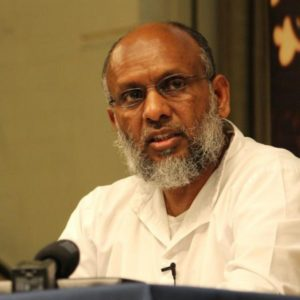

*Do not deny Shaykh Yūnus (may Allah have mercy on him)*
23/4/2026
Where are those intoxications of the night’s wine?
Rise now—for the delight of the dawn’s sleep is gone.
O claimant!
Your haste evokes both regret and astonishment. You have issued a verdict about a man—whose scholarly stature your gaze has not even yet reached—on the basis of a few scattered incidents, some hearsay, and some superficial observations. This is not a method of reasoning; it is that very intellectual impulsiveness which the people of knowledge describe as the “audacity of ignorance.”
Pause for a moment and reflect on the foundation of your claim. You say that Shaykh Yūnus used to ask questions, therefore he was weak in fiqh. SubḥānAllāh! If asking questions is a sign of weakness, then where will you place all the great luminaries of intellectual history? Have you not seen that the towering pillars of knowledge would question one another, engage in discussion, and converse over the finer subtleties of knowledge? Questioning is not the negation of knowledge; rather, it is its very soul and life.
In reality, questioning itself has degrees: at times it takes the form of reverence; at times it serves to draw attention to the addressee; and at times it is a subtle method of gauging the intellectual level of one’s contemporaries. Failing to grasp this distinction is the real weakness—and that weakness lies not in Shaykh Yūnus, but in your inference.
Our teacher, ʿAbd al-Fattāḥ Abū Ghuddah (may Allah have mercy on him), had the habit that whenever he met a scholar, he would ask him scholarly questions so that the students’ attention would be drawn towards that scholar. Likewise, it is not far-fetched that Shaykh Yūnus—himself a mature and perceptive researcher—wished to assess the temperament of the muftis of his time: whether they were merely confined within the particulars of later jurists, or whether they possessed independent insight and juristic acumen.
Fix this firmly in your mind: Shaykh Yūnus was a rabbānī scholar—a man of God; unparalleled in the science of ḥadīth, and in his understanding of Ṣaḥīḥ al-Bukhārī he appeared on par with Ḥāfiẓ Ibn Ḥajar al-ʿAsqalānī (may Allah have mercy on him):
If you were to meet him, you would see all people in one man,
An age in a moment, and the earth within a house.
The reality is that the most radiant aspect of Shaykh Yūnus’s scholarly personality was the vastness of his knowledge, the depth of his insight, and the loftiness of his research—such loftiness that even in the golden eras of the past, examples of it were rare, and in the present age, it has all but vanished. Today, the desire for knowledge remains, but the resolve for hard work has departed; claims persist, but entitlement is absent.
The current generation is caught in a strange contradiction: it seeks water but is unfamiliar with thirst; it desires nourishment but does not understand hunger; it longs for the destination but is deprived of the passion for seeking.
In such an environment, when a true man of the field carves streams of knowledge through rugged terrain, instead of appreciating him, people shower him with objections—because for the superficial mind, depth is always a cause of suspicion.
This writing is neither a comprehensive account of Shaykh Yūnus’s achievements nor an exhaustive survey of his scholarly services. It is merely a warning—a light strike—so that the unappreciative may realize what knowledge truly is and who deserves to be called a researcher.
Shaykh Yūnus’s life reflected that of a scholar who never made the world his objective. No pursuit of wealth or possessions, no greed for status or rank, no craving for fame—knowledge alone was his aim, and for it he devoted his entire life. In Sufism, he possessed authorization and succession, yet he never allowed spiritual leadership to obstruct the path of knowledge. For him, knowledge was not a means to something else; it was itself an end, a precious treasure, and the ultimate destination.
The luminous headings of his life were: an unbounded passion for study, a constant yearning to increase in knowledge, and the ever-resounding call of “Is there any more?”
He did not benefit only from his teachers; rather, he drew from the entire scholarly tradition—as if the scholars of all centuries of Islam were his contemporaries. His vision encompassed the sciences and disciplines from India to Egypt and Syria, from Khurāsān to Andalusia:
What blessed, fruitful tree are you,
That the garden and orchard severed themselves from all else and joined themselves to you?
One of his distinguishing qualities was that he held deep reverence for the Imams and mujtahids, yet he did not subscribe to blind imitation. He weighed every opinion on the scale of evidence and tested every claim on the touchstone of research. When he disagreed, he did so with etiquette; when he agreed, he did so with insight.
If in the Indian subcontinent there was a personality in whom one could witness that intellectual courage, breadth of vision, and commitment to truth reminiscent of the great Imams, it was Shaykh Yūnus—and this association is not born of emotional attachment, but is a natural consequence of his scholarly rank.
His method of teaching was also highly distinctive. He was not a teacher who merely listed opinions; rather, he compared views with their evidences, established fair and research-based evaluations between them, and then presented a clear, strong, and well-substantiated conclusion. When he spoke, it felt as though knowledge itself had found a tongue:
What can be said of such miraculous expression?
A style entirely unique has been forged.
Particularly in Ṣaḥīḥ al-Bukhārī, his rank was so elevated that he was counted among the foremost scholars of his time in the intricate chains of transmission, and he possessed a unique juristic insight. His gatherings were not ordinary lessons; they were centers of research—where minds were trained, not merely information transmitted.
And you, ignoring all these realities, issued a verdict of “weakness” based on a superficial observation?
O claimant! The real issue is not the strength of Shaykh Yūnus’s scholarship, but the poverty of our standards. We have made knowledge seem easy and research unnecessary. We have abandoned study, yet not abandoned commentary. We have withdrawn from hard work, yet still claim the right to pass judgment.
Shaykh Yūnus stood beyond the artificial categories into which we divide scholars—“muqallid,” “non-muqallid,” and so on. His intellectual horizon was far wider than these narrow confines. His principle was simple yet profound: we are, first and foremost, seekers of knowledge and truth—only then anything else.
There was not even a trace of prejudice within him, for prejudice is a sign of a weak mind and a limited outlook—and both of these flaws were absent in him.
The void that has emerged in the field of research and insight after him is not hidden from anyone with perception. Such individuals are born only once in centuries, and when they depart, they leave behind a silence that cannot be filled by mere words.
If you are truly a seeker of knowledge, then first correct your standards, broaden your vision, and cultivate caution in your judgments. Otherwise, there is a real danger that you may look upon the ocean of knowledge and mistake it for a trivial pond.
Kaleem! How long will you complain of lack of ability? Shame on you!
If you do not set your foot upon the path, what can the guide do?
⸻
Allah knows best.