Cold is cold, and heat is heat

The history of passion is that, in every age of reason, we ourselves have fashioned the scaffold of persecution.
From the early days of schooling up until graduation from Nadwah, during essay-writing hours we were made to write on many worn-out topics. These subjects were usually of little interest, but being compelled to write on them had the unintended benefit of sharpening observation, clarifying the distinctions between similarity and difference, cultivating the ability to generate meaning, and developing a method for expressing thoughts and ideas.
One of those perennial topics was: “Which is better: cold or heat?” Each student would write according to his preference. Some extolled the virtues of cold, while others sang the praises of heat. These essays were assessed, and we would learn from one another. It never happened that the admirers of cold formed one faction and the supporters of heat formed another. As soon as we stepped out of the essay-writing hour, we forgot who preferred what. Just as we had been close and affectionate before, we remained so after. Nor did it ever happen that the strength of one party’s arguments caused cold to desire to become heat or heat to wish to become cold. No matter how strong our arguments, they were never capable of altering reality.
It also happened that a student who wrote an ode to winter on one occasion would, on another, recite the merits of summer. I myself spent a long time in love with summer—until a time came when I became captivated by winter and gave clear proof of my inconsistency.
This brings to mind the case of Mirza Hairat Dehlavi, who—while composing a book denying the martyrdom of Ḥusayn—would, every Friday, deliver passionate sermons on that very martyrdom, moving audiences to uncontrollable tears.
Here in London, there is a park called Hyde Park. One corner of it, near Marble Arch and where coaches to Oxford depart, is known as Speaker’s Corner. Every Sunday, orators stand here and shout out speeches on various topics. This, too, is a form of recreation for Londoners. Some of the speakers are hired. One Sunday you may find a man arguing in favour of a matter, and the next Sunday, the same man arguing against it.
The battle between cold and heat that has been smouldering in India for ages once flared up in Baghdad—this time between the curtain and the banner:
“Hear this tale: in Baghdad a conflict arose
Between the curtain and the banner.”
Shaykh Saʿdī describes this dispute in detail in the second chapter of the Gulistān, “On the Morals of Dervishes.” He, with poetic flair, took the side of the curtain and made it the hero of the debate. Yet, in truth, the banner’s words are deserving of being written in gold:
“You and I are both servants in the same court,
Devotees at the doorstep of the King.”
It is no secret to the wise that praising one thing is not a condemnation of another. Intelligent people, when hearing someone praise their beloved, do not regard it as an insult to their own. If Qays ʿĀmirī recounts the beauty of Laylā, Farhād takes no offence; and if Farhād sings of his love for Shīrīn, Qays is not moved to jealousy.
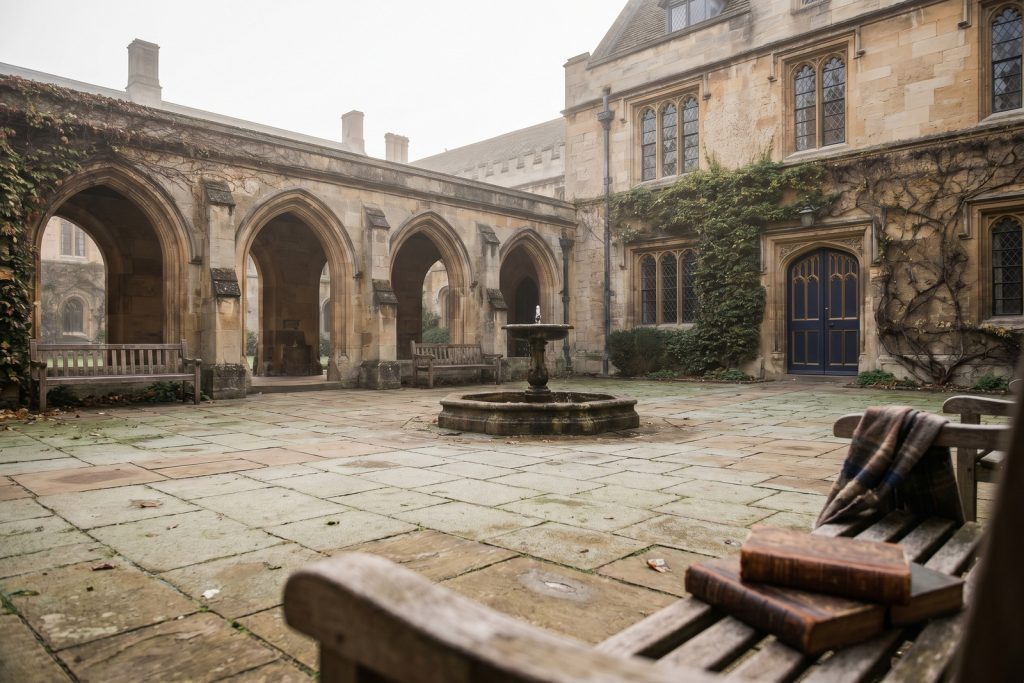
In England, there is a constant competition between Oxford and Cambridge. Sometimes one leads, sometimes the other. In certain subjects Oxford excels, in others Cambridge. Despite this rivalry, there is remarkable cooperation between the colleges, departments, and professors of both. Each strives to surpass the other in peace and goodwill. Neither Oxford wastes its time refuting Cambridge, nor does Cambridge squander its efforts contradicting Oxford.
“Lovers of eloquence care not
For whether it be Lucknow or Delhi.”
In Mughal India, both Farangī Maḥall and Madrasah Raḥīmiyyah achieved remarkable feats. They revived the memories of Baghdad and Córdoba, turning Bukhārā and Samarqand into mere echoes of the past. Yet they displayed no envy or jealousy.
The scholars of Farangī Maḥall never made it their mission to refute the scholars of Madrasah Raḥīmiyyah, nor did Raḥīmiyyah plunge into the swamp of declaring others astray or deviant.
But that age of peace and harmony has become a thing of the past. India has now become a battleground of debates, boastfulness, and antagonism. From every direction, a single cry is heard: “There is none like me!” And from every quarter: “Those were our forefathers—bring forth their like if you can!” Sects have been formed, new idols and deities sculpted. Fellow Muslims are declared worse than disbelievers, polytheists—even more abominable than demons and devils.
“Each day, a new decree emerges in this city,
One can no longer tell what it all means.”
Words like disbelief (kufr), polytheism (shirk), innovation (bidʿah), and misguidance have been repeated so often that the very mouths uttering them begin to reek of the evils they denounce. A doctrine has taken hold: if you do not become like us, we will not let you live. A ruling has been issued: since we recognise only black and white, anyone who perceives red, yellow, green, or any other colour is a superstitious fool—and we declare them blind. The list of the blind keeps growing, and continues to grow.
“The pure-hearted can gain nothing from the flawed,
What can a blind man see through spectacles?”
In this atmosphere of tug-of-war, there is a constant fear: if you praise your teacher, another will publish an entire book exposing his flaws. If you appreciate an author, someone will consider that praise an attack on their own scholars, and accuse you of rebellion against their elders. If you mention the virtues of your institution, your right to live will be snatched away. If you honour your teachers, it will be deemed such a grave crime that any future glimpse of dawn upon your dark nights will be rendered forbidden.
“O Saʿdī, though love of one’s homeland is a noble sentiment,
Still, one cannot bear harshness merely because one was born there.”
Psychologists describe feelings of superiority as a branch of inferiority complex. Why have our scholars and seminaries become so weak? They ought to have raised their standards, improved their work, and quietly let their deeds speak—“True musk is that which gives off its own scent, not that which the perfumer proclaims.”
How long are we to continue our lamentation? Over how many ailments of this Ummah are we to weep?
The griefs of Ḥasan and Ḥusayn are without end.
Original source: