A Day in My Road Journey
A Day in Mira Road
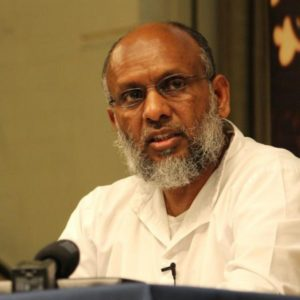
As the clock approached noon, with the sun casting its golden rays over the towering buildings of the city, like a delicate silk draped over a silent scene, my journey towards Mira Road, Mumbai, commenced in the company of Dr. Azeemuddin Syed. The car was driven with remarkable calm, confidence, and skill by his son, Mr. Saad Syed. His manner of driving was akin to an experienced sailor navigating his vessel with composure amidst the tumultuous waves towards the shore.
Throughout the journey, a conversation with Mr. Saad unfolded. His thoughts were both fresh and mature; it felt as if a beacon was lit on the horizon of the new generation, eager not only to illuminate itself but also to dispel the surrounding darkness. Hearing about his educational and social activities, a tender sprout of hope emerged in my heart. It was heartening to know that even among the modern educated class, there are young individuals who perceive the issues of the community not merely as headlines but as a deep-seated pain in their hearts.
Yet, alongside this joy, there lingered a shadow of sadness. A thought arose that the awareness and consciousness evident in some educated individuals of the new generation seem to be waning in many circles of madrasas and khanqahs. Often, it feels as if each person has confined themselves within their sectarian walls, much like the sea water trapped in small vessels. Every sheikh has become the guardian of his khanqah, every scholar the custodian of his madrasa, yet few remain who lift their gaze to the vast sky of the Ummah. The grand caravan of faith and community, once moving in a unified direction, now appears fragmented into small circles.
It is disheartening when meeting a scholar who speaks only of his madrasa, donations, and sect. Apart from Maulana Syed Bilal Hasni, I have rarely encountered anyone genuinely concerned about the communal issues of Muslims and the welfare of other communities in India. Surprisingly, there seems to be less focus on the educational advancement of Muslims and more on collecting donations to erect building after building; as if the construction of bricks and stones has been prioritized over the nurturing of human beings.
After the Zuhr prayer, I visited the Darul Qaza, which operates under the meticulous supervision of Dr. Azeemuddin. This institution felt not merely like a building but a sanctuary where tangled affairs find the cool shade of justice. Here, I unexpectedly met Maulana Abdullah Islahi. This encounter felt like finding a familiar oasis during a long and exhausting journey. Since he is the nephew of my beloved teacher, Maulana Abdul Quddus Islahi, our conversation opened many windows of memories. Mentioning my esteemed teacher brought back those moments from the past that had been buried under the dust of time.
Subsequently, we arrived at the program hall of Ms. Uzma Naheed. The atmosphere there was imbued with a fragrance of knowledge and dignity, as if spring had quietly descended into a garden. Ms. Uzma Naheed, her husband Mr. Salman Ghazi, Professor Hina Syed, and other distinguished guests welcomed us with utmost sincerity. There was love on their faces, respect in their tones, and a rare dignified elegance in the gathering.
Upon the request of some scholars, I recited the Musalsal Bil Awwaliyah to the attendees and granted general permission. This moment felt like the light of an ancient scholarly lamp being passed from one hand to another. This chain of tradition is not merely the transmission of words but a journey of trust and knowledge between hearts.
During this event, the launch of my book on women’s prayer in mosques also took place. At the unveiling of the book, it felt as if a long-standing thought, nurtured in the recesses of the mind for years, had finally donned the attire of words and presented itself to the people. I briefly discussed its subject, necessity, and background. The interest of the attendees indicated that this issue is not merely a jurisprudential debate but a living question of our societal consciousness.
Later, I delivered a speech on the academic and practical achievements of women, which lasted about an hour. I stated that knowledge is as much a right for women as it is for men, just as every ray of the sun has a right to light. If half the population is kept in the darkness of ignorance, the destiny of the nation can never witness a complete dawn. While mentioning the great women of Islamic history, I said they were like stars that illuminated the sky of their respective eras. Today, there is a need to open the doors of knowledge for our daughters with the same generosity as a gardener opens the gates of a garden in spring.
I especially emphasized the importance of contemporary education. In today’s world, worldly education is not merely a convenience but a means of survival. If religious education is the nourishment of the soul, then contemporary education is the provision for life’s journey. Without both, the vehicle of the community cannot run on a single wheel for long.
After the speech, a question-and-answer session took place, which proved to be intellectually fruitful. The questions were like winds coming from different directions gathering around the same lamp. Serious discussions occurred on topics such as women’s education, religious identity, contemporary demands, participation in mosques, and family upbringing. In each question, the heartbeat of society could be heard.
Ms. Uzma Naheed presented an introduction to her educational and social activities, and I inaugurated the IT center established by her. At that moment, it felt as if seeds of the future were being sown in a silent land. Her efforts were a shining testament that if the resolve is true, even one individual can spread light across the horizon of society.
It is regrettable for those who, instead of appreciating these constructive efforts, waste their time in undermining them: “Do not criticize our shortcomings, for our hearts are filled with goodness.”
At the end of the program, Professor Hina hosted us with peda. The taste of sincerity surpassed the sweetness of the confectionery. During the gathering, the exchange of scholarly and social conversations continued, and each sentence felt like new bridges of trust were being built between hearts.
We returned around half-past five in the evening. On the way, Mr. Saad lovingly treated us to shawarma. This brief pause felt like a cool breeze brushing off the dust of the journey. Various topics were discussed, but since there was a cricket match that day, the city’s streets were flooded with people. The traffic crawled as if time itself had become weary. Finally, around half-past eight, I reached the hotel and rested for a while.
At half-past eleven at night, brother Mahmood arrived with his car. Accompanied by Zaid, I set off for the airport. The joy doubled when I learned that Maulana Muhammad Mazammil Nadwi was also with us. His companionship felt like an old lamp rekindled in the night of the journey. Throughout the way, memories of the past, discussions of scholarly personalities, and events of bygone times enlivened the gathering.
Eventually, Zaid and I departed from Mumbai for Jeddah. As the plane ascended and the lights of Mumbai began to fade like scattered stars below, waves of affection for this city surged in my heart. Mumbai bids me farewell each time as a gracious host who escorts the traveler to the door with a lamp of prayers in hand. This time too, I bid farewell to Mumbai, cherishing the lamp of love in my heart.
Translation note: This article was translated by AI. View the original Telegram post.