The Significance of Headgear in Identity
India is a land of wonders. Here one encounters an abundance of colours, a diversity of civilisations, a charm in customs and traditions, and such variegated dispositions of mankind that reason itself is left bewildered. With the change of seasons garments are altered; with shifting political winds slogans are revised; and when the matter of religious and social identity is raised, the very first glance is often directed to the top of a person’s head. It is as though the entire dossier of a human being’s personality has been sealed within the single cap placed upon his head: observe the cap, recognise the person, and pass judgement upon his inner state!
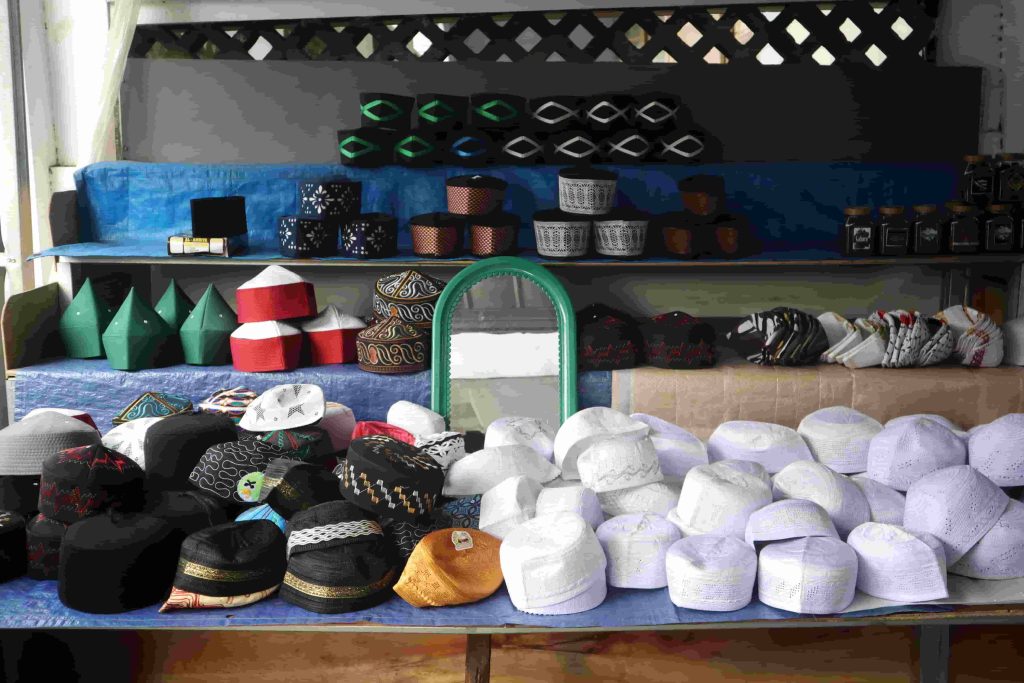
Cast an eye over the by-lanes and bazaars of India, over its masājid, khānqāhs and political rallies, and one beholds a curious garden of heads: some capped in white, others in red, yellow, black, pink or blue. The caps of Muslims are distinct, those of Hindus distinct; the style of the ʿulamāʾ and mashāyikh differs from that of political leaders. From the Gāndhī cap to the Ajmal cap and the various religious and cultural head-pieces, every group has prescribed for its head a separate title, a separate symbol, a separate badge of identity.
Attire and outward appearance are indeed manifestations of a society’s history, taste and collective self-recognition. In that there is no fault. The problem arises when clothing advances from merely signifying identity to pronouncing verdicts upon character; when a particular style becomes the certificate of taqwā; when, by looking at a cap, one undertakes to measure a person’s sincerity. In some circles the very shape of a man’s cap is deemed proof of his piety, whereas the absence of any cap at all places a question-mark over his religious consciousness. It is as if, in order to learn the states of the hearts, one needs neither companionship, nor observation of dealings, nor any examination of morals and conduct—only a single glance at the head, and the reading of the inner book is complete!
Would that taqwā could be purchased from a cloth-seller, that ikhlāṣ might be stitched by a tailor, and that ʿilm could be acquired merely by resting upon the head! Then who would endure the toil of study in the madāris, who would keep vigil through the nights for research, and who would tread the arduous valleys of tazkiyat al-nafs? One would simply buy a fine cap, place it upon the head, and obtain a licence of piety. A most convenient formula—yet alas, the human interior is no commodity of trade, and sincerity is not contingent upon any specific outward form.
A subtle irony of our society is that the cap remains upon the head, but the question of what lies beneath it rarely arises. We dispute the cut of cloth, but never inquire into the structure of the mind. We devote ourselves to adorning the exterior of the head, while scant attention is paid to the cultivation of the intellect and awareness housed within. It appears we have invented a new standard for valuing human beings: the more conspicuous the appearance, the more conspicuous the religiosity; the more peculiar the style, the greater the sincerity! Within this scale, where is there room left for character, trustworthiness, honesty, justice or excellence in dealings?
In reality, religion did not come merely to bestow outward identifiers upon man; it was revealed also to reform his interior, to construct his character, and to guide his reason and insight. External symbols have their place, but to regard them as the whole substance of the dīn is akin to a man who, on seeing the cover of a book, claims he has read it. A cover may introduce the work, but it cannot substitute its content; likewise, a cap may indicate a cultural or religious affiliation, but it can never constitute decisive proof of anyone’s taqwā, sincerity or scholarly rank.
An instructive illustration of this superficiality is found in an incident. Once, at the Maulānā Āzād Educational Centre, a gentleman was performing ṣalāh without a cap. A passer-by could not bear the sight. Without a moment’s hesitation, he picked up a cap made of leaves from somewhere and placed it upon the worshipper’s head. In his estimation, a fundamental defect in the edifice of the prayer had to be remedied on the spot!
Our late teacher, Mawlānā Sājid Qāsimī, expressed grave astonishment at this incident. His surprise stemmed from the level of ignorance that people did not even know that prayer without a cap is perfectly valid. They are oblivious to the basic fact that a cap is not a condition for the correctness of ṣalāh, and to deem a non-obligatory matter obligatory is certainly no sign of sound understanding of religion.