If Only Cameras and Loudspeakers Had Remained Forbidden

Yesterday I received a question from a student at a madrasa. He asked for my opinion about a recently published book. The book dealt with the subject of Nasibism, and scholars are divided into two camps on this issue: one group refutes the other, and the other refutes the first. It is as though an academic disagreement has formed two battle lines, with cannons prepared on both sides; only the name of the battlefield has been changed to “research.”
I replied to the student, “Today is the first time I have even heard the name of this book. If I have not seen the book, am not familiar with the subject, and have not studied its arguments, how can I give an opinion about it? Merely hearing the name of a book is not knowledge. To express an opinion on an issue one does not know about is not scholarly integrity.”
The matter ended there. But last night someone sent me several videos of scholars discussing the same issue. I thought perhaps they would be scholarly refutations: the book’s arguments would be examined, references verified, passages considered in their context, and differences of opinion kept within the bounds of knowledge and courtesy.
But what I saw first surprised me and then saddened me. This was less a refutation than an exercise in humiliating one another. People were being named and discussed in a tone that made it sound less like an academic gathering and more like a court of war. Voices were raised, faces were reddened with anger, words were laced with sarcasm, and the manner was mocking. Rather than demonstrating one another’s scholarly errors, they were trying to make each other appear small and contemptible before an audience.
I kept thinking for a long time: Do they not know that backbiting is forbidden? Do they not know that mocking a believer is forbidden? Are contempt, ridicule and hurting people’s feelings part of the manners of religion? And does raising one’s voice somehow make one’s argument stronger?
Perhaps we have discovered a new principle of defending religion: if the name of some revered figure is on your tongue, then your tongue is considered free from every other restriction. If the title is “defense of religion,” then backbiting becomes religious zeal, mockery becomes speaking the truth, humiliation becomes honor, and shouting becomes the strength of the argument.
It was at this point that I felt we do not have just one problem but two problems: cameras and loudspeakers.
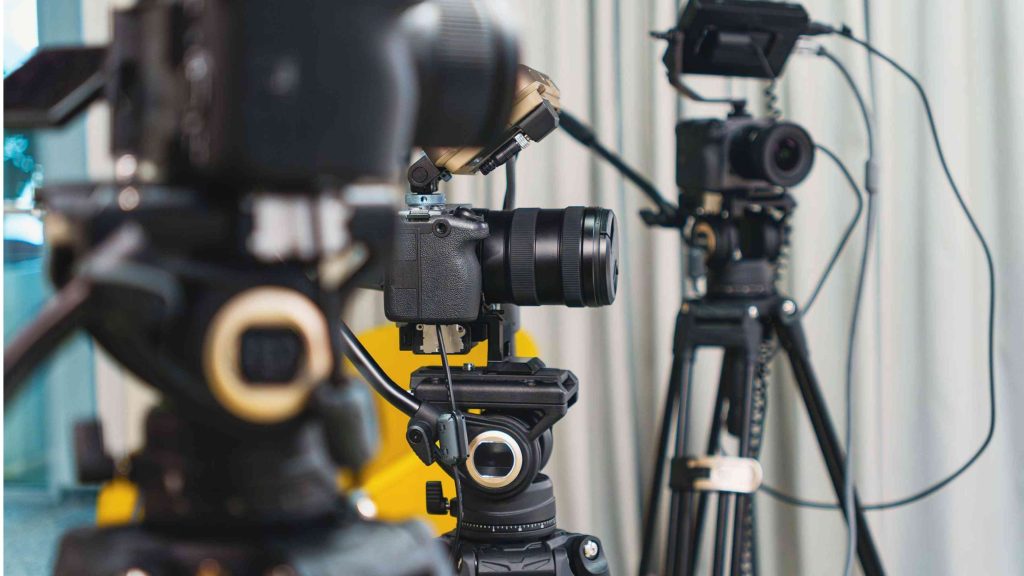
The camera has preserved our gatherings, and the loudspeaker has carried our voices far and wide. Previously, a person might say something in anger before ten people; now the camera preserves the face behind that anger, while the loudspeaker carries the angry voice into streets, cities, and countries. Previously, when a gathering ended, there was at least some hope that the matter had ended too. Now the gathering ends, but the photograph remains, and the sound of the loudspeaker continues to echo across the internet.
If only cameras and loudspeakers had remained forbidden! At least many of our mistakes would have remained buried within the four walls of the gathering. A person would become angry, say something, the gathering would end, the night would pass, the anger would cool, and perhaps by morning he would even regret his words. But now the camera stands between us. The person’s anger disappears; the video remains. The person grows old; the clip remains young.
The camera has preserved faces, but it has made no provision for preserving character. The loudspeaker has amplified the voice, but no button has been invented to amplify patience and restraint.
And this is our misfortune. We set out to protect religion, but along the way we wounded the very ethics of religion. We tear apart the moral principles of the very religion we claim to be defending. In the name of sacred personalities, we insult one another while driving away, through our own manner of speaking, the patience, dignity, and courtesy of those very personalities.
The names of the Companions are on our tongues, but their forbearance is absent from our speech. References to the Sunnah are present, but the ethics of the Sunnah are absent from our tone. Religious zeal appears in our slogans, but religious courtesy is missing from our conversations.
What kind of defense is this, in which the very person defending something ends up wounding the thing he claims to be protecting?
If a scholar believes another scholar’s statement is wrong, let him clarify the error, provide evidence, cite his sources and demonstrate the context of the passage. There is nothing wrong with scholarly disagreement. Disagreement is part of the life of knowledge. But when the camera records the face of that disagreement, the loudspeaker amplifies the anger, and the mobile phone then carries it to thousands of people, scholarly disagreement ceases to remain merely a scholarly matter; it becomes a spectacle.
And perhaps the greatest harm caused by this spectacle is something we cannot yet fully see.
Several young people have told me that watching scholars fight among themselves, humiliate one another, use sarcasm, and speak harshly has made them disillusioned with religion. One person said plainly: “If this is what religion is, then we want to stay away from it.”
When we hear this sentence, we should question our pulpit, our voice, and our camera—all three. We ask young people why they are moving away from religion, but we rarely ask ourselves: What face of religion have we shown them? The face of mercy or rivalry? Wisdom or anger? Courtesy or mockery?
We complain that young people are being influenced by social media. Yet on those very social media platforms, we ourselves circulate videos of one another in which there is more anger than knowledge, more volume than evidence, and more humiliation than reform.
The camera is silent, but it shows everything. The loudspeaker has no tongue, but it carries everything far and wide.
The problem is that we have learned how to use both, but we have not learned what should be shown and what should be heard.
Not everything a camera can show is worth showing, and not everything that can be amplified through a loudspeaker is worth amplifying.
Previously, reaching the pulpit required knowledge, teachers, study, and years of training. Now every mobile phone is a pulpit. Every camera is a reporter. Every loudspeaker is an announcer. And the strange thing is that climbing onto this new pulpit requires neither knowledge nor patience nor piety nor courtesy.
The person with the most anger has the loudest voice. The person with the most sensational content has the most viewers. And the person with the sharpest tongue has the video that spreads fastest.
A book is read slowly; a clip is watched instantly. Understanding an argument takes time; laughing at sarcasm takes a moment. That is why we have turned religion into a matter of clips rather than arguments, clicks rather than knowledge, and going viral rather than reform.
Perhaps only a few hundred people will read a hundred-page book, but millions may watch thirty seconds of people fighting with one another.
This is the power of the camera and the loudspeaker: turning one person’s gathering into a crowd and turning a moment of anger into a permanent record.
That is why sometimes I wish that cameras and loudspeakers really had remained forbidden! The camera would not preserve every wrinkle on our faces, and the loudspeaker would not carry every verbal arrow we fire so far. Many things would end where they were said. Many tempers would cool by morning. Many gatherings would remain gatherings, rather than becoming global spectacles.
But alas! We have cameras and loudspeakers; we have mobile phones, YouTube, and Facebook; and in every hand there is a pulpit that requires no madrasa, no teacher, and no qualification to climb onto.
The issue is not whether there is a camera. The issue is what our character is like in front of the camera. The issue is not whether there is a loudspeaker. The issue is what our tongue is saying through it.
If the camera carries our face to the world, we should remember that our face may also be taken as the face of religion.
If the loudspeaker carries our voice far and wide, we should also remember that our voice carries an association with religion along with it.
So disagree—by all means, disagree. Make the distinction between truth and falsehood clear—by all means, do so. Write refutations of books—by all means, write them. But raise the level of the argument, not the volume of the voice; bring scholarly criticism to the forefront, not personalities; seek reform, not disgrace.
Perhaps what we need more than new debates is the etiquette of disagreement. Otherwise, we may end up protecting religion from its enemies while, with our own hands, distorting the image of religion in people’s hearts. Then one day a young person may ask us: “The religion you were so busy protecting—where is that religion?”
We will open our books, bring out our references, and present our arguments. But perhaps he will say, “Before your arguments, I needed your character.”
At that moment, perhaps we will have plenty of references but few answers.
So now that cameras are no longer forbidden and loudspeakers have also been written into our destiny, let us at least not allow either of them to become enemies of the ethics of religion.
Let the camera show the face, but not take away the character. Let the loudspeaker raise the voice, but not lower the tone. Let the camera preserve the argument, not the backbiting. And let the pulpit become a voice for truth, not an arena for humiliating a fellow Muslim.
Otherwise, perhaps we will always be left with this regret:
If only cameras and loudspeakers had remained forbidden!
But perhaps the real regret should be this: cameras and loudspeakers were not forbidden—if only backbiting, mockery, humiliation, and bad manners had never become permissible within us.
Because it is not always the person who opposes religion who harms it. Sometimes harm is also done by the person who distorts the face of religion in front of a camera and silences the ethics of religion through a loudspeaker.
Dr. Muhammad Akram Nadwi, Oxford