Mawlānā Abū al-ʿIrfān Nadwī (رحمه الله عليه)

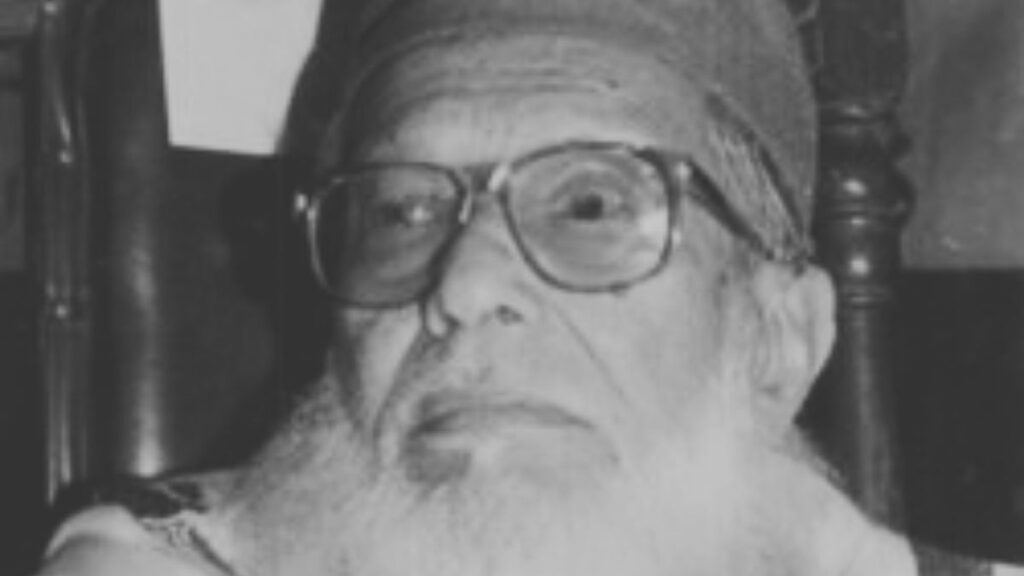
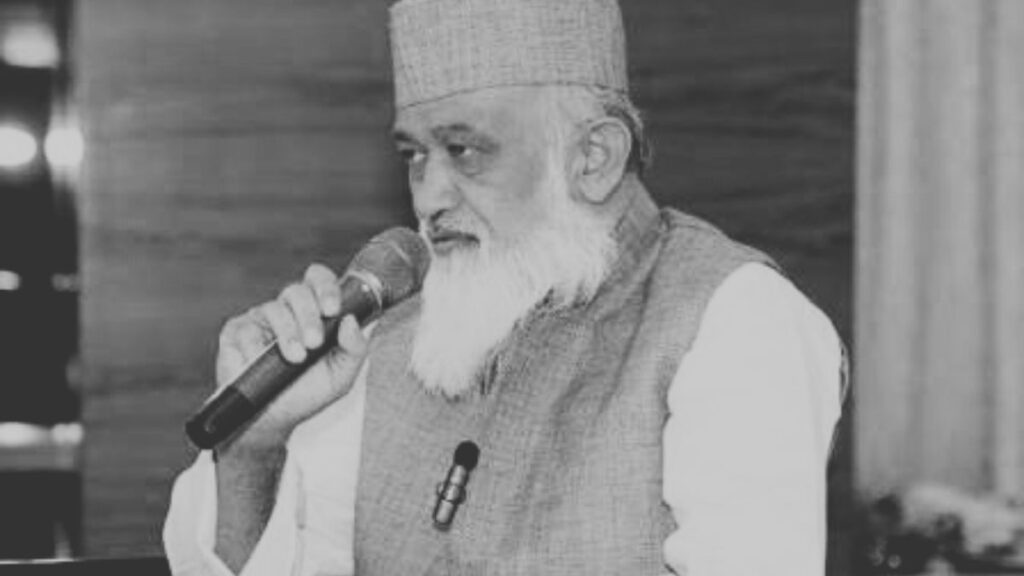
The name of my esteemed teacher, Mawlānā Abū al-ʿIrfān Nadwī (رحمه الله), is not merely an identifier of an individual; rather, it represents a scholarly temperament, an intellectual tradition, and a refined civilisational awareness. To speak of him is not simply to praise a person, but to recall that legacy of knowledge which, over generations, has shaped the minds and sensibilities of countless seekers. Whenever his name arises in memory, a quiet sense of reassurance settles upon the heart—like the unexpected moisture in the air after a long dry season.
My relationship with him extended far beyond the formal bounds of studenthood. It was a bond woven from national affiliation, intellectual closeness, heartfelt affection, and spiritual alignment—all breathing together. Over time, this attachment did not become a mere memory; rather, it transformed into an inner compass, a moral and intellectual benchmark.
His Birth, Lineage, and Upbringing
When I open the windows of remembrance, what appears before me is not merely the face of a teacher, but the portrait of a multifaceted personality—one who embodied seriousness in scholarship, simplicity in disposition, expansiveness in thought, and precision in nurturing. His speech carried a refinement that rose above conventional rhetoric, and a level of eloquence that was not merely stylistic but rooted in insight. His expression was spontaneous yet deeply effective—it felt as though he was transferring not just knowledge in words, but experience in meaning.
The serenity on his face was not the product of status or outer spiritual exercises. It was the reflection of inner composure, born of sincerity, deep intellectual discipline, and a dignified character.
Mawlānā Abū al-ʿIrfān Nadwī (رحمه الله) was born in 1341 AH (1923 CE) in Jaunpur, in an environment steeped in knowledge and spiritual illumination—where learning was not a profession, but a way of life. His father, Shaykh Dīn Muḥammad Jaunpūrī (رحمه الله), was himself an exemplar of knowledge and asceticism. The formation provided by this household was not confined to books; it encompassed ethics, spirituality, and cultural grace that permeated the atmosphere day and night.
His early education took place in that very environment. This was not merely the learning of letters and vocabulary—it was a schooling of conscience, a sharpening of intellect, and a cultivation of the soul.
His Teachers and Companions
He then proceeded to Allahabad, where he drank deeply from the fountains of logic and philosophy. There, his academic disposition developed the colours of analytical reasoning and discursive insight, and his comprehension widened. Thereafter, he travelled to Dār al-ʿUlūm Deoband, a shining minaret in the scholarly history of the Indian subcontinent. The academic environment of Deoband further strengthened the seeker of knowledge within him, yet even there, his quest remained incomplete.
It was Nadwat al-ʿUlamāʾ, Lucknow, that captured his heart forever. It was a caravan of scholarship in which the fragrance of refined language and the dignity of culture radiated from every corner. At Nadwa, he was blessed with the company of towering scholars such as ʿAllāmah Sayyid Sulaymān Nadwī (رحمه الله). There, his scholarly disposition was not merely refined but gained the depth I describe as the civilisation of knowledge. Nadwa became not only his place of study—it became the ground of his consciousness, the centre of his reflection, and the abode of his soul.
His association with Nadwa did not end with his student years. He remained connected to Nadwa in both academic and administrative capacities for nearly forty-five years. His teaching was marked by a philosophical and historical depth that transformed the classroom into a space of experiential learning. He did not teach from books; he did not remain confined to texts. He taught from the heart, conveyed through the intellect, and nurtured through the soul.
I witnessed on many occasions that when he would explain complex discussions in Ḥujjat Allāh al-Bālighah or tafsīr, the words seemed to pour effortlessly from his lips, landing on the soil of understanding, and the listener would become immersed in the warmth of his scholarship.
His Character and Scholarship
His memory was expansive beyond imagination. He would recall poetry, texts, aphorisms, scriptural evidences—everything—as though he had just read them, though no book lay before him. His retention was not mechanical—it was rooted in conscious, lived engagement. He internalised knowledge to the point that he became synchronised with its essence. Whether philosophy, tafsīr, kalām or history—wherever he began a discussion, many paths of learning would be illuminated.
I recall vividly the day I presented to him my Arabic translation of Risālah-yi Dānishmandī, a Persian treatise by Shāh Walī Allāh al-Dihlawī (رحمه الله). He not only reviewed it with depth, but enriched it in both intellectual and literary terms. He was not merely a corrector—he was an architect. He would sculpt scholarly sentences in such a way that the structure of meaning would rise, and the ceiling of argument would rest upon it securely. That translation was later published in al-Baʿth al-Islāmī and became the first milestone in my scholarly journey. For me, it was not simply a publication—it was a covenant sealed under the mentorship of my teacher.
Later, when Mawlānā Abū al-Ḥasan ʿAlī Nadwī (رحمه الله) cited that translation in Rijāl al-Fikr wa al-Daʿwah in his discussion on Shāh Walī Allāh, I felt not that I had received an honour, but that I had inherited a responsibility—one that had descended into my lap through the blessing of my teacher.
His lectures were like flowing rivers—carrying pearls of knowledge, waves of literature, and the current of spiritual insight. Once, after Mawlānā ʿAbd Allāh ʿAbbās Ṣāḥib delivered a well-reasoned address on the educational systems of Europe and the Arab world, Mawlānā Abū al-ʿIrfān (رحمه الله) opened his remarks with a couplet by Aṣghar Gondawī:
> Yahī thoṛī sī mai hai aur yahī choṭā sā paymānah
Isī se rind rāz-i-gunbad-i-mīnā samajhtē haiñ
This couplet was not merely an introduction—it was a pointer to an entire worldview. His statement—that the true source of knowledge lies not in the institutions of Europe nor in the universities of the Arab world, but in the baṣīrah that springs from the soil of the heart—pierced through to my soul. In that moment, I understood that when knowledge becomes nūr, it is no longer constrained by geography nor by time.
In his nature, there was indifference to praise, and in his simplicity, an allure—as though he wore the cloak of a dervish, neither adorned with expensive threads nor embellished by outward appearance, yet possessing a value that only the discerning could perceive. His izārband (waist-string) would often hang loose—symbolic of his disregard for formality. His entire personality could be summarised in the verse: “No desire for praise, no concern for reward.”
Then came the day this radiant sun finally set—on 7 Rabīʿ al-Thānī 1409 AH, corresponding to 1988 CE. There was grief in the winds of Jaunpur, and silence in the courtyards of Nadwa. I myself was present at his funeral. When his body was carried forth, bearing testimony to a life of knowledge and spiritual insight, it felt as though an entire era had closed its eyes.
Even today, whenever I write a philosophical or theological treatise, or participate in a literary or historical gathering, the first thing that comes to mind is his affectionate gaze—a gaze that remains with me still. He was not merely my teacher; he was my guide, the benefactor of my heart, the lamp of my aspirations. In his memory, my heart still recites the very couplet he once chose:
> Yahī thoṛī sī mai hai aur yahī choṭā sā paymānah
Isī se rind rāz-i-gunbad-i-mīnā samajhtē haiñ
Original source:
View the original Telegram post.