A Word on Human Grief
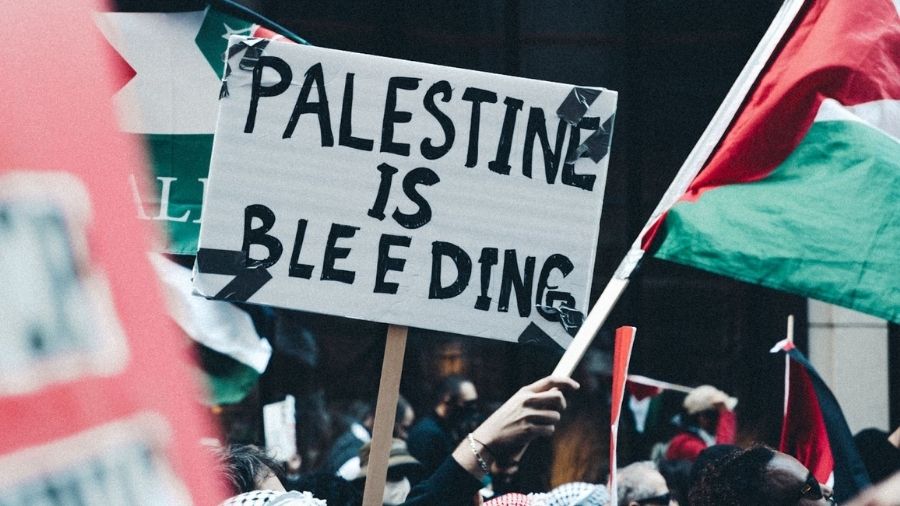
I never imagined that I would find myself writing, at a time when humanity boasts of its advancement, about a city being annihilated in broad daylight, where blood is spilled as easily as water, where homes are destroyed as though they were nothing more than parasitic weeds, and where an entire population is besieged like wounded prey cornered by wolves.
I never imagined I would be writing about Gaza, not because she does not deserve to be written about, but because she deserves more ink than newspapers can contain, more tears than the eyes can bear, and more awareness than this wretched world, steeped in silence and persistent in its delusion, has yet acquired.
Gaza and the conscience of humanity
Gaza! O pain of the heart! O poem of sorrow that has never ceased for over seventy years! You are not merely a point on the map, nor a passing political dispute, nor a fleeting headline scrolling across the news ticker. You are the open wound in the conscience of the world, the bleeding verse in the book of humanity.
Tell me, by God, what difference is there between blood spilled in the East and blood spilled in the West? Is not all blood, in the end, the blood of the descendants of Ādam? Is not every tear, no matter how small, a drop that nourishes the soil of human suffering? Is not every cry beneath the rubble, every moan from the corners of shattered homes, a piercing reminder that war is no solution, but rather the very heart of the problem? Does fire change when it burns a house in Gaza compared to when it burns a house in any so-called developed city of the world?
What is happening in Gaza is not merely an assault on a city. It is a direct stab in the heart of civilisation. These bombs do not simply demolish stone and brick. They shatter the very spirit of rebuilding and crush the meaning upon which humanity stands. When fields are set ablaze, whether here or there, it is not only the wheat that falls, but also the hopes of the poor and the dreams of the hungry who once believed that tomorrow might be better.
The cost of war
What does the earth grow when burdened by tanks? What can a mother offer when terror settles into her children’s eyes? What remains of victory when the celebration of it becomes a funeral lament? And what is the meaning of defeat when life itself becomes an unending funeral procession?
War, at its core, is a breakdown of understanding, a corruption of conscience, and a deviation from what it means to be human. War cannot mend what politics has ruined, nor can bloodshed heal wounds carved by hatred. Even if war sometimes appears necessary, it remains harsh and blind, unable to distinguish between a child and a soldier, between a home and a military post.
And after the fire and blood, what then? Hunger. Deprivation. Disease. Displacement. Generations raised among ruins, knowing of the world only smoke and dust. Is this truly what we desire for our future? Is this befitting for us, who pride ourselves on thought, philosophy, and art?
And though the war rages there, are we truly safe from its ashes? Can our hearts remain untouched by its flames, even if our bodies are far away? That child crying in Gaza cries on behalf of all children. That mother digging with her bare hands for her children represents all mothers. Shall we remain silent? Shall we shut our ears to the screams, close our eyes to the blood, and suffice with sending wishes of peace like festive greeting cards?
A call to conscience
No. Our duty today, now that the darkness has deepened, is to light a candle, not in Gaza alone, but in every conscience. Our duty is to say: no. No to war. No to savagery. No to politics that trade in human lives. No to silence. No to indifference. No to fear.
Let us wage other kinds of war: wars against poverty, against ignorance, against racism, against tyranny, and against hatred. Let us wage war against war itself, against this madness that has turned the world into a theatre of blood and the human being into a perpetual victim. Let us spread the light of thought in this dark world.
Let us forge shields from letters, weapons from ideas, and cries from words. Not to fight, but to stop this senselessness and restore meaning to humanity.
A final address to Gaza
O Gaza! O flower blooming in flames! O city praying beneath the rubble! O heart beating in a crucified body! To you belongs the glory, and to your people belongs steadfastness in the face of an unending storm. If we ever forget you, may we forget our own faces, our names, and our very humanity.