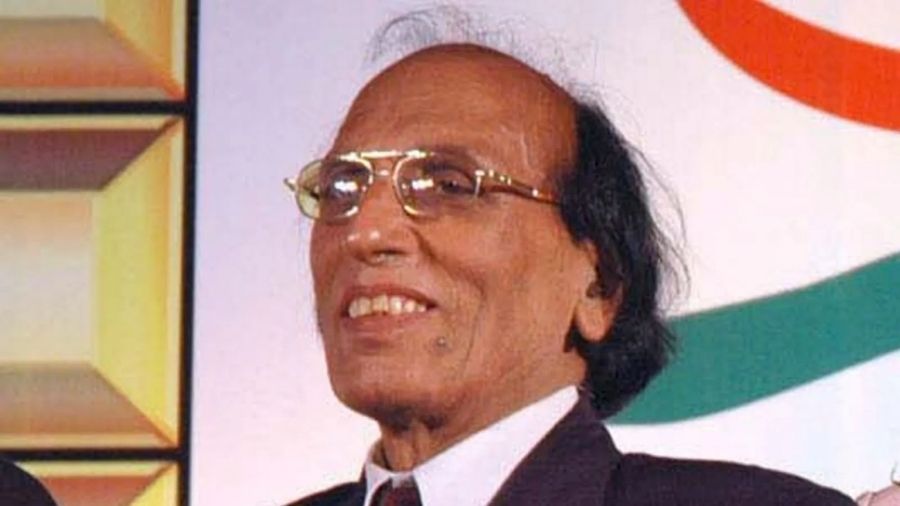
The Passing of Professor Yahya Michot, May Allah Have Mercy on Him

Today, the 3rd of Shawwal, 1446 AH, our esteemed and brilliant colleague Professor Yahya Michot passed away in the United States of America after a prolonged illness that exhausted and fatigued him. Indeed, we belong to Allah and to Him we return. When the news of his passing reached me, I said:
لِتَبكِ عَلَيهِ الإِنسُ وَالجِنُّ إِذ ثَوى
فَتى مُضَرٍ في كُلِّ غَربٍ وَمَشرِقِ
His Academic Journey
(“Let mankind and jinn weep for him who rests now,
A noble son of Mudar, mourned in East and West.”)
I accompanied Professor Yahya Michot for nearly ten years; we were colleagues at work and neighbours for a long period. He even entrusted me with teaching Arabic and Islamic studies to his son and daughter. He was among those distinguished individuals who leave indelible impressions in memory, a remarkable example of intelligence, clarity of thought, and analytical strength. He combined knowledge with rigorous research, diligence with determination, and possessed beautiful character and humility. How I miss those happy days that now seem but fleeting shadows or ghostly images:
ثُمَّ اِنقَضَت تِلكَ السُنونُ وَأَهلُها
فَكَأَنَّها وَكَأَنَّهُم أَحلامُ
(“Then those years and their people passed away,
As though they and their days were merely dreams.”)
His Scholarly Contributions
Professor Yahya Michot—formerly known as Jean Michot—was born on the 3rd of July, 1952, in Thuin, Belgium. He gained prominence in scholarly circles for his significant contributions to Islamic studies and Muslim-Christian relations. Renowned as a brilliant thinker, his work was not limited to teaching and authorship but also included his role as editor for the academic journal “The Muslim World,” published by Hartford Seminary in Connecticut, USA.
His academic journey began in 1983 at the University of Louvain in Belgium, where he taught Arabic philosophy, language, literature, and history until 1997. During this period, his deep studies on the eminent philosopher Ibn Sina, for whom he held profound admiration, marked a transformative phase in both his academic and personal life, leading directly to his conversion to Islam. He was deeply sincere in his faith and held a profound love for Islam in all its dimensions—its worship, culture, civilisation, history, arts, literature, philosophy, and theology.
Professor Michot’s intellectual journey was not confined to Ibn Sina alone. Fate also guided him to delve deeply into the works of Shaykh al-Islam Ibn Taymiyyah, with whom he developed an extraordinary attachment and profound respect. Rarely did we gather without him speaking about Ibn Sina and Ibn Taymiyyah, expressing his immense regard for these two towering figures of Islamic thought. He saw them as symbols embodying rationality and authenticity within the Islamic intellectual heritage.
Between 1998 and 2008, he taught Kalam (Islamic theology) and Arabic language at Oxford, supervised academic research and dissertations, and served as a consultant for several universities and international organisations in the United Kingdom. He was responsible for numerous intellectual achievements in his field.
Professor Yahya Michot authored valuable books and outstanding articles on classical Islamic thought and the influence of Ibn Sina and Ibn Taymiyyah on philosophy and theology. Among his notable works are:
“Ahmad al-Aqhisari: Against Smoking” (for which he honoured me by asking to write the introduction)
“Ibn Sina: Letter to Vizier Abu Sa’d”
“Ibn Sina: Refutation of Astrology”
“Ibn Taymiyyah: Muslims Under Non-Muslim Rule”
“Muslims in Europe.”
He would recount fascinating responses by Ibn Sina to the Mu’tazilites, often sharing with me his immense admiration for Ibn Sina and Ibn Taymiyyah, highlighting their shared intellectual brilliance, sharp insight, yet their distinct visions and methods. It seemed as though he began thinking and feeling as they did, and he found great pleasure whenever they were mentioned.
I greatly admired his sincerity in research, his commitment to Islam, and his deep connection to knowledge and faith. Our closeness was not only in our mutual appreciation of the works of Ibn Sina and Ibn Taymiyyah but also in our shared sincere desire to spread knowledge and learning.
He was a noble, vigilant, wise man, guided rightly, characterised by refined morals, approachable, gentle, and generous in nature. His face radiated a sweet, constant smile. His companionship was never tiresome, and his gatherings never dull. All tongues agree in praising his virtues and extolling his merits. May Allah encompass him in His infinite mercy and grant him spaciousness in Paradise.
Original source: