On the Concept of Tay al-Makan wa al-Zaman (Folding of Space and Time)
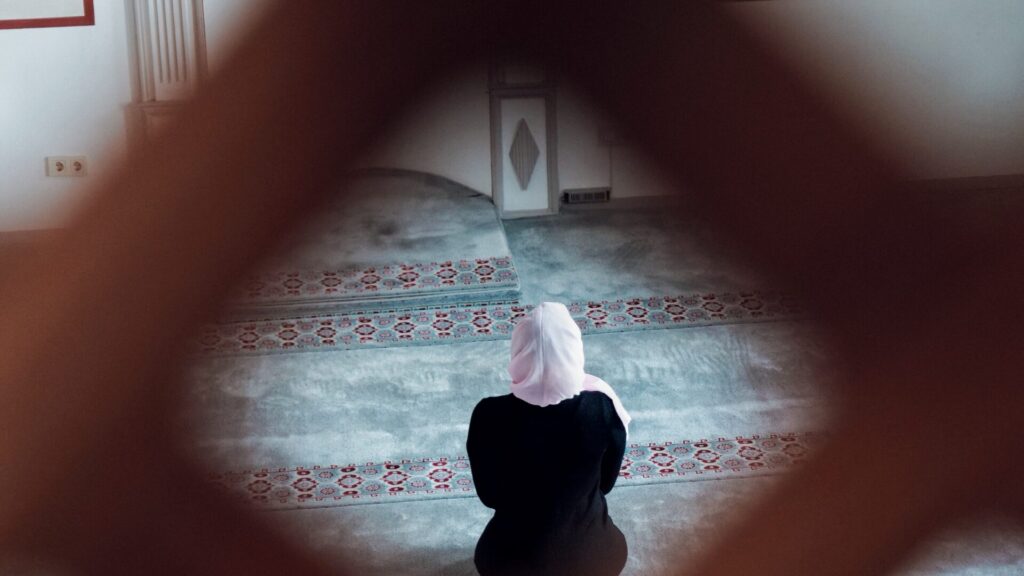
Imam Abdul Wahhab al-Sha’rani, in his book Lawaqih al-Anwar fi Tabaqat al-Akhyar, narrates about his Shaykh, Ali al-Khawas. He recounts that Shaykh Ali would be seen at his shop in Egypt during Dhuhr time, but no one ever saw him performing the Dhuhr prayer there. When asked why he did not pray Dhuhr, he would remain silent. Later, some of his followers from Palestine revealed that he prayed Dhuhr with them in the city of Ramla, Palestine.
The Sufis believe that certain saints, such as the four Qutubs (spiritual poles)—Shaykh Abdul Qadir Jilani of Iraq, Shaykh Ahmad al-Rifa’i of Syria, Shaykh Ahmad al-Badawi of Yemen, and Shaykh Ibrahim al-Dasuqi of Egypt—possessed the miraculous ability of “Tay al-Ard” (folding of the earth). Similar beliefs are also attributed to some Indian Sufis. Some would claim to reside in villages in Punjab but simultaneously perform their prayers in the Sacred Mosque in Mecca.
Imam Abdul Wahhab al-Sha’rani also narrates in Al-Tabaqat al-Kubra about Abu al-Mawahib al-Shadhili, who claimed to see the Prophet Muhammad ﷺ in a wakeful state. The Prophet reportedly told him, “Death has not overtaken me; rather, it means that those who lack understanding of Allah are veiled from me.” When Abu al-Mawahib expressed concern that people might reject his claim of seeing the Prophet in a physical sense, the Prophet ﷺ allegedly replied, “Whoever does not believe in this vision or denies it will die as a Jew, Christian, or Magian.”
Sufi books and narratives frequently mention accounts of “Tay al-Zaman wa al-Makan” (folding of time and space). However, scholars generally reject such claims vehemently. Imam Ibn Taymiyyah, for example, asserted that a person cannot exist in two places at once. When he was imprisoned in Egypt, there were reports of him being seen delivering a sermon in Damascus. Upon investigation, it was discovered he was still in prison. When asked about it, Ibn Taymiyyah clarified that it must have been a jinn impersonating him, as jinn are known to lie, whereas angels do not.
Sufis argue that one should not reject what they do not understand and should acknowledge their ignorance. While this principle is valid, it does not validate all their claims or extraordinary anecdotes. Any claim lacking evidence from rational or scriptural proof is mere illusion, self-deception, or ignorance. Allah has not obligated humans to believe in anything without sufficient proof.
Some may ask, “If miracles of saints (Karamat) are true, then why reject Tay al-Zaman wa al-Makan?” The answer is that miracles are divine gifts granted by Allah and not under a person’s control. They occur only in extraordinary circumstances and are not habitual; otherwise, miracles would become ordinary occurrences.
It should also be noted that merely asserting the possibility of something does not establish its reality. Claims about miraculous acts attributed to Imam Abu Hanifa, Imam Shafi’i, or Shaykh Abdul Qadir Jilani must be substantiated with credible evidence and reliable chains of narration. For instance, some claim Imam Shafi’i completed two Qur’an recitations daily during Ramadan or that Imam Abu Hanifa prayed Fajr with the same ablution as Isha for 40 years. Such claims lack authentic chains of narration and often contradict the teachings of Allah and His Messenger.
The correct understanding is that many such claims are either false or based on misunderstandings. For example, someone who prays Isha and Fajr in congregation is rewarded as if they spent the entire night in prayer. Exaggerated claims often arise from this premise.
Similarly, the concept of Tay al-Makan wa al-Zaman often involves imaginative experiences rather than physical realities. A person may imagine themselves conversing with the Prophet ﷺ or attending events from the past, but these are products of the imagination and hold less significance than dreams. Weak-minded individuals or those deeply affected by spiritual exercises may begin to confuse such visions with reality.
When faced with such experiences, a person should refrain from spreading them indiscriminately. Instead, they should seek treatment for their condition and pray to Allah for healing.
May Allah protect us from spreading falsehoods and baseless beliefs, and grant us the ability to rely on the Qur’an, the Sunnah, and authentic knowledge. Ameen.
This article was translated from Urdu using AI. For the original source, visit:
Original source: