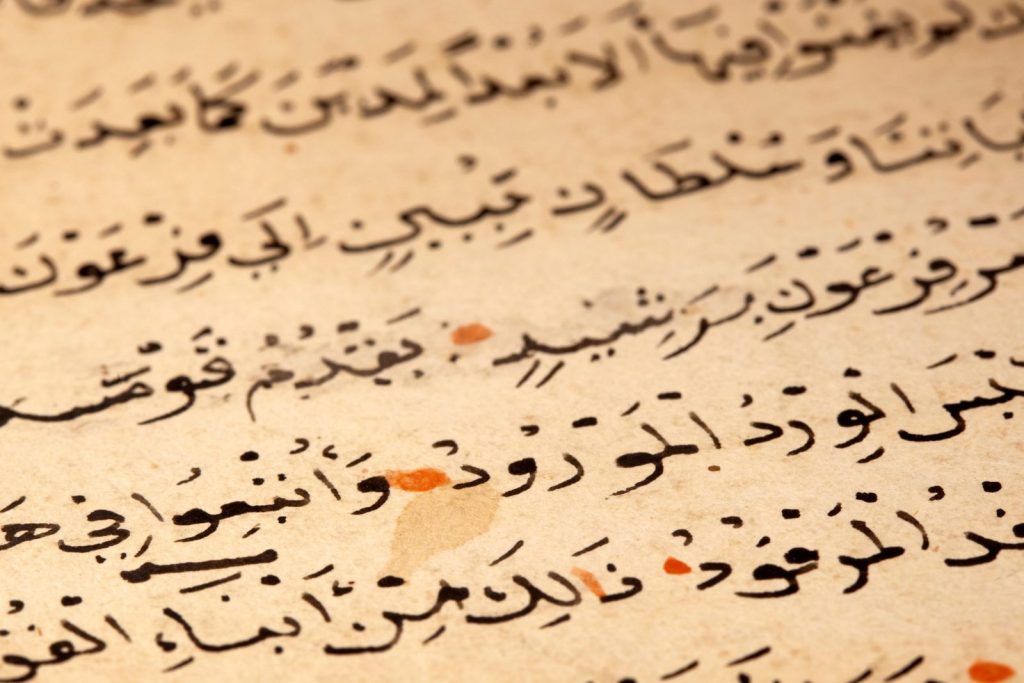
Understanding Quranic Verses: A New Perspective


Clear Verses: Misunderstood in Their True Essence
Author: Maulana Muhammad Inayatullah Asad Subhani
Maulana Muhammad Inayatullah Asad Subhani is counted among the distinguished scholars of our time who have dedicated their entire scholarly lives to the understanding, contemplation, and elucidation of the truths and insights of the Holy Qur’an. His scholarly acumen, profound research, and balanced thought in the fields of Qur’anic sciences, the order of the Qur’an, and the principles of exegesis have earned him a prominent place among scholars. He is among the few who regard the Qur’an not merely as a book for blessings and recitation but as a source of reflection, contemplation, and vibrant intellectual guidance.
During my student days at Nadwatul Ulama, Lucknow, I had the honor of benefiting from and being close to him. At that time, Maulana Subhani would occasionally visit our esteemed teacher, Maulana Shahbaz Sahib (may Allah have mercy on him), and pose serious, scholarly, and insightful questions on the intricate passages, difficult verses, and complex exegetical discussions of the Qur’an. I had the opportunity to participate in these scholarly gatherings. These sessions were not mere formal academic discussions but served as a living classroom for Qur’anic contemplation, understanding of verses, and the taste of exegesis, where deep discussions on various aspects of the Qur’an’s order, context, style, and internal coherence took place. These gatherings ingrained in my mind the truth that Maulana Subhani’s true field is the sciences of the Qur’an and contemplation of its verses, and his insight in this regard is of an extraordinary degree.
Maulana Subhani has presented numerous important, beneficial, and thought-provoking works related to the Qur’an. His scholarly endeavors, such as “Al-Burhan fi Nizam al-Qur’an,” “Im’an al-Nazar fi Nizam al-Ay wa al-Suwar,” “Al-Tahrir wa al-Tahbir fi Usul al-Tafsir,” “Aqd al-Juman fi Taqwim Tadabbur al-Qur’an,” and other books, are viewed with appreciation and esteem among scholars. The central focus of all these works is the correct understanding of the Qur’an, the elucidation of its order and coherence, and paving the way for contemplation of its verses. The book at hand, “Clear Verses: Misunderstood in Their True Essence,” is also a very important, unique, and noteworthy work in this scholarly series.
This book comprises a renewed study of those Qur’anic verses that have been deemed “difficult,” “ambiguous,” or “extremely complex” by a group of exegetes for centuries. The author’s fundamental claim is that the Qur’an, in its true essence, is a very clear, coherent, easy, and comprehensible book, and most of the difficulties that arise are not due to the Qur’an itself but result from human shortcomings in understanding, inadequate exegetical methodologies, weak traditions, and neglect of the Qur’an’s order and context.
At the beginning of the book, the author raises a very fundamental question: If the Qur’an itself declares: “And We have certainly made the Qur’an easy for remembrance, so is there any who will remember?” and if it was revealed “in a clear Arabic language,” then why, in later periods, was it labeled as “difficult” and “problematic”? Why did some exegetes go so far as to say that certain verses are “the most difficult in the Qur’an”? According to the author, this question is not merely an exegetical discussion but a fundamental question related to the entire methodology of understanding the Qur’an.
Maulana Subhani concludes that for the correct understanding of the Qur’an, relying solely on inherited exegetical statements is not sufficient; rather, it is essential to understand the Qur’an in light of its own order, context, internal coherence, and the natural style of the Arabic language. This is why he emphasizes “direct contemplation” and “understanding the order of the Qur’an” over imitative exegesis.
A significant feature of the book is that the author does not suffice with theoretical discussion but presents practical analysis of several verses where, in his view, a large segment of the Ummah has not attained the correct understanding. For instance, regarding the verse from Surah Al-Baqarah: “And do not marry polytheistic women until they believe” (Al-Baqarah: 221), the author establishes a detailed scholarly discussion. The majority of exegetes have exempted women of the People of the Book from this ruling, whereas the author believes that the Qur’an includes the People of the Book within the sphere of polytheism. To substantiate this stance, he presents several Qur’anic texts, such as: “The Jews say, ‘Ezra is the son of Allah’; and the Christians say, ‘The Messiah is the son of Allah’” and: “They have certainly disbelieved who say, ‘Allah is the third of three.’” According to the author, overlooking the polytheistic elements in the beliefs of the People of the Book and considering them separate from the polytheists is not fully aligned with the overall temperament and style of the Qur’an.
Similarly, in the interpretation of the verse from Surah At-Tawbah: “Indeed, the polytheists are unclean,” the author expresses the opinion that the term “polytheists” is not limited to the idolaters of Arabia but also includes the People of the Book, as the Qur’an, in several places, explicitly declares some of their beliefs as polytheism.
Likewise, regarding the verse from Surah Al-Imran: “Abraham was neither a Jew nor a Christian, but he was a true Muslim, and he was not of the polytheists,” the author argues that “the polytheists” does not refer only to the idolaters of Arabia but to any group that deviated from pure monotheism, even if they are the People of the Book.
Furthermore, concerning the verse from Surah Al-Anfal: “Just as your Lord brought you out of your home in truth,” and the verses related to testimony and bequest in Surah Al-Ma’idah, the author attempts to clarify that labeling these verses as “extremely difficult” is actually a result of unfamiliarity with the Qur’an’s order, context, and the style of Arabic. According to him, if the Qur’an is understood in light of its own order and internal coherence, these difficulties largely resolve themselves.
An extremely important scholarly aspect of this book is that the author has deeply benefited from Imam Hamiduddin Farahi’s theory of the order of the Qur’an. He has established several fundamental principles for interpreting the Qur’an, such as:
– No part of the Qur’an can contradict another;
– The ambiguous must be understood in the light of the clear;
– The apparent meaning of the Qur’an cannot be abandoned based on weak traditions;
– Every verse should be understood in the context of its order, coherence, and the central theme of the Surah;
– The well-known and natural style of the Arabic language holds primary importance in interpreting the Qur’an.
These principles essentially provide the foundation for the intellectual and exegetical structure of this book.
In terms of literary merit, this book is of a very high standard. Maulana Subhani’s style presents a beautiful blend of scholarly dignity, intellectual sobriety, strong reasoning, and literary elegance. His writing not only exhibits deep research but also conveys a profound spiritual and intellectual connection with the Holy Qur’an with full force.
In summary, “Clear Verses: Misunderstood in Their True Essence” is not merely an exegetical work but a serious scholarly and intellectual dialogue on the prevailing methodologies of understanding the Qur’an. This book invites the reader not to understand the Holy Qur’an merely through inherited statements but to ponder over its meanings with contemplation, order, context, and scholarly integrity. This is why this work holds great importance, utility, and is worthy of study for students of Qur’anic sciences, researchers, teachers, and serious readers.
Translation note: This article was translated by AI. View the original Telegram post.