Meeting with Maulana Muhammad Yusuf Siddiqi
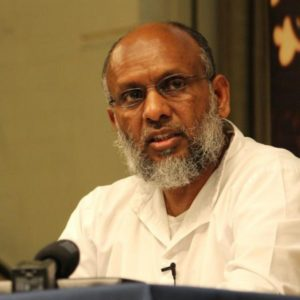

Maulana Muhammad Yusuf Siddiqi Nadwi
Maulana Muhammad Yusuf Siddiqi Nadwi, along with Maulana Muaz Nadwi and other companions, came to meet this humble servant from Bhopal. Their arrival was not just a visit; it was a delightful invasion filled with affection, informality, wit, knowledge, humor, and the distinctive charm of Nadwi. Some guests enter through the door, some into the heart, and some leave behind the fragrance of their laughter, voice, and grace in the room even as they depart. Yusuf Bhai belongs to this third category.
We met on the evening of April 4, 2026. Until their departure the next day, we spent most of our time together. We had a long session in my room. Yusuf Bhai delivered a captivating speech in the style of Hazrat Ji and then led a prayer. Oh, how perfectly he imitated that even the most serious attendees couldn’t help but smile, and those familiar with Hazrat Ji’s temperament and style were left in admiration for a long time. If mimicry is an art, then Yusuf Bhai is such a master that distinguishing between the original and the imitation becomes difficult. His language is playful, yet respectful; his mimicry is humorous, yet not disparaging. This is the excellence of his art.
On the morning of April 5, we had breakfast together. There was more conversation than food. Afterward, we visited various departments of Nadwa. We spent some time in the Shibli Library, where the silent rows of books were accompanied by Yusuf Bhai’s melodious voice, as if spring had suddenly arrived in the corridors of an ancient school. If books could speak, they would likely praise his eloquence.
Around ten o’clock, we met with Maulana Khalid Saifullah Rahmani, President of the All India Muslim Personal Law Board. Maulana is a broad-minded jurist. His fatwas reflect both depth of knowledge and concern for the collective welfare of Muslims. He inquired about my engagements. When I mentioned the commentary on Sahih Muslim, he particularly praised the “Muhaddithat” in high terms. My association with Maulana dates back to when I was a teacher at Nadwa, and he used to visit with Maulana Muntallah Rahmani and Qazi Mujahidul Islam, may Allah have mercy on them. Since then, we have met numerous times in India and abroad. Some relationships are formed through correspondence, some through companionship, and some through the harmony of hearts; this relationship is among the latter.
Afterward, we met with the esteemed teacher Maulana Saeedur Rahman Azmi, may Allah preserve him. Due to weakness and illness, Maulana perhaps did not pay full attention to my greetings and conversation. Here too, Yusuf Bhai displayed his strategic acumen. He began conversing in Arabic and presented such a barrage of synonyms that Maulana’s spirits were lifted. It was quite beneficial, and the gathering came to life. There was a time when Maulana had such authority at Nadwa that students would measure their breaths in his presence. Even today, the old Nadwis have not forgotten his awe, but time mercilessly leaves its elders behind: he has departed from the lane of deprivation!
The time spent with Yusuf Bhai was brief, yet it was full of presence. Two things define him: his black glasses and black bag. Neither the glasses leave his side, nor the bag. Even during prayer, the bag is placed in front. While Muslims generally focus on the place of prostration, Yusuf Bhai’s attention remains fixed on this black bag. What it contains remains a mystery to this day. Some believe it holds books, others say papers, and some skeptics consider it a chest of Nadwi secrets or Yusuf’s mysteries. But the truth is known only to Allah or Yusuf Bhai himself.
And it is also a mystery when and why Yusuf Bhai developed a fondness for the color black. From his attire to his belongings, this color reigns supreme. It seems as if the color black has pledged allegiance to him.
Yusuf Bhai’s greatest feat is that in this turbulent age, he has not yet married. And an even greater feat is that while the world has lost hope in his marriage, he has not let go of the thread of hope. Regarding him, friends have a tradition: every year, a new rumor circulates, a new proposal is considered, a few elders become active, some women concerned, but in the end, the result is the same: the same story, the same tale, the same failed plans.
With a boat-shaped cap on his head and wide-legged trousers, it seems as if a dandy from Lucknow is walking down the street. Such delicacy that with every movement, his waist bends ten times, yet his voice is strong, his tone passionate, and his conversation magnetic, drawing listeners irresistibly. Non-Nadwis are more enamored with him than Nadwis. Why do people from Deoband, Mazahir, and Aligarh hold him in such affection? This too is a puzzle. Perhaps because wherever Yusuf Bhai goes, he carries with him a mobile branch of Dawah and Tabligh.
At Nadwa, he was considered among the peace-loving students. For such a person, what better platform than the Tablighi Jamaat! This is why he was immensely popular and beloved both within and outside Nadwa. When he was made the leader of Nadwa’s Tablighi Jamaat, some expressed concern that it might be a conspiracy to weaken the Jamaat. There was even sarcastic commentary about “the understanding of the higher realm.” But contrary to the expectations of the alert-minded like us, the progress Yusuf Bhai brought to the Tablighi Jamaat is unparalleled. The grandeur with which large groups emerged from Nadwa during his tenure forced even critics to acknowledge: we were wrong in our assumptions.
The brilliance of Yusuf Bhai’s personality is that he is simultaneously serious and cheerful, humble and dashing, traditional and individualistic. He embodies the culture of Nadwa, the delicacy of Lucknow, the simplicity of the Tablighi Jamaat, and a personal playfulness that sets him apart from others. Some people are merely seen, some are remembered, and some are written about. Yusuf Bhai, fortunately, belongs to the third category.
Translation note: This article was translated by AI. View the original Telegram post.