Surojni Did Not Debate, Yet She Triumphed


Oxford,
31 December 2025
*A Scholar Remembered*
Nearly twenty years ago, an Indian scholar and researcher came to England. I had the opportunity to meet him and spend time in his company. He was exceptionally intelligent, serious, and hardworking. In Indian scholarly circles, he was widely known by the title “Ghamarr”. I no longer recall his given name. Indians have an old habit of assigning titles—sometimes out of affection and reverence, sometimes out of irony or satire.
Ghamarr would often narrate a particular account in his gatherings.
*The Chieftain of Wealth and Debate*
In a remote Indian village lived a man named Suraj Singh. He was immensely wealthy, a major landowner, and recognised as the chieftain of the village. The established custom was that anyone who claimed the chieftainship had to engage Suraj Singh in a public debate. At the conclusion of each debate, Suraj Singh would present proof of his wealth and thereby defeat his challenger.
On one occasion, a young man, through diligence and trade, accumulated substantial wealth and acquired more land than Suraj Singh. A debate was held. Suraj Singh produced five kilograms of gold and defeated him.
Another challenger appeared, possessing even more land and gold. This time, Suraj Singh produced a priceless diamond and prevailed once again.
Thus, every claimant was defeated, and Suraj Singh remained the uncontested chieftain of the village.
*Surojni: Victory Without Debate*
In the same village lived a young widow named Surojni. She was a schoolteacher who, despite her modest income, devoted herself fully to the education and upbringing of her two orphaned sons and two daughters.
Through perseverance, sacrifice, and moral strength, she achieved what wealth could not. One daughter became a doctor, one son an engineer, another a judge, and the youngest daughter a professor of English at a university. They not only attained professional distinction but also instilled in the next generation a love for knowledge, learning, and literature.
Through their efforts, the village youth were educated and nurtured, transforming the village into a model community. Surojni’s grandchildren and even her sons- and daughters-in-law became educated, respected, and socially influential, playing a decisive role in the intellectual and material development of the village.
In stark contrast, Suraj Singh’s descendants proved incapable. The wealth and lands they inherited were divided, squandered, and eventually lost. They fell into poverty and obscurity.
Without engaging in a single debate, Surojni—through knowledge, ethics, hard work, and character—became the beloved “Rani” (queen) of the village.
*Knowledge as the Final Arbiter*
The same principle applies in the scholarly world.
For centuries, Kufa and Basra debated their superiority in Arabic language and grammar. At times Kufa prevailed; at other times, Basra. Then Sibawayh, through silent labour and profound contemplation, produced Al-Kitāb—a work so monumental that Basra’s scholarly authority became established for more than twelve centuries, while Kufa’s position in grammar receded.
Imam Malik authored Al-Muwaṭṭaʾ. Many other Muwaṭṭaʾāt were written in Madinah, but they vanished. Only Imam Malik’s work endured.
The same applies to Ṣaḥīḥ al-Bukhārī, Ṣaḥīḥ Muslim, Imam al-Shāfiʿī’s Al-Risālah, Ibn Ḥazm’s Al-Muḥallā, Ibn Sīnā’s Al-Shifāʾ and Al-Qānūn. These works were not preserved through polemics or disputes, but through sincerity, rigour, and intellectual depth.
*Shah Waliullah and the Lamp of Renewal*
Shah Waliullah Dehlawi authored Ḥujjat Allāh al-Bālighah—not merely a book, but an enduring intellectual legacy. In it, he articulated the foundations of the Qur’an and Sunnah while offering a profound analysis of the moral, jurisprudential, and political challenges facing the Muslim Ummah.
His insight resembles the radiant lamp of prophethood: dispersing the fog of ignorance and blind imitation, and guiding the Ummah towards clarity, balance, and knowledge.
This work illuminated scholarly circles in both East and West, contributing to intellectual unity, reviving the spirit of faith, and restoring equilibrium between knowledge and practice. It became a means of intellectual and spiritual renewal whose light continues to guide Muslims today.
*Enduring Scholars, Enduring Works*
Allama Shibli Nomani authored Shiʿr al-ʿAjam, Al-Fārūq, Al-Nuʿmān, Al-Maʾmūn, Al-Ghazālī, his history of ʿIlm al-Kalām, and pioneering works on the biography of the Seal of the Prophets ﷺ. Though dozens of rebuttals were written against his Mawāzinah-yi Anīs o Dabīr, their authors are forgotten. Shibli’s work remains the standard for literary criticism in Urdu.
Allama Syed Sulaiman Nadwi authored Arḍ al-Qurʾān, Sīrat ʿĀʾishah, and ʿArabōn kī Jahāzrānī. His works continue to provide intellectual guidance through their historical breadth and analytical depth.
Maulana Hamiduddin Farahi authored Imʿān fī Aqsām al-Qurʾān and Al-Raʾy al-Ṣaḥīḥ fī man huwa al-Dhabīḥ, laying foundational principles for Qur’anic coherence and legal contemplation.
Maulana Maududi’s Tafhīm al-Qurʾān contextualised Qur’anic guidance for the modern age, while Maulana Amin Ahsan Islahi’s Tadabbur al-Qurʾān restored reflective engagement with the divine text.
These scholars, through sincerity and perseverance, remain guiding lamps for seminaries and intellectual circles.
*Maulana Abul Hasan Ali Nadwi: Greatness Without Disputation*
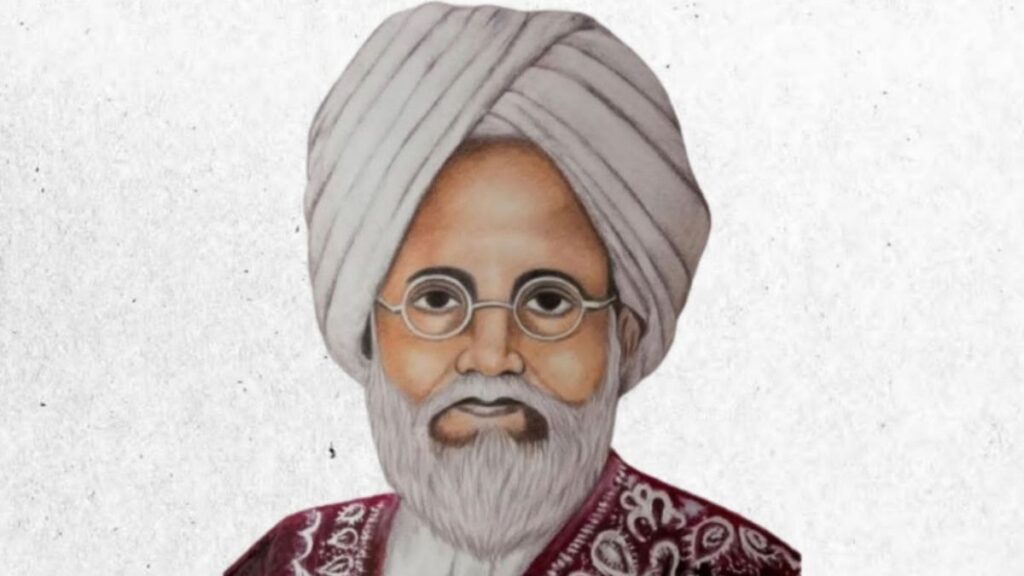
Maulana Abul Hasan Ali Nadwi never engaged in debate. Turning away from self-promotion, he authored Mādhā Khasira al-ʿĀlam bi Inḥiṭāṭ al-Muslimīn—a work unmatched in its depth and impact.
He passed away on this very date, 31 December 1999, leaving behind an enduring testament that true greatness arises from knowledge, ethics, humility, and perseverance.
*A Portrait of Dignity*
O Countenance, your threshold reveals the lights of sovereignty;
Within your thought are hidden a hundred divine wisdoms.
Though aged, his radiant forehead outshone youth. His silence unravelled complexities; his words fell like pearls. His presence illuminated hearts, and his gaze inspired devotion. He was an alchemist of souls—before whom even crystal clarity seemed dim.
With his departure, the world darkened. Hearts were left with an ache of absence, an unspoken grief:
Since Sulaymi settled in Iraq,
I face from her turning away what I face.
⸻
Acknowledgement
This text was translated into English with the assistance of artificial intelligence and subsequently reviewed, verified, and refined by the Sulayman Qadhi.
⸻