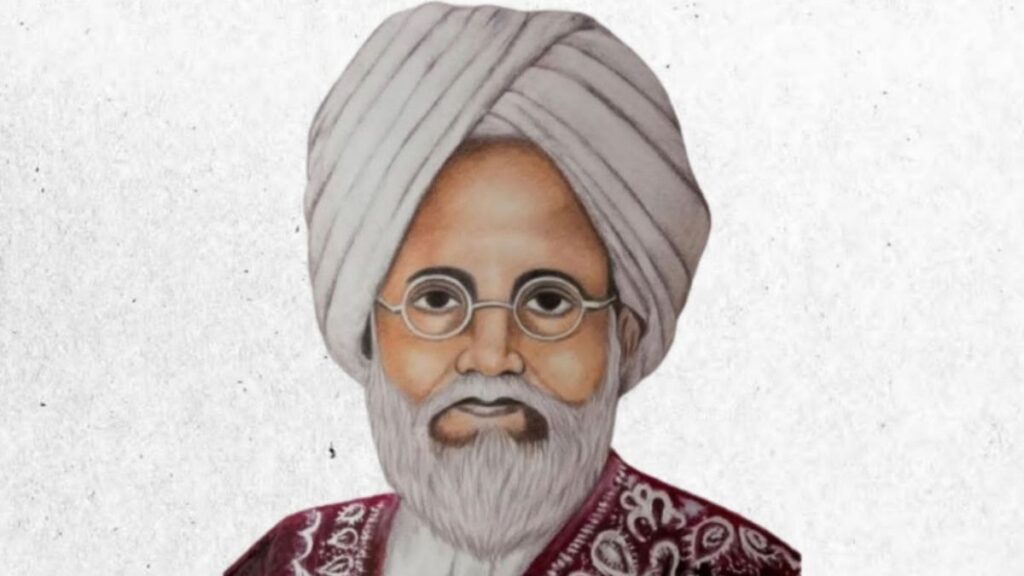
A Silent Custodian of the Nadwah Tradition
بسم الله الرحمن الرحيم
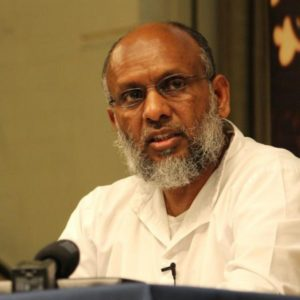
I received the following message concerning Mawlānā Aʿẓam Sharqī Nadwī from my dear friend Mawlānā ʿAbd al-Jī Nadwī, currently resident in Qatar:
> Peace be upon you, and the mercy of Allah and His blessings. I hope you are well. By the grace of Allah, we are all in good health here.
I wished to submit that the Taʿmīr Ḥayāt Institution had published a special issue on my late father. That special issue consisted of contributions by three respected scholars: Mawlānā Sayyid Ḥamzah Ḥasanī, Mawlānā Naẓr al-Ḥafīẓ Nadwī, and Professor Aṭhar Ḥusayn.
However, the relatives and close associates of my father expressed the desire that a separate book be published exclusively on him, and that those articles which could not be included earlier should now be published, along with new contributions commissioned from those connected to him. I have therefore begun this work, and by contacting scholars and associates both within the country and abroad, I have, by Allah’s grace, gathered approximately forty articles. The process of typesetting is currently underway—please pray for its completion.
Secondly, through your good offices, I wish to request an article from Mawlānā Shaykh Mohammed Akram Nadwi (may Allah preserve him) on my father. Mawlānā’s article entitled “Nadhr Nadwah” has already appeared in Taʿmīr Ḥayāt, but it has long been my wish that he write another piece, which may adorn this separately published book. Kindly convey my request to him. Peace be upon you.
Aʿẓam Sharqī Nadwī, Nadwat al-ʿUlamāʾ, Lucknow.
Reply:
Peace be upon you, and the mercy of Allah and His blessings.
Your message—so full of affection and of deep importance—has reached me. It reflects a seriousness, sincerity, and heartfelt concern to preserve the scholarly and intellectual legacy of the late master, Mawlānā Naẓr al-Ḥafīẓ Nadwī (may Allah have mercy upon him), which is truly worthy of appreciation. May Allah Most High accept these noble efforts, grant them honour, and make them a lasting charity (ṣadaqah jāriyah).
The preparation of a dedicated volume will, without doubt, prove to be a precious trust for the Nadwah tradition, its intellectual temperament, and for generations to come. In this context, I present the following reflections on the honoured teacher—neither as a formal tribute nor as a display of rhetorical praise, but as the remembrance of a teacher known not by noise, but by the depth of his influence.
Be a man whose feet are firm upon the earth,
And whose ambition’s crown is set among the stars.
Much of the world is shaped by those who do not announce their presence, but allow their influence to speak on their behalf. Their footsteps are quiet, yet the effect of their passing is so subtle and enduring that the atmosphere itself acquires a new balance; the environment settles into moderation; and for future generations, paths are softly illuminated—paths that once seemed difficult to tread. Such people do not raise slogans, nor do they inscribe their names upon plaques. Yet when time itself advances along their footprints, silence begins to testify that no ordinary soul passed through here. They are not written in the margins of history, but in its very foundations.
What people they were, who passed along the path of fidelity—
One longs to walk on, kissing their very footprints.
Within the scholarly and intellectual environment of Nadwat al-ʿUlamāʾ, the presence of the late master Mawlānā Naẓr al-Ḥafīẓ Nadwī (may Allah have mercy upon him) was of precisely this kind—never loud, never ostentatious, yet profoundly deep, enduring, and formative. He belonged to that category of sanctified souls who remain in the background, allowing others to advance, and whose true stature becomes even clearer, more meaningful, and more indispensable after their departure.
Nadwah is not merely an educational institution; it is a living tradition—a tradition that embodies a delicate yet resilient balance between transmission and reason, between the classical and the contemporary, between continuity and reform. Such a balance is not sustained by slogans or fleeting enthusiasm, but by precisely such silent, loyal, and selfless souls who place the institution above themselves. The late master was one such individual. His bond with Nadwah was not the result of office, title, or temporary responsibility, but the fulfilment of an inner covenant—one made with conscience, intellect, and his Lord. He resided in Nadwah, yet in truth Nadwah resided within him: in his tone, his silence, his patience, and in those decisions he made without claim or display.
A defining feature of his life was that he regarded Nadwah not merely as an institution, but as a sacred trust. In his view, institutions are not built of bricks and mortar, but of temperament—and safeguarding temperament is the most delicate and demanding of responsibilities. For this reason, he prevented disagreement from turning into discord, and diversity from degenerating into fragmentation. He firmly believed that institutions are sustained not by slogans, but by quiet perseverance; and that traditions are kept alive not by clamour, but by loyalty and sincerity.
In the intellectual formation of the late master, the personality of Mawlānā Abū al-Ḥasan ʿAlī Nadwī (may Allah have mercy upon him) stood as a radiant lighthouse. He did not merely read Mawlānā’s thought; he breathed within it. To him, Mawlānā’s message was not confined to a particular region or era, but constituted a comprehensive and meaningful response to the intellectual turmoil of the Muslim Ummah. He would often say to me that Mawlānā’s thought must be conveyed to Europe, and would suggest that certain of Mawlānā’s works ought to be translated into English.
By the same token, his relationship with the esteemed Mawlānā Rābiʿ Ḥasanī Nadwī (may Allah have mercy upon him) was not merely one of reverence, but of trust, loyalty, and intellectual harmony. He viewed these elders as the living continuity of the Nadwah tradition, and considered himself a modest yet responsible link in that chain. It was for this reason that Mawlānā Rābiʿ Ṣāḥib placed exceptional trust in him and included him in matters of serious counsel.
To confine his teaching to the narrow definition of delivering lessons would be an injustice to his legacy. He opened windows in minds more than he turned pages of books. Words, to him, were not an end, but a means—one that compelled the student to think, not merely to accept. He understood well that true education is that which gives rise to questions, and that the most meaningful questions are those that bring a person face to face with himself. Hence, in his lessons, a single sentence might dominate an entire lecture, or a meaningful pause might send a student on a lifelong intellectual journey.
Knowledge, in his view, was not a burden to be placed upon memory, but a trust to be entrusted to consciousness. He likened knowledge to water: when it flows through proper channels, it irrigates fields; when released without direction, it floods settlements. For this reason, he was never willing to sacrifice intellectual maturity for mere curricular success. To him, intelligence was a gift—but ethics were its safeguard, and character its true measure.
His relationship with students was never merely formal. Despite being a teacher, he held deep respect for the human being within the student. A glimpse of this respect was evident in his relationship with me. I was his student, yet he always honoured me; I came to learn, yet he would also seek my counsel. On one occasion, I delivered a lecture in Nadwah’s Jamāliyyah Hall on the subject of “The Development of the Science of Ḥadīth”. He listened to detailed accounts of it from his students, and when we met, he spoke of it in such generous and affectionate terms that reflected both his magnanimity and compassion.
At times, he would attend my lectures from beginning to end. This conduct was not merely the result of personal nobility, but an expression of his firm conviction that knowledge advances not through ranks, but through sincerity. In his gatherings, being a student did not evoke a sense of inferiority, but instilled a sense of responsibility.
He resembled a discerning gardener who recognises the distinct soil, sunlight, and water required by each plant—offering shade to weaker branches and support to sturdier trunks. He neither rejoiced in another’s misstep, nor neglected another’s success. His kindness possessed a seriousness that never descended into indulgence, and his firmness carried a gentleness that refined rather than wounded.
In an age when education is steadily becoming an industry, and institutions are increasingly caught in a race for results, statistics, and outward achievements, the memory of the late master appears before us like a mirror. He belonged to a generation of teachers for whom teaching was an act of worship, and moral formation a quiet, prolonged, and patient struggle. He understood that knowledge divorced from character becomes a sword, and character devoid of knowledge remains little more than a pious wish.
The late master has departed from this world, yet his absence cannot be confined within words. Some voids are not filled; they are only felt. He left behind neither noise nor claims—only a standard, a sensibility, a temperament, and a fragrance that does not fade with time.
Such people do not die; they are absorbed into time. And when time itself claims someone as its own, forgetting them is no longer possible.
O you who dwell permanently within the heart,
Time itself dares not dream of emptying that abode.
My eyes yearn for you whom they behold,
Whether in waking moments or in sleep’s embrace.
May Allah Most High forgive the late master, allow his knowledge and nurturing to be passed on from lamp to lamp, and grant us the ability to once again regard knowledge as a trust, institutions as living traditions, and teachers as the true architects of human beings. Āmīn.
Original source: