The Passing of Shaykh al-Muqri’ Bashīr Aḥmad – May Allah Have Mercy on Him
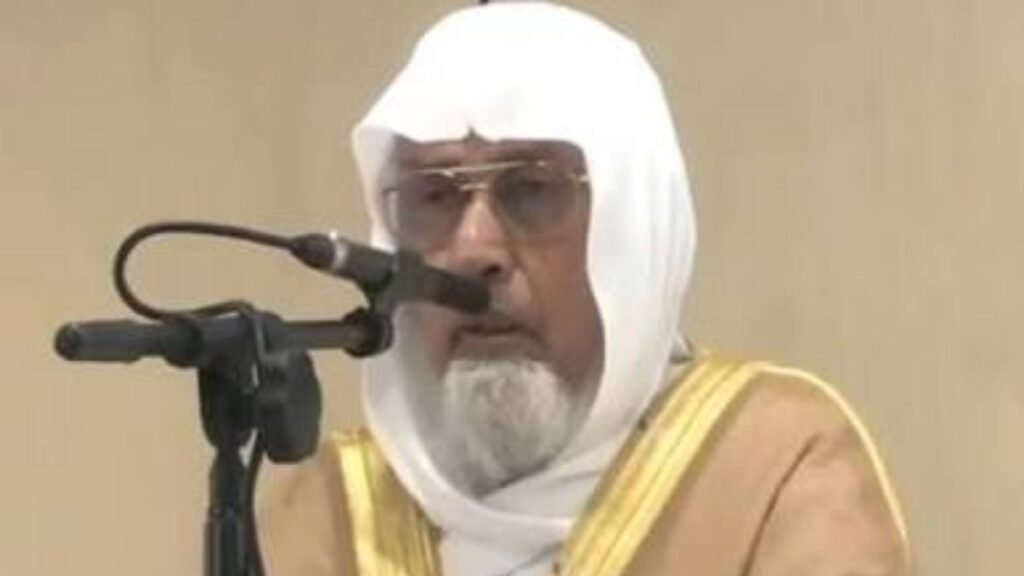
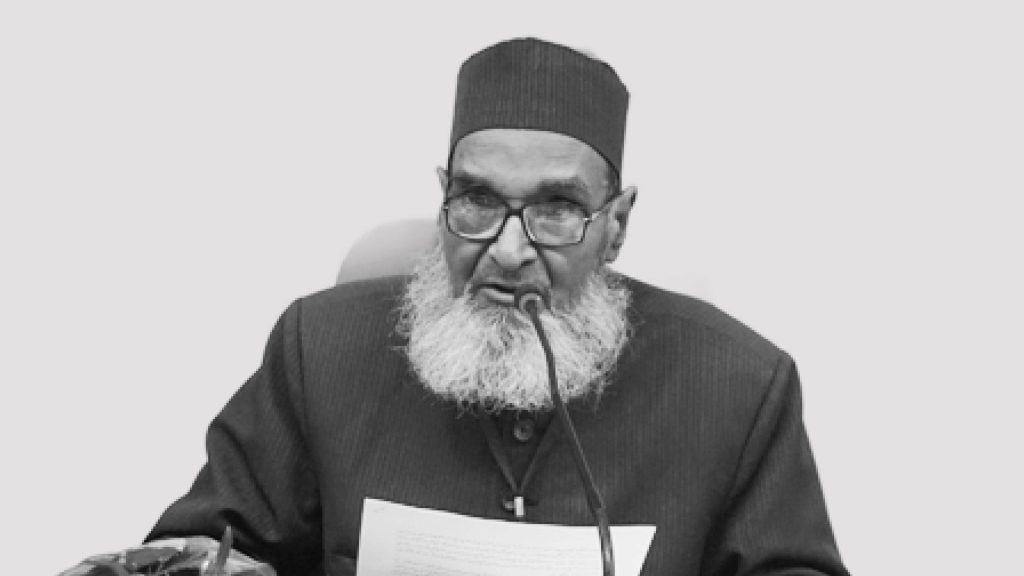
We received with deep sorrow and grief the news of the passing of the venerable Shaykh Bashīr Aḥmad Ṣiddīq, the reciter (al-muqriʾ) at al-Ḥaram al-Madanī al-Sharīf for many decades, who passed away on Wednesday, the 9th of Rabīʿ al-Ākhir 1447 AH. Many people in Britain and beyond benefitted from his knowledge. He had a particularly profound impact on my own students, both men and women, through the firm knowledge, precise recitation, and majestic delivery of the Book of Allah that he instilled in them.
His Death and the News of His Passing
Though the body is now absent from our sight, the melodious voice that so often rose with the verses of Allah in the precincts of al-Masjid al-Nabawī remains engraved in the memory of hearts. Its trace is not erased, nor its echo diminished. His luminous presence and lofty character will continue to bear witness to a life wholly dedicated to the service of the Qurʾān.
Shaykh Bashīr Aḥmad Ṣiddīq was born in the city of Liyyah, in the district of Muẓaffar Garh, Pakistan, in 1357 AH. He was raised in a wholesome environment under the care of Allah and within the light of His Book. He memorised the Qurʾān as a child in his birthplace and completed his primary education there, before travelling to Lahore, where he enrolled at Jāmiʿat Dār al-ʿUlūm al-Islāmiyyah. There he immersed himself in the sciences of tajwīd and the seven canonical qirāʾāt, studying them under the expert master and then Shaykh al-Qurrāʾ of Pakistan, ʿAbd al-ʿAzīz al-Shawqī, may Allah have mercy on him.
His Early Life and Memorisation of the Qur’an
From Lahore, he moved to Karachi, where he joined Jāmiʿat Dār al-ʿUlūm and studied under the Imām of the reciters and Shaykh al-Shuyūkh, Fatḥ Muḥammad Ismāʿīl, may Allah have mercy on him. With him he studied the ten qirāʾāt individually (ifrād), completing nineteen full recitations, each riwāyah separately. He then completed Ṭayyibat al-Nashr fī al-Qirāʾāt al-ʿAshr. After his graduation, he was appointed as a teacher, and later became head of the Department of Tajwīd and Qirāʾāt, becoming a distinguished reference point in this discipline.
Then it was the will of Allah that he migrate to the city of al-Muṣṭafā ﷺ in 1385 AH, where he engaged in teaching at al-Masjid al-Nabawī al-Sharīf. He kept the company of the Shaykh al-Qurrāʾ of Madinah, Ḥasan ibn Ibrāhīm al-Shāʿir, may Allah have mercy on him, from whom he drew greatly. Thereafter, he was appointed a teacher at Maʿhad al-Qurʾān al-Karīm, affiliated to al-Jamāʿah al-Khayriyyah in Madinah, and later became its director. Yet he never ceased teaching in the Prophet’s Mosque, devoting himself to the instruction of the qirāʾāt, especially that of Imām ʿĀṣim and the riwāyah of Warsh from Nāfiʿ, may Allah have mercy on them both. From among his students are hundreds who came from every corner of the world, carrying his influence, his voice, and his blessed breath in recitation.
The Shaykh also left behind significant scholarly works. Among the most notable are his Awḍaḥ al-Maʿālim fī Qirāʾat al-Imām ʿĀṣim and his encyclopaedic Jāmiʿ al-Manāfiʿ fī Qirāʾat al-Imām Nāfiʿ, which extends beyond seven hundred pages and became an indispensable reference.
His Teachers and the Qira’at Studies
Allah honoured me to meet him during my ḥajj in 1439 AH, after Maghrib prayer in the precincts of al-Ḥaram al-Madanī. The meeting was brief, but full of meaning. He welcomed me with a radiant face and illuminating words. He urged me to intensify teaching in the West, warning against rigidity and narrowness, and calling for openness of mind and breadth of vision. What particularly struck me was his enlightened thinking when he told me that he taught tajwīd to women, stressing that correcting articulation cannot be achieved except through direct observation of the pronunciation and performance of the letters, and that this cannot be done from behind a veil.
In that moment, I saw in him a balanced intellect, an open spirit, and a sincere concern that the Qurʾān be transmitted in performance and recitation exactly as it was revealed.
He gifted me his precious work, Jāmiʿ al-Manāfiʿ fī Qirāʾat al-Imām Nāfiʿ bi-Riwāyat Qālūn min Ṭarīq al-Shāṭibiyyah wa-al-Ṭayyibah, published in 1421 AH. About it, the reciter Yūsuf ʿAbd al-Wahhāb al-Sambari wrote in his endorsement: “I found it a refined, simplified, and well-arranged book, in which the author gathered the essential rulings of uṣūl and farsh relating to this riwāyah in an accessible style. No student of this science will have an excuse after it…” and so on, in words that testify to the merit of the author and the quality of his work.
I was delighted by his dedication to writing, alongside his great contribution to teaching and recitation. It is rare to find among the reciters of the Indian Subcontinent those who combine teaching with writing, research, and precision. This book stands as proof of his distinction and evidence of his high ambition and deep devotion to serving the Qurʾān.
His Service at al-Haram al-Madani
It suffices him as honour that the Qurʾān was his lifelong companion wherever he resided or travelled, and that he lived in its company—as a teacher, reciter, author, and disseminator of its light. All honour and dignity are attained only through the Qurʾān; all nobility and esteem are built only upon service to the Word of Allah.
May Allah have mercy on Shaykh Bashīr Aḥmad Ṣiddīq. He was a school unto himself: a school in purity of soul, firmness of knowledge, and breadth of vision. A man who lived for the Qurʾān does not die, for his influence continues in every reciter who learned from him, and in every heart moved by his gentle voice, in the East and in the West.
Original source:
View the original Telegram post.
Closing Reflection