Writing for one’s time
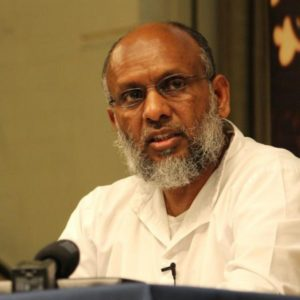
Shaykh Akram Nadwi
Muhaddith & Islamic Scholar

Writing for one’s time
By: Dr Mohammad Akram Nadwi
Oxford
There have been many great Muslims who did not commit their religious wisdom to writing. We know about them and have some of their sayings only because they taught their disciples who recorded them. We cannot say such Muslims were self-absorbed or self-centred, not concerned with fellow human beings, because they were teachers and improved the religious lives of their students.
After a hundred or so years, Islam became established as a civilisation with a state that could employ learned Muslims in various offices, and with a lavish court that could patronise poets, writers, philosophers and so on. A great deal of the literature that we have now from the so-called classical and post-classical periods is a product of the patronage of state and court mediated through public institutions such as mosques, madrasahs and the courts of Law. During this phase the intellectual life of the religion was carried by either the fuqaha’ or by senior sufi shaykhs, and to a lesser extent, by celebrity intellectuals who had, through their reputations in the institutions of the Muslim world, gained the appreciation of the court. To some extent, therefore, the writings of this intellectual class were dependent on the approval of their peers in the formal institutions or of their patrons. Many of the great names in Islamic intellectual history wrote with one eye on past literature and the other eye on a reputation with posterity. It is relatively rare to find a great intellectual whose output begins in the practical, transient domain of responding to questions, i.e. fatwas, but is equal in value to the great works of the past in theology or philosophy. Of the few men of whom this is true, most seem to have written their works with an eye to their reputations among future generations. In other words, they wrote books, polished, edited writings, intended to be studied in madrasahs and universities.
One conspicuous example of someone who did not produce polished, edited writings intended for posterity but whose writings have continued to be enormously influential for centuries is Ibn Taymiyyah. He did not write a biographical dictionary or world history or encyclopaedia or a tafsir of the Qur’an. Nevertheless, the materials contained in his collected fatwas cover all these subject areas with as much information, together with sophistication of theoretical and historical analysis, as you would find in the books of those who wrote for posterity more than for the benefit of the ummah of their time. This aspect of Ibn Taymiyyah’s writings leads to a great deal of repetition, digression and polemical over-statements, but the quality of his thinking, his ability to bring different domains of knowledge to bear on the questions he is tackling – he seems to have been blessed with an extraordinary memory together with power of recall – overrides the negatives. His work is aimed at fellow scholars and their students with the intention of preventing them from falling into the confusion that must come when people prefer the wisdom of their forefathers and ancestors over that of the Qur’an and Sunnah. His life work is one expression of his zuhd, his renunciation of worldly pleasures and advantages, and of his dedication to the ethical and spiritual well-being of his contemporaries. He was never trying to correct or complete, or compete with Aristotle for the attention of posterity. Rather, he was always trying to correct the mistakes (of reasoning and action) of those who were influenced by those who were trying to fit the Aristotelian tradition around the Qur’an and Sunnah, or those who were influenced by the theology and devotional techniques of non-Muslims.