The Science of History is the Key to the Science of Ḥadīth


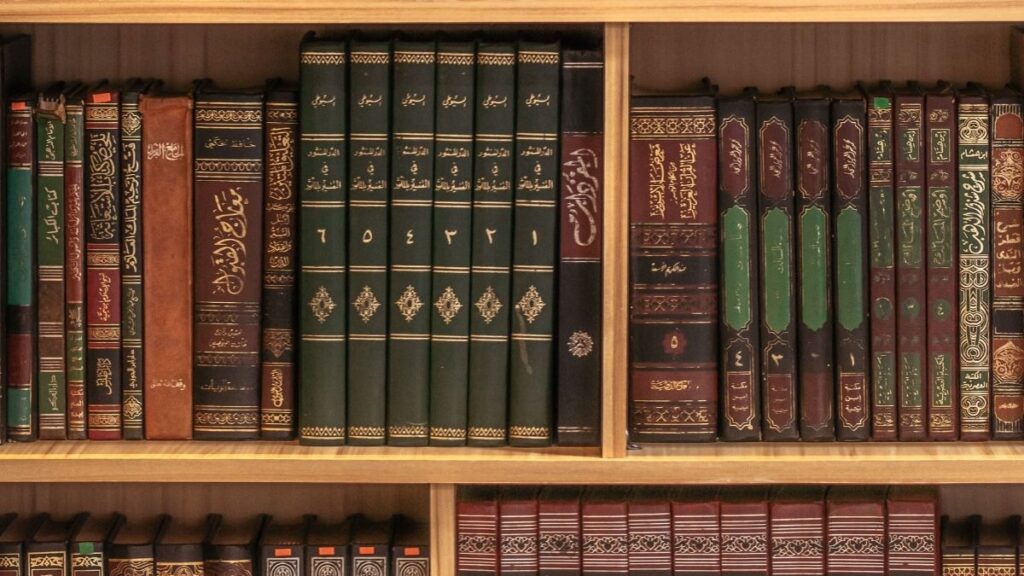
The science of ḥadīth is, in essence, that great repository of reports and history which, by its very nature and reality, holds an unparalleled position among all the sciences of the world. It is a treasury of knowledge that elevated human consciousness, religious insight, and scholarly investigation to such lofty heights as have no equivalent in the whole span of human history. This science did not merely preserve religious tradition; it imparted to civilisation itself the lesson of how a report is to be scrutinised, by what standard an event is to be verified, and what principles and criteria are necessary to ensure that transmitted knowledge remains sound and reliable. Through the discipline of ḥadīth the world came to know that safeguarding a report as a trust is not only an ethical obligation but also an intellectual responsibility. It is precisely this distinction which renders it superior to and apart from all other sciences.
On Thursday, the 27th of Ṣafar 1447 AH, I had the honour of attending, at the invitation of an institute engaged in the critical study of Ṣaḥīḥ Muslim. There I was asked regarding my own experience in the commentary and examination of Ṣaḥīḥ Muslim. I presented before them the same point which, after years of research and study, I have come to regard as an established truth: that the true key to understanding the method of the muḥaddithūn in criticism and authentication is to grasp that ḥadīth is, in its essence, khabar (report) and history. Once this is appreciated, it becomes as clear as daylight that the imāms of ḥadīth adopted, in weighing reports and scrutinising narrations, a procedure of precision and rigour never attained by any historian or transmitter of reports elsewhere. It is this very secret which elevated the two Ṣaḥīḥs (al-Bukhārī and Muslim) to the rank whereby no other book on earth can approach their standard of rigour and verification.
This reality was unveiled to me only when I understood that the science of ḥadīth is in fact a branch of the science of history. On this basis, when I plunged into the deep ocean of meanings of ḥadīth, I discovered how Imām al-Bukhārī and Imām Muslim applied the principles of historiography with utmost strictness and subtlety in their critique of ḥadīth. Their very first and fundamental condition was that every transmitter must be characterised by both ʿadālah (uprightness) and ḍabṭ (accuracy of retention), and that these two qualities be assessed independently of each other. This was a most profound and extraordinary insight. It is for this reason that they referred to their works on narrators as kitāb al-tārīkh (Book of History), for to them, the scrutiny of transmitters was essentially the same task that a historian undertakes with respect to his sources and references.
Even when trustworthy narrators report an event, at times error or inadvertence may creep in. To guard against this, they laid extraordinary stress upon ittiṣāl al-isnād (continuity of the chain), so that the narration should never be broken at any point, and the report be preserved as a connected sequence of transmission.
Yet, even these three basic requirements—uprightness, accuracy, and continuity of the chain—were not deemed sufficient. For despite their fulfilment, there may remain in the ḥadīths such fine and hidden defects (ʿilal khafiyyah) as escape the attention of ordinary muḥaddithūn. To guard against such subtle flaws, those two great Imāms also applied, with utmost rigour and precision, the conditions of absence of shudhūdh (irregularity) and absence of ʿillah (defect). These are the five pillars upon which the greatness of Ṣaḥīḥ al-Bukhārī and Ṣaḥīḥ Muslim rests, and by virtue of which these two works have surpassed all other books in the world. No human endeavour, however careful and painstaking, can ever attain even half their rank.
The details of these points I have presented in my works: Tamhīd ʿIlm al-Ḥadīth, Madkhal rāʾiʿ ilā mā fī Ṣaḥīḥ al-Bukhārī min asrār wa ṣanāʾiʿ, and in the introduction to my commentary on Ṣaḥīḥ Muslim. The whole of my commentary on Ṣaḥīḥ Muslim is, in fact, a sustained attempt to unveil this secret: that the labour, insight, and scholarly precision of the imāms of ḥadīth was not merely a service to religion, but also an unparalleled intellectual achievement for the history of humanity itself. It was not only the preservation of ḥadīth, but also the safeguarding of reports as a trust; not only the scrutiny of chains, but also the upholding of the dignity of transmission; not only knowledge, but that consciousness which shall remain ever luminous upon the pages of time.
Original source:
View the original Telegram post.