Journey to Bosnia (8)
(7)
Saturday, 6th Dhu al-Hijjah 1447 AH
This marks my second journey to Bosnia. I had previously shared my reflections from the first journey in six articles, documenting the conditions of the land, the people I met, and the enduring emotions that journey left within me. It seems that when one returns to a beloved place, they carry with them two images: an old one stored in memory and a new one awaiting discovery. Thus, one lives between memory and anticipation, between what was known and what is hoped to be seen anew.
We departed from —myself, my wife, and my daughters Aisha and Hala, with Hala’s children: Amani, Usama, and Maryam—at a time when the night was tender, and dawn was slowly breathing. It was a quarter to three in the morning. We performed the Fajr prayer before setting out, then proceeded quietly, as if the entire city was submerged in a deep slumber, unwilling to awaken. was peculiarly still, with only the sound of passing footsteps or a distant car breaking the silence, making one feel that this ancient city cares little for those who leave or return, for it is older than all people and more enduring than their transient journeys.
We boarded a large vehicle that accommodated us all, embarking on the long road to Luton Airport. The road stretched before us in monotonous tranquility, flanked by dark trees appearing as silent phantoms in the dim light, beneath a gray, still sky—neither bright to inspire joy nor rainy to evoke sorrow. It was the typical English sky that invites silent contemplation and instills a vague sense of estrangement.
Upon reaching Luton Airport at four o’clock, we were joined by my daughter Fatima, her husband Dr. Imran Nawid, and their young daughter Aisha. Later, my daughter Sumayya arrived with her children: Asim, Asiya, and Ibrahim, accompanied by her husband Abu al-Farhan, along with a group of students from the Peace Institute. We encountered an unexpected crowd. The airport, though small, was bustling with people, as if the entire world had gathered there. The school holidays that had just begun seemed to have prompted families and students to travel, mingling faces and languages, with children’s voices rising and long lines stretching before the inspection and passport windows, inducing fatigue and weariness. The travel procedures took a full hour, during which I moved between windows and inspection points, feeling a quiet exhaustion as the effects of sleeplessness and travel weighed heavily on both body and soul.
I then sat in a corner of the airport, intending to engage in some work, as I always carried papers and books, hoping to seize an hour for reading or review. However, fatigue overpowered me, and I sat in a daze, observing the people around me without truly seeing them, hearing the echoes of voices in the vast hall as if they came from afar. I felt a deep exhaustion that bore no apparent pain but weighed down both spirit and body, relieved only by sleep.
At six-thirty, we boarded the plane, and as soon as I settled into my seat, I surrendered completely to sleep, as if my body had been drained of all strength, and the past hours had exhausted any remaining energy. I was oblivious to the journey or the happenings around me on the plane until the stewardess awakened us, announcing our descent into Sarajevo Airport, which was at a quarter to eleven in the morning.
Upon opening my eyes, I felt as though I had returned to a land not foreign to my soul, despite the passage of time. Some places, once visited, leave an indelible mark on the heart, and upon returning, one feels an old familiarity, as if there is an unbroken acquaintance between them. There, we met others from our group, arriving from various countries, exchanging greetings and joy mixed with fatigue. The faces bore the marks of long travel, yet they also shone with the joy of reunion after separation.
I entered my hotel room near midday, while most of the students went out for lunch and conversation. I chose solitude and quiet, having a light meal in my room, then performed the combined Dhuhr and Asr prayers. The fatigue within me drove me to seek refuge in sleep, as if sleep was a blessing sent by Allah to the weary, a mercy for their exhausted bodies.
I awoke around five, feeling refreshed and somewhat relieved of the fatigue I had been experiencing. I immersed myself in reviewing my book on Tafsir, a habit I cherished during my travels, finding in knowledge a unique solace not found elsewhere. As I turned the pages and reviewed the meanings, I felt my soul regaining some of its tranquility and balance, as if reading restored order to the heart after the chaos of travel and movement.
As evening approached, we descended to the hotel restaurant for dinner, where I met my senior students from the UK, Europe, America, Canada, and Australia. They were all joyful and optimistic, their faces reflecting the happiness of reunion after a long absence, their eyes filled with the clarity born of sincere love and companionship. The gathering was filled with conversations and memories, with voices and laughter intertwining in an atmosphere of intimate camaraderie. Observing them, I realized that knowledge unites not only minds but hearts as well, and these journeys, despite their fatigue and hardship, leave in the soul a warmth and clarity that make all the toil worthwhile.
The Peace Institute held its first meeting in the hotel conference hall at eight-thirty after the Maghrib prayer. The spacious, serene hall was filled with attendees from various countries, each bringing something of their experience, hopes, and the questions that drive people to travel and seek knowledge. Though fatigue was evident on the faces, there was also a hidden energy sparked by the beginning of a new journey, accompanied by the excitement and anticipation that always accompany new beginnings.
The esteemed Abu al-Farhan, the institute’s director, addressed the attendees with a calm and composed speech, outlining the purpose of the journey, its daily programs, and the planned visits, lectures, and meetings. He spoke with simplicity and clarity, yet one could sense that for him, this was not merely organizing a transient journey but an effort to transform the days we would spend in Bosnia into an intellectual, spiritual, and human experience.
Participants then took turns speaking, each introducing themselves, their interests, their connection to the Peace Institute, and the impact and experiences of previous journeys they had participated in. It was remarkable to witness the vast differences among people in age, country, and specialization, yet see them all united by a single desire: the desire to learn, to seek meaning, and to attempt to understand life more deeply than ordinary, repetitive days offer.
Some spoke with hesitation and modesty, others with confidence and enthusiasm, but what united them all was the simple sincerity that emerges from the soul when speaking of things one truly believes in. As I listened, I felt that regardless of how distant lands and cultures may be, at their core, people remain drawn to the same profound questions: Why do we live? How do we find guidance? What gives life meaning and value?
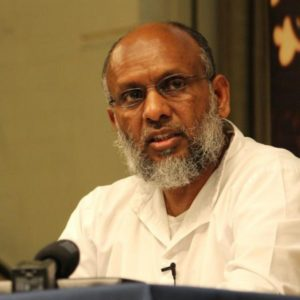
When it was my turn to speak, I discussed the meaning of traveling through the earth, saying that many people think journeys are merely moving from place to place, collecting stories, events, images, and memories, as if a person is a tourist passing through places without depth. However, when the Quran invites us to travel the earth, it does not intend this superficial, limited meaning but a deeper, more significant one: to learn and reflect, to observe the destinies of nations, and to understand the laws governing human life, destruction, and salvation.
I then recited the verse: “Those are the towns whose stories We relate to you. Their messengers came to them with clear proofs, but they would not believe in what they had denied before. Thus does Allah seal the hearts of the disbelievers.” I paused at the phrase “what they had denied before,” explaining that it is not directly related to “believe” as might be initially understood, but rather it explains it; they did not believe because they had previously denied, persisting in their denial until it became a habit of both mind and heart. A person does not go astray suddenly; it begins with neglecting the truth, then hesitating, then turning away, until they are unable to see it even when it is clear before them.
I told the attendees that the most dangerous affliction is not ignorance alone but the disabling of the intellect, for Allah has endowed humans with the ability to observe and discern. If neglected, the heart is sealed, and one hears without benefit and sees without reflection. I then recited: “That is from the news of the towns which We relate to you; of them, some are standing and some have been mowed down. And We did not wrong them, but they wronged themselves. And their gods, whom they invoked besides Allah, availed them not at all when the command of your Lord came, and they added to them nothing but ruin. And such is the seizure of your Lord when He seizes the towns while they are doing wrong. Indeed, His seizure is painful and severe.”
I explained that when the Quran narrates the stories of nations, it does not aim to fill the memory with events but to awaken the conscience, teaching that when injustice prevails in a nation and it turns away from the truth after knowing it, its apparent strength does not benefit it, nor do its civilization, idols, or what it imagined to be a source of pride and protection.
I then mentioned the verse: “And We did not find for most of them any covenant,” linking it to: “And they swore by Allah their strongest oaths that if a sign came to them, they would surely believe in it…” to “as they did not believe in it the first time.” I explained that people often deceive themselves, thinking that if they saw a sign, they would believe, or if circumstances changed, they would be upright, while the root problem lies within, in their approach to truth and their readiness to accept it. Those who reject the truth the first time are likely to be deprived of success afterward, for when the heart becomes accustomed to turning away, returning becomes difficult.
I also mentioned Pharaoh’s words: “O Haman, build me a tower that I might reach the ways,” saying that Pharaoh did not need to ascend to the heavens to know the God of Moses but needed to observe the signs surrounding him and within himself. The truth does not elude a person due to distance but because they turn away from it. Even Iblis was in the heavens but did not find guidance; instead, he grew more distant and was expelled, for proximity in place means nothing if the heart is corrupt.
The hall was extraordinarily still, with people listening in quiet contemplation, as if each was reviewing something within themselves. As I spoke, I felt that the journey had truly begun, not when we boarded the plane, but when people began to view life with reflection and responsibility.
I concluded my talk by telling the students that we must approach life with seriousness and reflection, not with frivolity and heedlessness, and view the events and experiences around us with the eyes of a thoughtful learner, not a passerby who sees things and then forgets them. Life is too short to waste in heedlessness, and the world is full of signs for those who wish to see.
The meeting ended around ten-thirty at night, with fatigue evident on faces after a long day that began before dawn and ended only now. We returned to our rooms quietly, each carrying a piece of reflection and thought, then surrendered to rest, preparing for a new day of this journey.