The Illusion of Human Significance
He who believes that his death will leave an unfillable void is indeed deluded. How profound is the human’s arrogance in himself, and how fragile he is before the passage of time!
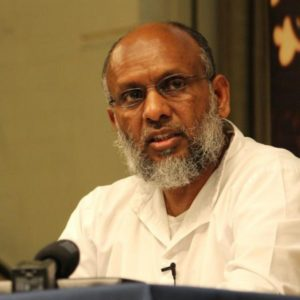
By Dr. Muhammad Akram Nadwi
Oxford
23/5/2026
One lives a long life, secretly harboring the belief, which he dares not confess, that the world revolves to the rhythm of his steps, that homes are illuminated by his voice, and that the faces gathered around his table draw warmth from his presence. When he departs, life seems to falter, much like the sky when a star is extinguished.
Perhaps this is the singular lie shared by all: the rich and the poor, the learned and the ignorant, the poet and the soldier, the ruler and the beggar. Each harbors this beautiful, sorrowful illusion: that their death will be a monumental event in the history of existence, that doors will remain closed after them, and that seats will stay vacant, awaiting their return like a widow awaiting her husband who will never come back.
Yet, my friend, life does not honor loyalty as we wish to imagine, nor does it keep promises as tender hearts do. It resembles a mighty river, swallowing rocks, corpses, ships, and dreams, then flowing on with a tranquil surface, as if nothing ever fell into it.
The man who filled the house with noise, commands, and laughter dies, and the rooms echo with weeping for a day or two, only to soon grow accustomed to the new silence. Within weeks, his clothes are moved from the closet, his watches and pens are divided, and perhaps his servant wears the coat he once cherished, walking the streets unaware that this fabric once clung to a man who thought himself great.
How cruel are the things that betray their owners! The desk where he spent years writing letters and articles becomes a cold slab accumulating bills and cups. The bed that witnessed his pains, dreams, and final breaths is slept in by another, perhaps even laughed upon by a child who knows not the name of the one who died there. Even books, which he deemed more loyal than people, soon bend under dust, as if they aged suddenly upon losing the hand that once caressed them.
The house itself is a traitor too; it absorbs the voices of its inhabitants and then forgets them. How many homes has death entered weeping, only to be filled with laughter and feasting years later? How many rooms have witnessed a man’s last moments, only to have their walls painted anew, curtains changed, and windows opened to the sun, as if the residents wish to erase even the scent of absence?
Man dies twice: once when his soul departs, and once when people cease to mention him. The first death is gentle; a brief moment like the blink of an eye. The second is the true death; when your name passes fleetingly on tongues like the name of a distant city, or is mentioned in passing in a cold gathering, before people move on to discuss food, travel, and real estate prices.
I have seen people who filled the world with noise, whose presence in a gathering turned heads like ears of grain to the wind, then they died. Their images were removed from walls after years, their phones fell silent, and their letters in drawers yellowed, as if time had passed over them with a giant eraser, erasing their features.
O poor human! You do not realize the world’s harshness until you imagine returning five or ten years after your death, walking the streets you once knew, only to find they do not recognize you. You enter your home to find the furniture changed, your scent vanished, and the spot where your picture hung now occupied by a modern clock or mirror.
You see your children, for whom you stayed awake, believing they could not live without you, each now with their own world, small concerns, and postponed plans. One thinks of travel, another of buying a car, and another laughs with a friend over the phone, as if you were not once the center of their fear and love.
Even grief ages. In the early days, it is like a hurricane, uprooting the heart, then it turns to light rain after months, then to a distant cloud, then to a faint memory that only occasionally hurts. Thus, man does not conquer loss by the strength of his heart, but by the weakness of his memory.
The tragedy of parents is especially severe! They spend their lives toiling like oxen in fields, gathering wealth, building homes, buying books and artifacts, believing they are constructing their small immortality. Then they die, and the heirs sell everything piece by piece: the once-sacred library becomes surplus furniture, the car its owner washed with his own hands is sold in a used market, the fine suits given to servants, and old letters thrown into garbage bags like dry autumn leaves.
Even pictures show no mercy. Initially surrounded by gilded frames, they are moved to a small corner, then to a drawer, then lost among papers, until a day comes when nothing remains of the deceased but a faded face in a photo whose owner’s name is unknown to children. As for the grave, which the deceased thought the last bastion of memory, it too soon succumbs to oblivion. Grass grows around it as it does on any abandoned stone, birds perch on the headstone indifferent to who lies beneath, and years pass until graves resemble each other like waves of the sea; indistinguishable from one another.
Only here does the stark truth we have long fled reveal itself: the world was not created for anyone, and it does not pause for any heart, no matter how much it loves itself. It is a colossal carriage that has been moving for thousands of years, passengers falling one by one, while new faces board, as the wheels continue their relentless journey on the same path, without mercy, without looking back.
Yet, within this harsh truth lies a hidden mercy. If the world truly stopped for every deceased, the earth would turn into a vast cemetery. If mothers continued to weep for their children forever, no child would ever laugh again. Forgetting is not betrayal as we think; it is the bandage Allah places on human wounds so they can continue living.
So do not seek, O human, to leave a void after you; for the void is an illusion. But seek to leave a good mark, even if small, like the trace of rain on thirsty soil.
Plant a tree, wipe a tear, or grant a fearful heart some reassurance. These are the things that linger a little before time devours them too.
As for you, with your body, name, image, and voice, you will pass as millions before you have passed, and as millions after you will pass.
A day will come when nothing remains of you but a solitary prayer hastily raised by a son, or a fleeting memory passing through the heart of an old woman at sunset, then disappearing like the last blush of the sun over the graves.
Only then will man realize—but too late—that his greatest lie was the phrase he whispered to himself for so long: “When I die, a void will be left that no one can fill.”