The human prophet
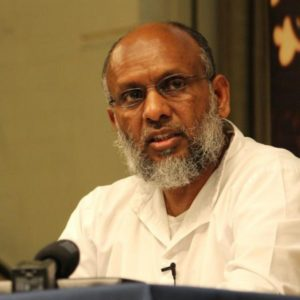
Shaykh Akram Nadwi
Muhaddith & Islamic Scholar

The human prophet
by: Dr Mohammad Akram Nadwi
Oxford
The figure of the Prophet holds a unique place in the religious consciousness of believers. Unlike kings, philosophers, or poets whose greatness may be recounted through achievements or inherited through lineage, the Prophet is defined first and foremost by divine election. As Islamic tradition asserts, it was God Himself who chose the Prophet, and this appointment cannot be explained by mere human reasoning or moral comparison. The Qur’ānic prophet is therefore not a construct of human invention, but a reality grounded in divine will.
The central principle underpinning the prophetic mission is that it originates from God alone. As believers understand, the Prophet was not chosen because he was uniquely virtuous or morally superior to all others, but because God, in His perfect knowledge and wisdom, selected him. This distinction is vital: while many individuals throughout history have been recognised for their goodness, piety, or leadership, prophecy cannot be earned or deserved. The Prophet himself never claimed that he merited divine favour. Rather, he repeatedly affirmed to his people that he was a messenger appointed by God, not a superhuman entity elevated by his own merit.
A second important aspect concerns the distinction between history and legend. History, as a record of events, provides a framework through which we understand the Prophet’s life as a man who lived, suffered, and endured the trials of his mission. Legends, by contrast, are human inventions, often created to exalt or embellish a figure until he appears beyond human grasp. In the case of the Prophet, legends risk obscuring the central truth: he was chosen by God for reasons beyond human understanding, not because he possessed qualities fabricated by later storytellers. Legends may enrich the imagination, but they can also distort the essential theological message, that the Prophet’s greatness lies not in mythical achievements, but in his role as the humble recipient of divine revelation.
The greatest mistake people make in approaching the idea of God and His messengers is to interpret them through human categories. In particular, Western philosophical traditions have often sought to comprehend God as if He were bound by human form, attributes, or limitations. Such anthropomorphism is alien to Islamic teaching, which insists that God transcends all human comprehension. To apply human logic to the mystery of divine election is to misunderstand both God and prophecy. The Prophet’s humanity is central—he ate, drank, suffered, and rejoiced like all people—but his prophetic mission is not reducible to human reasoning. It is a divine trust, the purpose of which cannot be grasped fully by mortal minds.
Ultimately, the Prophet’s life and message remind us of his essential humanity. He never claimed superiority in worldly terms, nor did he invite worship of his person. Instead, his role was to point towards God, to embody the revelation entrusted to him, and to remind his community of the reality of divine guidance. In doing so, he provides the model of a servant of God, distinguished not by mythical grandeur, but by humility and obedience.
As the Qur’ān itself declares: “Say, ‘I am only a man like you, to whom has been revealed that your god is one God.’” (Qur’ān 18:110)
FOLLOW THE الشيخ محمد أكرم الندوي CHANNEL ON WHATSAPP:
https://WhatsApp.com/channel/0029VbAxp2qGpLHHqQ3LoY0w