The Book “Qawaid al-Lugha al-Arabiya” (Arabic Grammar Rules)

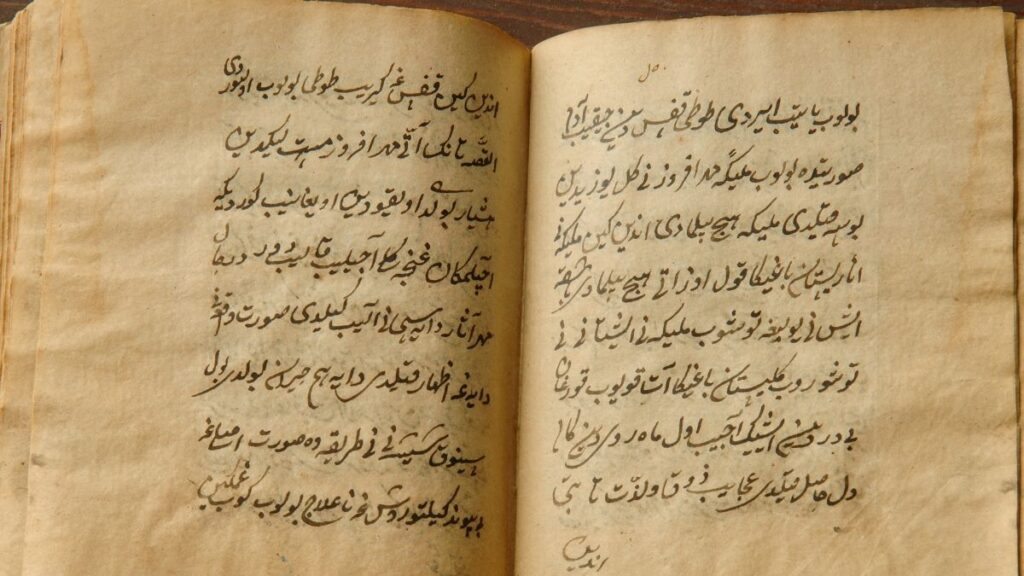
In the Name of Allah, the Most Merciful, the Most Compassionate
The Book “Qawaid al-Lugha al-Arabiya” (Arabic Grammar Rules)
Introduction
The book Qawaid al-Lugha al-Arabiya (Arabic Grammar Rules) is one of those works whose impact is unforgettable. This book was part of the Arabic curriculum in the second year at the Maulana Azad Educational Center. Its authors are Hanafi Bey Nasif, Muhammad Bey Diab, Mustafa Tamoum, Mahmoud Effendi Omar, and Sultan Bey Muhammad. This unique and concise book on Arabic grammar (nahw) was prepared under the supervision of Al-Azhar scholars by the Egyptian Ministry of Education for public school curricula. The advancements made in Arabic language and literature curricula in Egypt during the past century remain unparalleled in the Arab world.
My Journey with Grammar
Before encountering this book, I had studied Nahw Mir and Asbaaq al-Nahw at Zia al-Uloom. My mind was sharp, and everything I learned was absorbed quickly. When we received Qawaid al-Lugha al-Arabiya in the second year, we had only one copy available in the library. We would copy the daily lesson into our notebooks, which helped solidify our understanding.
Back then, I had begun to understand Arabic better than Urdu. If I didn’t hold Mir Taqi Mir, Ghalib, Sir Syed, Shibli, Hali, and Iqbal in high regard, I might have considered Urdu a lesser language. My fascination with the superiority of Arabic fueled my dedication to mastering its grammar. Every lesson felt enlightening, every day brought a new revelation, and each step brought me closer to mastery:
“Every moment brings a new insight, a new flash of brilliance,
May the journey of seeking never end.”
Impact of Maulana Azad Educational Center
The Center played a vital role in refining our thought and perception. Here, we connected not only with Urdu literature and the Qur’an but also developed a deep bond with Arabic language and literature. Over time, I began comparing my old school to this one, and gradually, a critical awareness arose that made me feel somewhat out of place in any environment.
Insights on Tradition vs. Innovation
The seeds planted in my mind by Qawaid al-Lugha al-Arabiya were nourished further, and it became clear that traditional Indian grammar books were weak, filled with unnecessary topics unrelated to actual grammar. An example is Hidayat al-Nahw, which may be one of the poorest works ever written on grammar.
Challenges with Traditional Books
A slightly better book is Al-Kafiyah by Ibn Hajib, a highly respected scholar of grammar and morphology. His Al-Shafiyah is a revered text on morphology. However, Al-Kafiyah did not achieve the same level of excellence and was perhaps a letdown from his usual standards.
In not only India but also Turkey and Central Asia, Al-Kafiyah is taught along with Mulla Abdur Rahman Jami’s commentary, which burdens the mind and stifles the joy of learning. Shibli Nomani, a pioneer in educational philosophy, rightly said, “In this book, there is everything but grammar.”
Embracing New Ideas
This critical perspective on books like Hidayat al-Nahw underscores why I hold Qawaid al-Lugha al-Arabiya in such high regard. It has a modern structure and organization, introduces new topics, and presents old topics attractively. Despite its brevity, it is a comprehensive and refined collection on Arabic grammar, suitable for students at various levels, whether they are beginners or looking to deepen their understanding.
Learning “Lasiya”
The book includes a special section on “Lasiya,” a term I read about in detail for the first time in this book. It explained that if “Lasiya” is followed by an indefinite noun, that noun can carry the nominative, accusative, or genitive case, each justified clearly. I remember feeling a unique sense of scholarly pride after understanding these cases.
Impact on Perspective
When I returned home from school after learning about the different cases of “Lasiya,” I felt an internal sense of pride. Upon meeting my old classmates, who were studying Hidayat al-Nahw, I couldn’t help but critique their book, which offered only repetitive examples like “Zayd” and “Amr.” Whenever I hear these examples, I recall a famous story in Sheikh Saadi’s Gulistan about a handsome boy memorizing grammar at the Kashgar mosque, where the poet humorously critiques the endless repetition of “Zayd” and “Amr.”
This book gave me a profound sense of progress, and while my friends had only simplistic examples in Hidayat al-Nahw, I felt I was moving towards a deeper understanding.
“Qawaid al-Lugha al-Arabiya” as a Comprehensive Guide
The Qawaid al-Lugha al-Arabiya book offers clear, structured, and engaging lessons that were significantly more effective than traditional books. It provided me with a newfound clarity and confidence in understanding Arabic grammar.
When discussing topics with my peers, especially the “Lasiya” topic, I realized that this book not only taught grammar but also opened doors to a more analytical approach in language studies. Unlike traditional texts that often confined students to memorization, this book encouraged comprehension, analysis, and a love for the Arabic language that traditional methods rarely achieved.
Conclusion
Reflecting on my journey, I see how much influence Qawaid al-Lugha al-Arabiya has had, helping to cultivate an appreciation for depth, precision, and elegance in Arabic grammar. This book is a hidden gem within the study of Arabic and remains a significant contribution to the field, offering something invaluable to students and scholars alike. It demonstrates that a well-structured, thoughtful approach to teaching can inspire students far beyond the classroom.
Through these experiences, I came to realize that tradition is essential, but it should never confine the spirit of learning. As I continued my studies, I learned to embrace new perspectives while valuing the wisdom of the past. True progress in education lies not in blind adherence to tradition but in an openness to growth and discovery.
“Fear of the new path, clinging to the old ways—
This is the most challenging journey in a nation’s life.”
In summary, Qawaid al-Lugha al-Arabiya remains a cornerstone in my academic journey, symbolizing not only mastery of Arabic grammar but also the courage to question, learn, and evolve.
Original source: View the original Telegram post.