Surah Baqarah verse 62
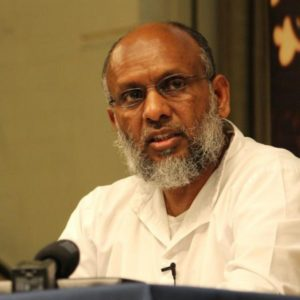
Shaykh Akram Nadwi
Muhaddith & Islamic Scholar

Surah Baqarah verse 62
by: Dr Mohammad Akram Nadwi
Oxford
Question: My respected student, Mr Ali Rasul, from Dallas, USA, asked me the following question:
As-salāmu ʿalaykum Ustād,
In Ayah 62 of Sūrah al-Baqarah, Allah says:
“Indeed, those who believed, and those who were Jews, Christians, or Sabians, whoever believes in Allah and the Last Day and does righteous deeds, will have their reward with their Lord, and no fear will there be concerning them, nor will they grieve.”
My question is: Why is belief in the Prophet Muhammad (ﷺ) as the final Messenger not mentioned here as a requirement for success in the Hereafter?
Answer:
Wa ʿalaykum al-salām wa raḥmatullāh,
This noble verse (Sūrah al-Baqarah, 2:62) must be understood within its proper Qur’ānic and historical context. It is, first and foremost, a reminder to Banī Isrā’īl that their lofty claims of being “the chosen people of God” or “His beloved children” would not benefit them in the least. Lineage or communal affiliation is of no value in itself; rather, what truly avails before Allah is sincere faith (īmān ṣādiq) and righteous action (ʿamal ṣāliḥ).
The mention of “those who believed, the Jews, the Christians, and the Sabians” refers to various religious communities known at that time. The Sabians were a group who originally followed a divine religion but later deviated from it. The expression “those who believed” serves here as a generic term, much like the later use of “the Muslims” to denote the followers of the final revelation.
This verse, therefore, establishes a universal moral and spiritual principle: that salvation is not tied to tribal identity or inherited labels, but to true belief in God and the Last Day, accompanied by good deeds. The Qur’ān clarifies this same concept elsewhere: “Indeed, this community of yours is one community, and I am your Lord, so worship Me. But they divided their religion among themselves. To Us they will all return. So whoever does righteous deeds while he is a believer, there will be no denial of his effort, and We are recording it for him.” (Sūrat al-Anbiyā’, 21:92–94)
As for the question of why belief in the Prophet Muḥammad (ﷺ) is not explicitly mentioned in this verse, the answer lies in the purpose and scope of the āyah. The verse is not defining the complete creed of salvation for all times, but correcting a misconception among the Children of Israel, that mere affiliation to a religious group guarantees divine favour. It teaches that faith and action, not ancestry or titles, are the true measures of worth before Allah.
Moreover, the requirement to believe in the Prophet Muḥammad (ﷺ) and in the Qur’ān as the final revelation has already been clearly stated earlier in the same sūrah, where Allah addresses Banī Isrā’īl directly: “O Children of Israel, remember My favour which I have bestowed upon you, and fulfil My covenant so that I may fulfil your covenant, and fear only Me. And believe in what I have revealed, confirming that which is with you, and be not the first to disbelieve in it…” (Sūrat al-Baqarah, 2:40–41)
Thus, it is self-evident within the Qur’ānic discourse that true belief in Allah and the Last Day in the present age necessarily includes belief in the Prophet Muḥammad (ﷺ) as the final Messenger, and in the Qur’ān as the final revelation. No faith is complete without this.
In summary, verse 2:62 does not exclude belief in the Prophet (ﷺ); rather, it emphasises that salvation depends on authentic faith and righteous conduct, not on inherited identity. Every community is judged by its response to the divine message revealed to it in its own time, and after the advent of the Prophet Muḥammad (ﷺ), sincere faith requires belief in him and the Qur’ān he brought.
FOLLOW THE الشيخ محمد أكرم الندوي CHANNEL ON WHATSAPP:
https://WhatsApp.com/channel/0029VbAxp2qGpLHHqQ3LoY0w